Gagan Thapa's Ascent: Navigating Transformation and Deep-Rooted Challenges within Nepali Congress

The special general convention of the Nepali Congress, within its long history, has become not just an event but a product of specific deliberation and extraordinary political circumstances. Such unusual and bold practices emerge only when any vibrant party finds itself trapped in a labyrinth of serious questions regarding its existence, credibility, and future direction.
In the past, Gagan-Bishwa stood at such a complex juncture, where on one side was the helplessness of surrendering to Sher Bahadur Deuba and his circle, and on the other, the courage to restructure the party anew. Against this backdrop, through the special general convention, Gagan-Bishwa have made the Nepali Congress dynamic through their leadership skills.
However, whether this skill was merely their personal capability or a collective explosion of accumulated dissatisfaction among the cadres towards the leadership? Its full determination remains pending. The outcome resting in the womb of the future will indicate this.
Their debut is not just a reshuffle of leadership, but a resounding declaration of the party's ideological, organizational, and moral renaissance. This rise is a confluence of three emotions: enthusiasm, expectation, and risk. Gagan-Bishwa's ideology appears to have translated victory into a concrete roadmap for transformation.
Thirst for Change Among Cadres
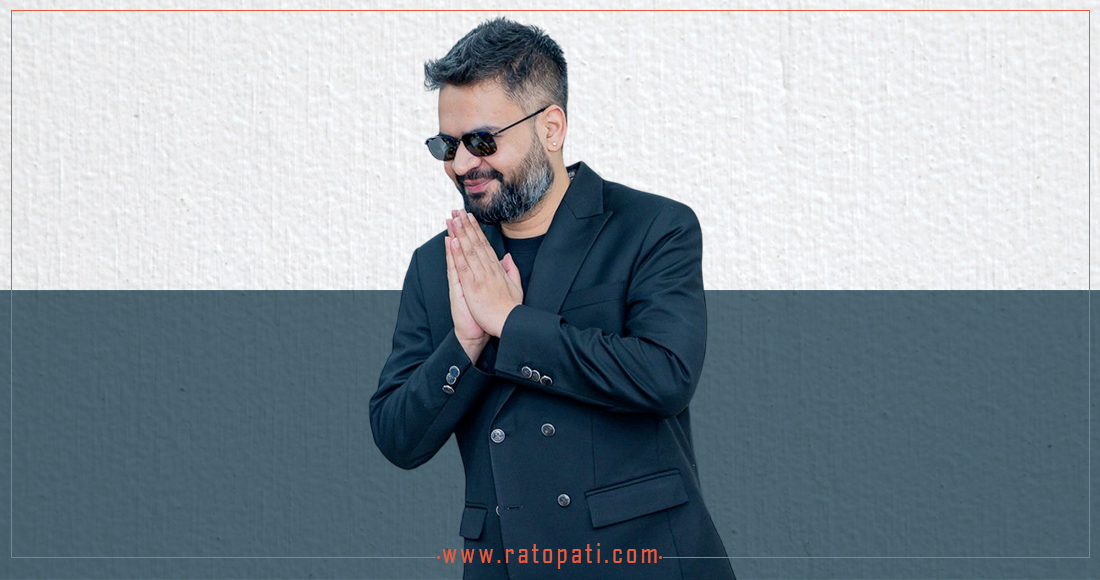
Gagan Thapa has long been established as a living symbol of youth aspirations and the future of the Congress. His sharp presence in parliament, ideological clarity on issues ranging from health to the strengthening of democratic institutions, and the courage to advocate for continuous reform whether in power or opposition, have placed him in a distinct and special category compared to traditional leaders.
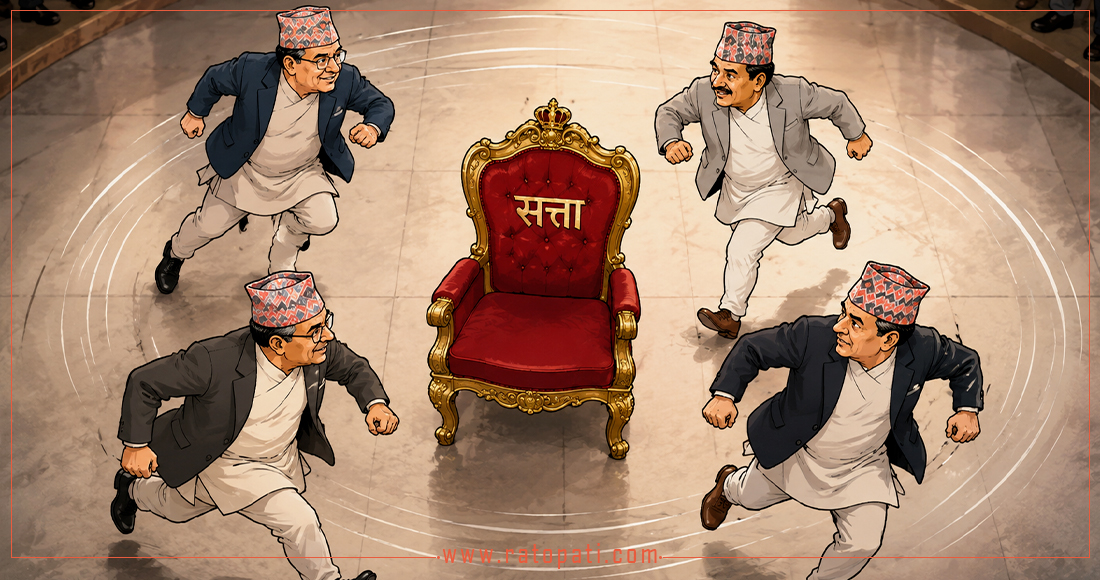
His election as president through the special general convention is, in fact, a clear expression of the cadres' deep dissatisfaction with the familialism institutionalized by the Deuba tendency, the culture of non-political alliances, and the politics of buying and selling. It is also an ideological rebellion against old factionalism, leadership inertia, repeated electoral defeats, and thoughtless lust for power.
From Slogans to Policy
The central philosophy of Gagan Thapa's leadership is transformation. But if this transformation remains confined only to speeches and attractive posters, Congress will lose another historic opportunity. His declared agenda has mainly five dimensions.
Organizational Restructuring: His goal is to build an institutional party run on the basis of procedure, not faction. He emphasizes the principle that responsibility, not position, and criteria, not recommendation, should prevail. His commitments to modernize the organization from the ward level to the center, implement a digital membership system, and make internal elections transparent lay the foundation for making Congress a party fit for the 21st century.
Ideological Clarity: Congress is currently accused of being 'neither socialist nor right-wing, today's Congress is a confused middle path.' Gagan Thapa faces the great challenge of translating democratic socialism into practical policies on Nepali soil. Balancing the state's parental role in education, health, employment, and social security with cooperation with the private sector will be his ideological acid test. This agenda is what established him among the younger generation.
Roadmap for Youth-Friendly Politics: Many speeches have been made about stopping the exodus of youth who see no opportunity at home, but policies have not materialized. Gagan Thapa's presidency will only be meaningful when there is a respectable presence of youth under 40 in the party's decision-making levels, and clear policies on employment, startups, and entrepreneurship are implemented. Creating opportunities for the youth is his biggest future challenge.
Good Governance and Moral Politics: Congress has long faced serious accusations not only of remaining silent on corruption issues but also of protecting and sharing the spoils of it. Gagan Thapa's biggest test lies in whether he can apply strict legal and moral standards when leaders within his own party are questioned. His insistence on not giving tickets to those accused of corruption and promoting individuals with clean images will be the cornerstone of his leadership.
Redefining Power: The party can regain credibility only if the principle 'Power is a means for societal transformation, not an end in itself' is put into practice. During Deuba's tenure, the party was always power-oriented. Standards were violated to bring relatives, cronies, and kin to power. Gagan must now break this royal style and politics of patronage and establish a system that correctly evaluates the right person.
Attack on Deuba-era Alliances: As Gagan Thapa takes the helm of Congress, he has attacked the politics of undemocratic alliances from the Deuba era, but he faces a mountain of challenges from within his own party and from the opposition. He must free politics from the clutches of unnatural alliances and guide it onto the democratic path of healthy and friendly competition. How he breaks this 'black web' remains to be seen.
The High Price of Transformation
The journey of transformation is never easy or filled with showers of flowers. For Gagan Thapa, the risk is not just the opposition parties, but the deep chasms within his own party.
Therefore, leaders who have captured the party's power and resources for a long time will not easily accept his rise. Structural reform means the weakening of their power. Thus, he will have to strike a balance between respectfully bidding farewell to the old guard and giving opportunities to the new, overcoming challenges ranging from internal obstruction and silent non-cooperation to open rebellion.
The expectation of the general public and cadres from Gagan Thapa is so immense that even one or two minor weaknesses can ignite a wildfire of disappointment. He must become the source of solutions to pierce the cloud of disillusionment accumulated over three decades. Therefore, breaking the Congress's dull tendency—to be sharp when in opposition but entangled in power-sharing when in government—is another acid test for Gagan.
The culture during the Deuba era, where the party criticized the government even while being in opposition, weakened the party, which he must end. Due to past mistakes, a segment of the public is skeptical of the Congress. To dispel this suspicion, mere speeches are not enough; results-oriented work and honesty are needed.
Gagan Thapa Versus the Entrenched System
Gagan Thapa's struggle is not just with individuals or groups, but with the orthodox, money-oriented, and power-hungry political culture that has been deeply rooted for years. If he adopts meaningful policies on issues like transparency in ticket distribution, effective implementation of federalism, and making parliament the center of debate, he will be established not just as a leader, but as someone capable of reshaping the entire system.
Therefore, this might also be Gagan's last chance. If he succeeds, Congress will once again become the ideological center of the country, and democracy will be further strengthened. But if he fails, there is a risk that Congress will be limited to a mere memory of history, and the rise of alternative forces will intensify. For Gagan himself, it is a test of whether he becomes a leader who missed an opportunity or a hero.
Gagan Thapa, elected president through the special general convention, stands at such a decisive juncture in history where half-hearted change will no longer suffice. Here, either deep transformation is possible, or long-term decline. If Gagan Thapa can move this chariot forward with courage, clarity, and consistency, his name will be written not only in the history of the Nepali Congress but as a golden chapter in the renaissance of Nepali democracy.
This specific news has been automatically translated by AI. As a result, there may be some inaccuracies or language errors.