Intense Electoral Battle Heats Up in Kanchanpur-1 Constituency as Candidates Seek Voter Trust


Dhangadhi. As the fervor for the House of Representatives election intensifies, candidates in Kanchanpur Constituency No. 1 are striving to win the trust of the voters.
A total of 19 candidates, representing various parties and independents, are contesting in this constituency. The candidates are busy reaching out to voters' doorsteps, promising to address all local problems if elected.
However, voters recall that those elected in the past also made similar promises, yet little work has been done for the public good.
Most voters here, primarily engaged in agriculture, have been facing problems in the farm sector for years. Locals say that since those elected previously did nothing, they will now choose carefully among the 19 candidates.
“We haven't seen the people we elected do any work; they only come to the village during elections and don't show their faces otherwise. Therefore, I am thinking of changing my vote this time,” said 67-year-old Bhawani Bohara of Belauri Municipality-4.
According to voters, leaders campaigning before the election promise to resolve border issues, improve roads and infrastructure, and solve problems related to agriculture and drinking water.
Ramsingh Wadiyak, 45, from Laljhandi Rural Municipality-3, stated that he would vote for someone who closely observes and understands the local problems. “We will vote for the person who knows the problems here,” he said.
Bina Magar, who began her political journey in the 2070 Constitution Assembly election, losing to an UML candidate, saw 2074 as her golden time. With the wave of the Left Alliance and the support of UML, she secured a massive victory and became the Minister for Drinking Water.
In the 2079 election, despite strong backing from the Nepali Congress and Unified Socialist Party, Bina Magar was defeated. The person who defeated her was Tara Lama Tamang, who was her key supporter in 2074. Magar, who lost by a margin of 5,546 votes, still feels the sting of that defeat.
Bina Magar is now entering the electoral arena for the fourth time, but her identity has changed this time. She is a candidate from the CPN (Communist Party of Nepal). For Bina, who grew up in this area, which is also her maternal village, this fight is emotional. However, given that she failed to win even with Congress support in the past, her path does not look easy this time.
Tara Lama Tamang's story is somewhat different. He did not come from a major political dynasty. Tamang, who emerged after winning the election for the chairman of the then Kalika Village Development Committee at the young age of 24 in 2054 BS, held the district leadership of UML for a long time.
Elected from the Provincial Assembly Kanchanpur-1 (1) in the 2074 election and becoming the Minister of Economic Affairs in the Sudurpashchim government, he openly supported the Unified Socialist Party during the UML split but later returned to UML. In the 2079 election, he surprised everyone by defeating the alliance's joint candidate, Bina Magar, for the House of Representatives seat. This time, he is the hope of UML. He appears confident in repeating his past victory.
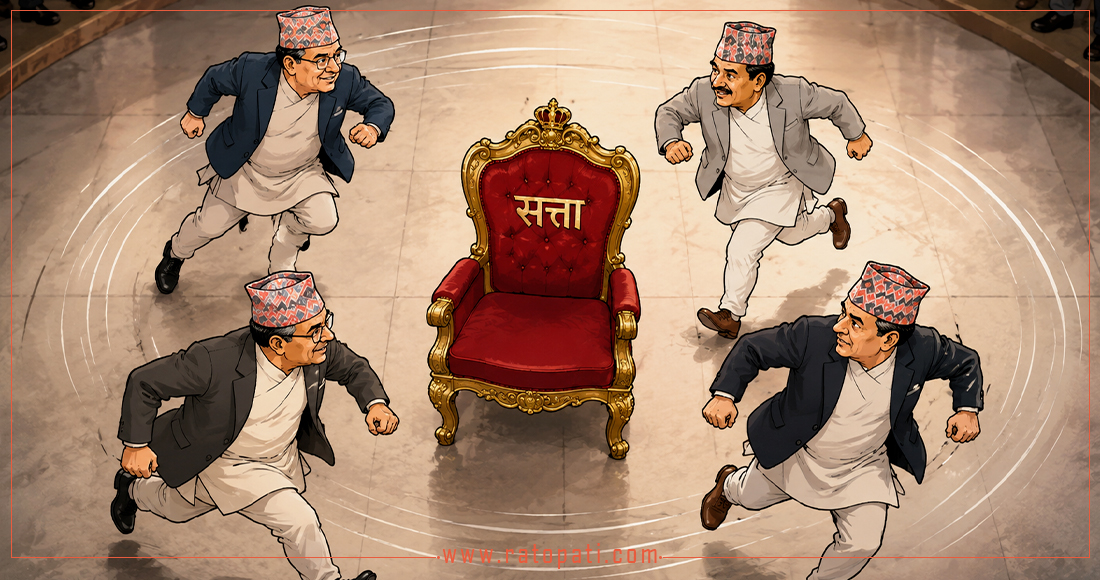
While Bina and Tara are competing to reclaim their dominance in this election, the Nepali Congress, Rastriya Swatantra Party, and others are aiming to secure the win for themselves.
Congress workers, who felt stifled in the 2079 election due to the alliance leaving them without a candidate, are enthusiastic this time. Congress has nominated Gopiprasad Upadhyaya as its candidate. Upadhyaya, who entered the villages with the slogan of justice, equality, and inclusive development, has a good image among the locals.
On the other hand, Janak Singh Dhami of the rising power, Rastriya Swatantra Party, is aiming to convert public disillusionment with old parties into votes through social connections.
Based on the proportional representation votes from 2079, an interesting competition is expected here. In the proportional category, UML received 17,954 votes, while Congress was the second largest force with 14,806 votes. CPN (Maoist Centre) received 9,677 votes, and Nagarik Unmukti Party received 7,430 votes in the proportional category.
The core vote base of UML is strong in this constituency. On the other hand, the future of CPN's Bina Magar depends on how many votes she can secure from Maoist, Unified Socialist, and other smaller communist factions. The Congress needs not only to retain its 14,000 proportional votes from the previous election but also needs to work harder to increase that vote share.
For Bina, who was elected as a Member of Parliament for one term and also became a minister, voters will decide whether to vote for her again based on the work she accomplished during that tenure. On the other hand, since Lama has also served as an MP once, voters are expected to determine their vote based on the evaluation of his term.
While voters are in a situation where they must form their opinion based on the evaluation of the one-term performance of these two main candidates, Congress and RSP will be strategizing to benefit from the competition between the two communist factions.
It is also a matter of interest how much influence the favorable political wave can spread in this area for RSP and how much voter trust it can gain.
It is estimated that the votes cut by candidates such as Krishna Bahadur Chaudhary from Nagarik Unmukti Party Nepal and Delhi Shahi from RPP in this constituency could alter the results of victory and defeat.
Independents like Anil Rana, Manju Devi Sunar, and even Puran Rana Tharu from Biplav have made their presence felt here.
This specific news has been automatically translated by AI. As a result, there may be some inaccuracies or language errors.