Nepali Congress President Thapa Blames Systemic Flaws for Slow Infrastructure Development, Pledges Transformation


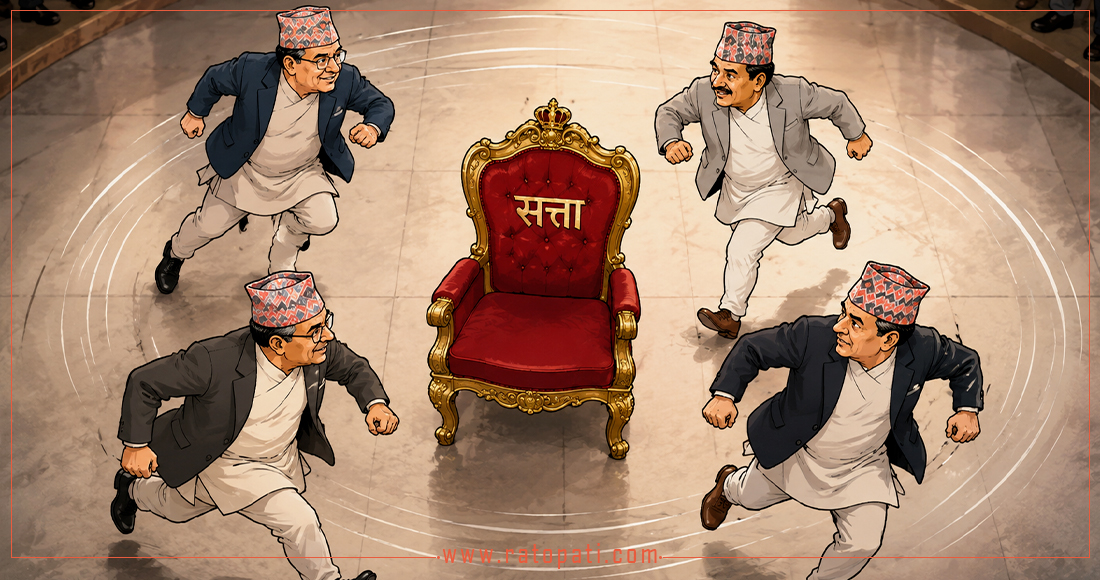
Kathmandu. Nepali Congress President Gagan Thapa has stated that the slow pace of Nepal's infrastructure development is primarily due to systemic problems, not just superficial reasons. Asserting that development is impossible through 'magic trick' styles like issuing directives, intimidating contractors, or scolding employees, he claimed to possess a clear roadmap to revolutionize the infrastructure sector within the next five years.
In a video message, Thapa illustrated the dire condition of national pride projects such as the Narayanghat-Butwal road section, the East-West Highway, and the Melamchi Water Supply Project, concluding that the traditional style of development is no longer effective. Thapa described the situation where major national projects remain stalled for years, and city roads are repeatedly dug up and refilled due to a lack of coordination, as the 'disaster' of development.
He noted that the tendency to dig up roads immediately after construction for water lines, followed by sewage and fiber optic work, not only increases costs but also causes the country to incur a huge opportunity cost. Thapa mentioned that having served in Parliament, parliamentary committees, and ministries for a long time, he has closely observed the problems in infrastructure construction.
"We might gain applause by occasionally intimidating contractors or issuing directives at the project site, but the problem will not be solved," Thapa said. "Working only on the symptoms is not enough; we must treat the root cause."
- Laws are the Obstacle: About Three Dozen Acts Need Revision
Thapa's assessment is that the outdated legal structure is the main reason for delays in infrastructure construction. He stated that the 48-year-old Road Act and the 20-year-old Public Procurement Act cannot address today's needs. He informed that his study shows that approximately three dozen laws need to be amended, revised, or repealed to ensure infrastructure projects are completed on time. He insisted that without changing the laws, no amount of public outcry will yield results.
Thapa emphasized the need to end the practice of securing projects based on political influence and pressure, noting that irregularities begin right from project selection. He stated that he is preparing to make 'Cost-Benefit Analysis' mandatory for project selection and to legislate provisions that prevent anyone from exercising discretionary power.
- 'Value of Time' Must Be Understood
Thapa proposed that since prioritizing 'low bidding' in the public procurement process has resulted in the loss of both quality and time, the 'Time Value of Money' must now be prioritized. He suggested that legal arrangements should be made to prioritize bidders who can complete the work faster, drawing lessons from the practices in India and other countries.
Thapa stressed the need to make transparency and social audits mandatory to ensure good governance in the infrastructure sector. He argued that regulatory bodies should be strengthened but not interfered with in a way that hinders their work.
Furthermore, he stated that the practice of announcing large projects without ensuring financial resources must end. He pointed out that investment in infrastructure can be mobilized by utilizing new financial instruments such as public asset monetization and the Hybrid Annuity Model (HAM).
- Commitment to Transformation in 5 Years
Thapa claimed that problems were not solved in the past by ministers threatening to cancel contracts or scolding people, and that results will now only come through institutional capacity and legal reforms.
He said, "If we think the problems will be solved miraculously, like magic, the next five years will also be wasted. I want to assure you that I will bring transformative change in the infrastructure sector within these five years."
Committing to establishing a system that completes projects taking ten to twelve years in just one or two years and ensures quality work, Thapa stated that the Nepali Congress will play a leading role in ending the suffering and harassment faced by citizens.
This specific news has been automatically translated by AI. As a result, there may be some inaccuracies or language errors.