Jumla's Electoral History: No Member of Parliament Has Been Re-elected in the Constituency

Surkhet. In Jumla, which has one constituency for the House of Representatives, a person elected as a member of parliament once has not been re-elected in the subsequent election. In the 048 House of Representatives election, Dilli Bahadur Mahat of the Nepal Workers' and Peasants' Party (NWPP) was elected from Jumla. In 051, NWPP fielded a different candidate, Bhakta Bahadur Rokaya. When Rokaya was elected, UML was limited to second place and Congress to third.
In 056, UML's Devilal Thapa was elected. In the elections that followed, Maoists emerged as the main political force. In the 064 Constituent Assembly election, Maoist's Naresh Bhandari was elected. In the 070 election, Congress's Lalitjung Shahi was elected, defeating rival Maoist candidate Gajendra Mahat. In the 074 election, however, Maoist's Mahat was elected. In that election, there was an alliance between UML and Maoists.
In the 079 House of Representatives election, even with an alliance between Congress and Maoists, RPP's Gyan Bahadur Shahi (Gyanendra) won the election. Looking at it this way, Jumla is among the districts that have never given a second chance to any MP for the House of Representatives so far.
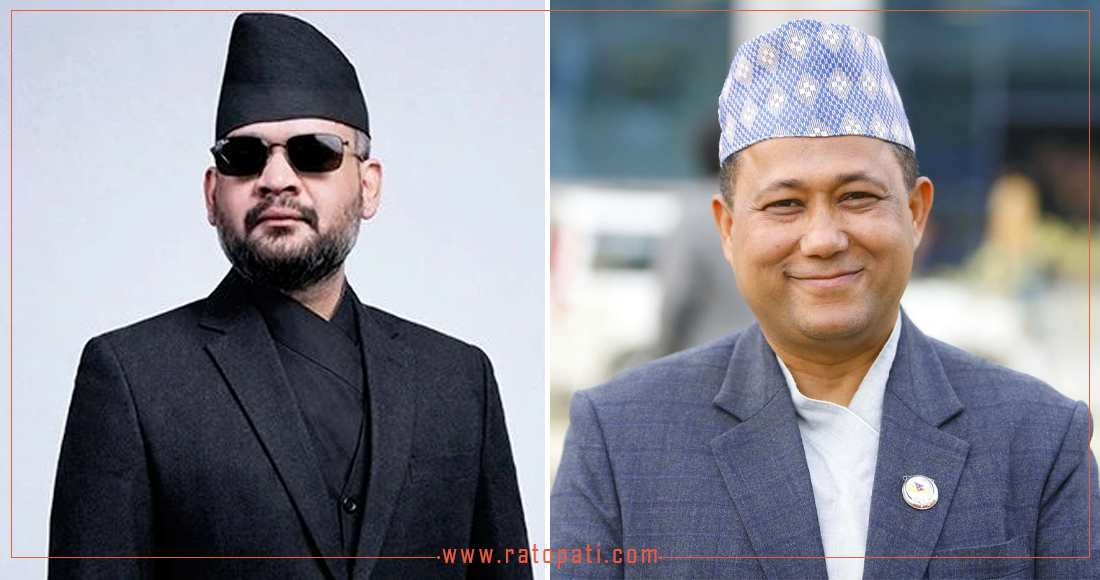
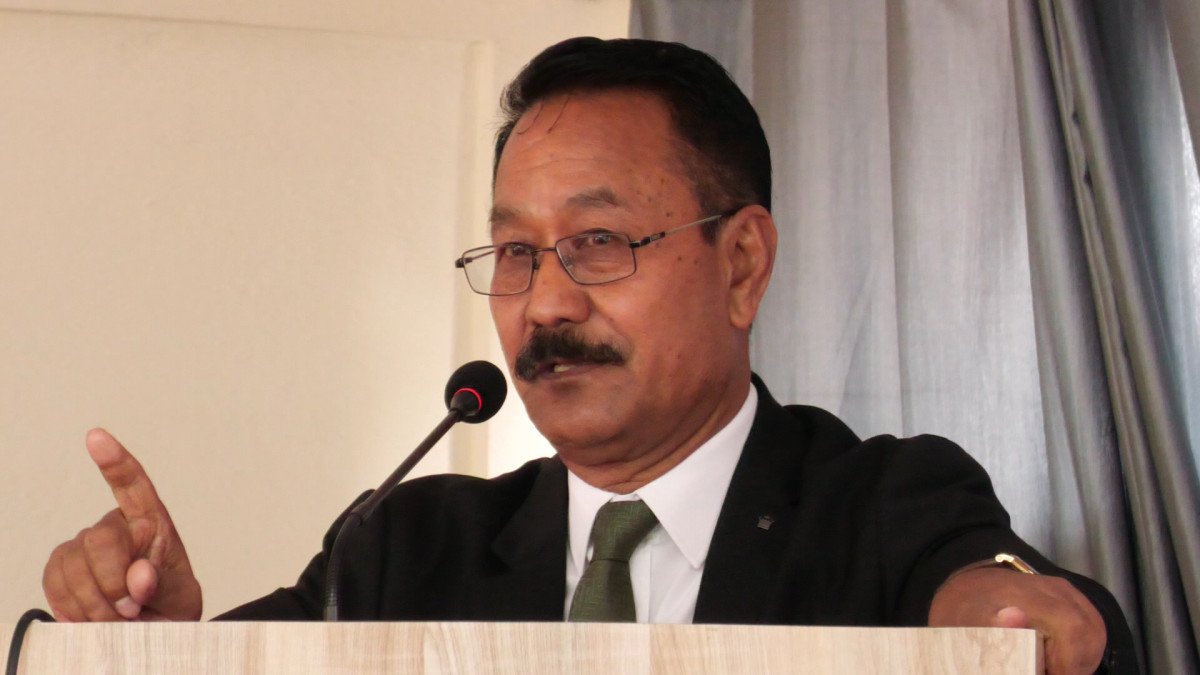
The outgoing MP from the House of Representatives, Gyanendra Shahi, is again a candidate from RPP. Here, CPN-UML has nominated Shantilal Mahat, Nepali Congress has Dip Bahadur Shahi, CPN (Maoist Centre) has Naresh Bhandari, Rastriya Swatantra Party has Binita Kathayat, and Pragatisheel Loktantrik Party (Prlopa) has Manarishi Dhital as candidates.

_OzbYC6cHgm.jpg)


Bhandari, who is a candidate from CPN (Maoist Centre), was elected in 064. It is often discussed that the 'Jumla Model of Development' was established through his initiative. Bhandari, who wrote about Karnali in the book 'Silver Lining', has returned to the electoral field with the aim of restoring the lost prestige of the Maoists.
Bhandari, who moved to the provincial level in 074 and also served as the Law Minister of Karnali, claims that the people will give him credit and elect him because the Karnali Health Sciences Academy and Chukeni Hydropower, among other large projects, were conceived by him.
When he decided to become a candidate and aware of the 'narrative' that MPs are not repeated, RPP's Gyanendra was initially rumored to contest from Surkhet-2. He came to Surkhet the day before filing his candidacy to understand the local situation. However, after finding a positive atmosphere in Surkhet-2, he returned to Jumla.
Here, two leaders who have previously served as MPs are in the electoral field, while other parties have new faces in the arena. Candidates from UML, Congress, RASP, and Prlopa are competing for the first time.
Organizationally, the strongest political party here is Maoist (now CPN), but looking at the 079 mandate, UML is the first party. In 079, UML received 10,548 votes in proportional representation, while Congress, in second place, received 10,458, and Maoists received 8,960 votes.
In the first-past-the-post category, RPP's Gyanendra Shahi received 22,819 votes, while his party RPP received only 5,796 votes in proportional representation. The Unified Socialist Party, now merged into CPN, received 2,648 votes, NWPP received 2,073, and RASP received nearly 900 votes.
In the proportional votes for the Provincial Assembly, Congress is first, UML is second, and Maoists are third.
In the first-past-the-post category, RPP was first, followed by Maoist's Goma Gautam Kunwar with 11,959 votes and UML's Ratan Nath Yogi with 6,528 votes.
Concerns of the Old and the New
Analyzing the proportional arithmetic, the main competition appears to be between Congress and UML, but due to the political wave following the Janji movement, Jumla is naturally affected, making it impossible to definitively state that the results will be the same.
Congress candidate Shahi is a well-known leader at the local level. However, after the special general convention elected a new leadership, factionalism and politics of revenge have intensified within Congress. Therefore, Shahi is concerned whether Congress votes will be split.
UML candidate Mahat was defeated in the mayoral race of Chandannath Municipality in 074. He is a leader who has served as the UML Jumla Chairman. Mahat is campaigning, promising to move forward by correcting past mistakes. He also considers Jumla's tendency not to re-elect MPs as favorable for him this time.
The older parties fear that votes from Patarasi will go to RPP's Gyanendra from Congress and CPN. Leaders analyze that some votes in the Sinja region, where these parties have close voters, will also go towards Gyanendra and Prlopa candidate Manarishi.
Dhital's candidacy has become a major challenge for CPN (Maoist Centre). Dhital wanted to contest the election when he was previously in Maoist. Leaders and cadres of the party say that in 079, Dhital initially received the ticket and was coming to Surkhet, but the ticket was snatched midway and given to Goma Gautam Kunwar.
Dhital is a journalist for the Maoist mouthpiece Janadesh magazine during the ten-year armed conflict and is an intellectual youth within the Maoist party. He has written a dozen books during the war period. He has a good impression among the intellectual class. CPN (Maoist Centre) leaders estimate that Dhital from Sinja may gain sympathy votes from his home region for not getting the ticket last time.
With Shahi of RPP on one side and his own former colleague cutting votes on the other, coupled with internal party strife, it is assessed that this election could be difficult for CPN's Bhandari. It is being closely watched how much support he receives from another faction within CPN (former MP Gajendra Mahat and others).
Although RPP's Gyanendra is being discussed on social media, locals say the ground report is not the same. Although Gyanendra asked for votes for a developed and prosperous Jumla last time, he is accused of being involved in the campaign to bring back the monarchy. His success will be determined by whether he can win over the dissatisfied voters.
Amidst this situation, leaders of the three old parties—Congress, UML, and CPN (Maoist Centre)—are fearful that candidates from RPP, Prlopa, and RASP might play a role in splitting their votes. However, considering the unexpected victory of RPP's Shahi in the previous election, it cannot be ruled out that the people of Jumla might surprise everyone again by delivering an unbelievable result.
Kathayat, nominated by RASP here, was a proportional member of parliament previously. She is trying to attract votes by appealing to voters for change.
Jumla has a voter count of 71,739.
This specific news has been automatically translated by AI. As a result, there may be some inaccuracies or language errors.