Artificial Scarcity and Overcharging Plague Nepal's LPG Market Amid Supply Claims


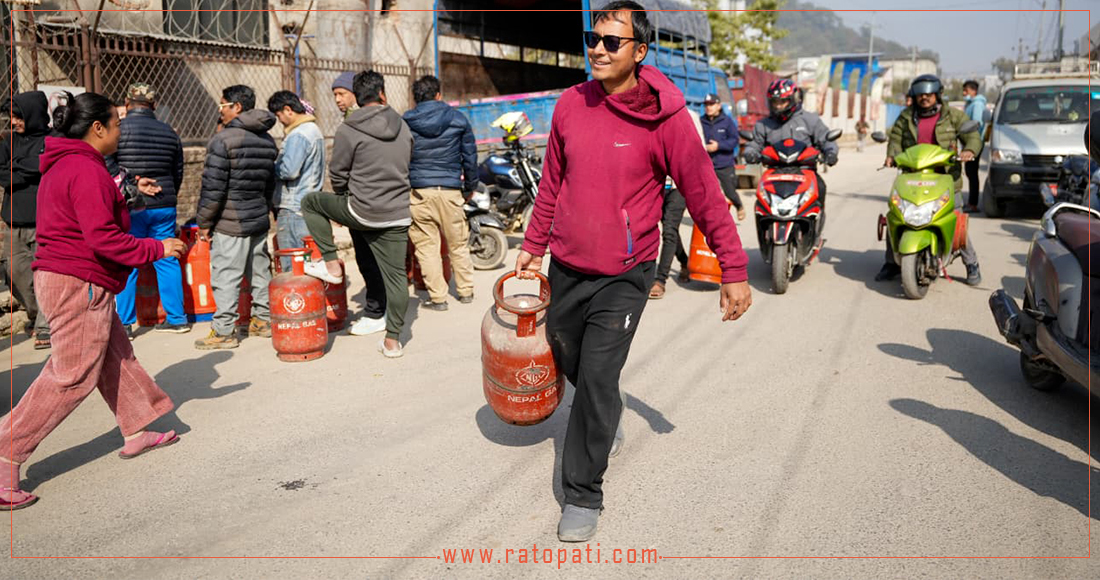
There is currently an extreme shortage of cooking LPG gas in the market. Ordinary citizens are unable to easily obtain gas. There are lines of empty cylinders at depots, and consumers are forced to wait for weeks after registering their names with retailers.
Meanwhile, the Nepal Oil Corporation claims to have increased gas imports and that the situation has eased. Industry sources, however, state that while gas imports have increased, the market has not normalized because consumers are unnecessarily purchasing and hoarding stock.
However, taking advantage of this shortage, artificial scarcity is being created in the market. Under the pretext of gas shortage, the practice of refusing to exchange cylinders of different companies, forcing consumers to buy new cylinders, and arbitrarily charging inflated prices is rampant.
How Consumers Are Being Cheated
Many retailers claim that they do not have gas for the company cylinder the consumer possesses, and only have gas for other companies. For students or ordinary citizens who only have one cylinder, it is an easier option to take the gas of whichever company's cylinder is available rather than waiting for their usual company's gas.
Retailers exploit this compulsion of consumers as an opportunity to profit, buying the empty cylinder from the consumer at a low price and selling a new cylinder filled with gas at an exorbitant price.
Although the practice of exchanging cylinders between different companies is normally permissible, retailers are taking advantage of the artificial shortage to exchange them for hefty fees.
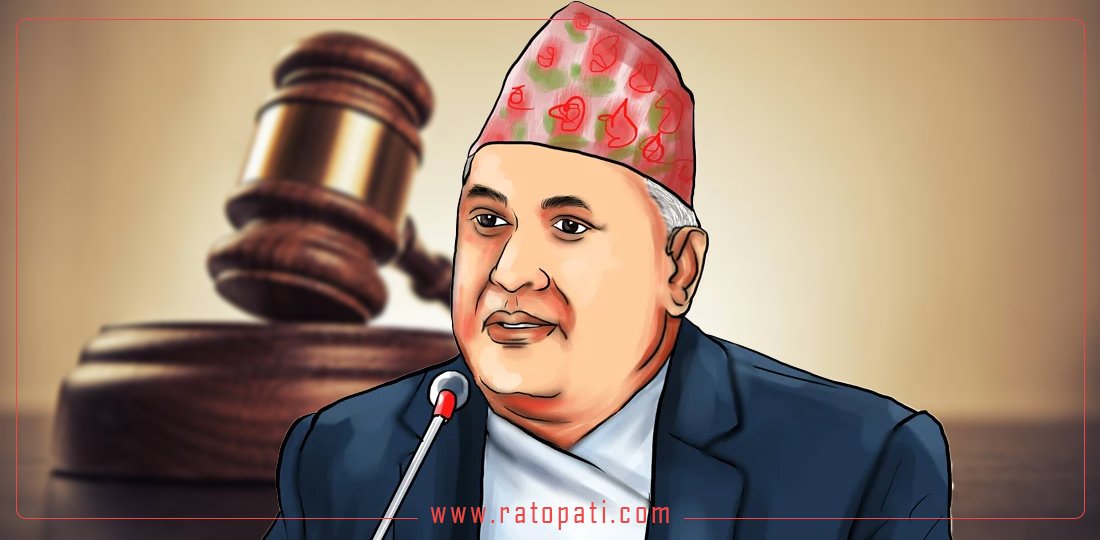
Consumer rights activist Bishnu Prasad Timilsina suggests that the current market activity is more about 'selling cylinders' than selling gas. Traders are pushing old, worn-out cylinders that should be disposed of onto consumers by creating fear of shortage.
Timilsina stated, 'The main objective of traders now is to sell cylinders rather than sell gas. They are aiming to offload those worn-out cylinders onto the government later. Charging consumers up to NPR 4600 without providing a bill is outright black marketing.'
According to him, there is a major manipulation happening with the cylinder deposit amount. 'The price of gas is NPR 1910; the remaining amount is the cylinder deposit, but if no bill is provided, consumers will not get their money back when they return the cylinder tomorrow,' Timilsina said.
Similarly, fraud is also occurring in the name of transportation costs. Retailers are charging anywhere from NPR 100 to 200, or even more, for transporting a single gas cylinder.
The Excuse of 'Regular Customer' and Bullying
Another problem seen in the market is the 'regular customer' issue. There are plenty of gas cylinders in the shop, but when a new person arrives, they are turned away saying, 'This is for our regular customers, we cannot give it to you.'
_52H9rEWA9f.jpg)
'This is the bullying of traders in the market,' says rights activist Timilsina, 'Saying I won't give gas if you don't buy lentils and rice from me, or using the excuse of regular customers, is against consumer rights. Cartelization is happening, trampling on the principle that the first come, first served.'
Government agencies remain silent despite such massive looting in the market. Regulatory bodies, including the Department of Commerce, have failed to conduct effective monitoring. Rights activist Timilsina calls this 'state-sanctioned crime.'
'Government employees work from 10 to 5, but they do not look at the disorder in the market,' he expressed his frustration, 'Even when complaints are filed, there is a tendency to leak information to the traders and engage in commission games. Taking advantage of the compulsion of consumers not daring to confront local traders, rampant looting is taking place now.'
This manipulation happening with an essential commodity like gas is directly striking the citizens' hearths. The practice of charging NPR 4600 to NPR 4800 for a new cylinder set that should cost between 3,500 and 4,000, adding high transportation costs even for nearby deliveries, and not issuing bills has made the market panicked. While the government remains helpless and traders view the artificial shortage as a lucrative season, innocent consumers are forced to pay exorbitant prices.
What Do Industry Sources Say About Gas Cylinder Prices?
Regarding complaints that up to NPR 4600 is being charged for a new cylinder set including gas (with a deposit for an empty cylinder of about NPR 2640), Ratopati sought clarification from Shiva Prasad Ghimire, the immediate past president of the LP Gas Industry Association of Nepal. Ghimire stated that charging consumers NPR 2640 as a deposit for an empty cylinder is excessive.
According to Ghimire, the industry purchases empty cylinders from India for about NPR 2600. However, the industry provides cylinders to dealers on a deposit basis of NPR 1800 to 2000. He clarified that this is only a deposit, not the selling price.
'We provide them to dealers for 1800 to 2000. Dealers should sell them to consumers with a margin of a few hundred rupees,' Ghimire said, 'It is excessive to charge NPR 2600 when it should cost between 2000 and 2200 by the time it reaches the consumer.'
However, he claimed that since there is no clear legal standard or limit set for how much deposit should be taken for the cylinder, dealers might be charging arbitrarily. 'There is no rule stating how much deposit must be taken, but charging 2600 is definitely too much,' he said.
Furthermore, informing about the gas supply situation, Ghimire stated that the import situation has now normalized. He mentioned that although there is no shortage of gas in the market, some problems are visible because consumers are hoarding more cylinders than necessary due to the fear of future shortages.
'Gas imports have increased now, and the situation is in a normal position,' Ghimire said, 'But because consumers are stocking up fearing they won't get it later, it still appears as a shortage in the market.'
He asserted that the supply in the market is smooth, urging consumers not to hoard gas.
This specific news has been automatically translated by AI. As a result, there may be some inaccuracies or language errors.