Judicial Appointments Stall as Election Commission Denies Consent for Supreme and High Court Judges


Kathmandu. A ripple effect has been created in the judicial sector after the Election Commission refused to grant consent to the Judicial Council for the appointment of judges to the Supreme Court and High Courts. The Judicial Council had sought consent from the Election Commission for the appointment process of two vacant judges in the Supreme Court and two vacant Chief Judges in the High Courts. Former judges and legal practitioners have expressed serious objections after the Election Commission denied permission for the judicial appointments.
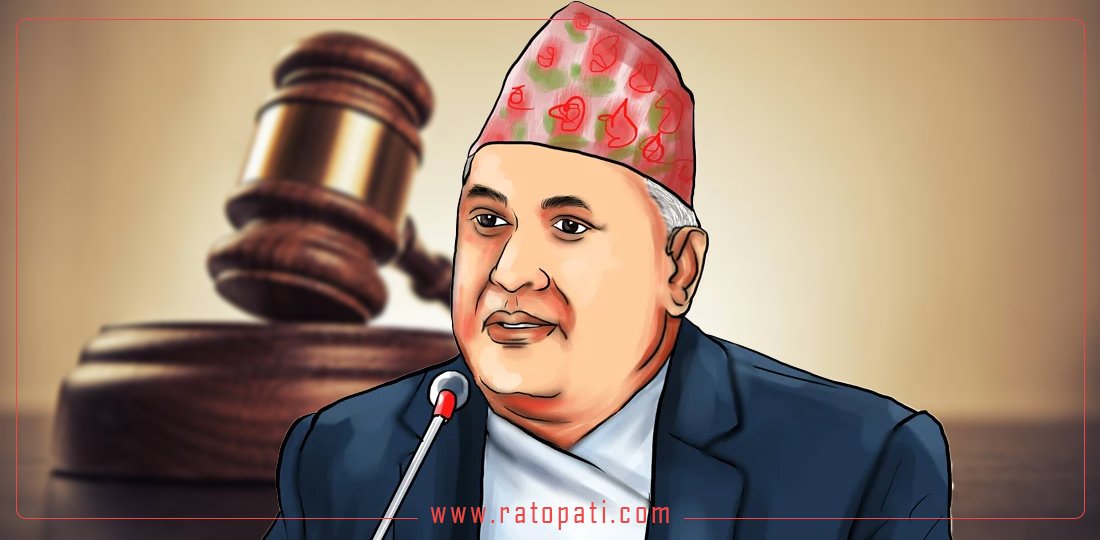
Former Supreme Court Justice Ishwar Prasad Khatiwada commented that the election code of conduct is not applicable to the functioning of the court. He asserted that the code of conduct cannot supersede the Constitution and the law.
“Hearing the news that the Election Commission did not give consent to the Judicial Council for judge appointments citing the election code of conduct feels like witnessing an unprecedented absurdity,” he said. “This is a deviation presented under the guise of proper procedure. Both seeking consent for judicial appointments and denying consent are wrong. Although the matter is wrong, we are forced to be mere spectators.”
He added, “Currently, I am neither an aspirant for a judicial appointment nor in a position to grant one. My personal matter is not connected in any way, shape, or form. I am putting forward this opinion purely from the perspective of a citizen's social duty.”
“How did the Judicial Council reach a stage where it has to seek consent from the Election Commission for judicial appointments? On what legal basis was consent sought?”
According to him, matters concerning judicial management should not be subjected to or allowed to be governed by the Election Commission's oversight. Furthermore, not everyone is obligated to adhere to all aspects of the code of conduct, especially when it is deemed unnecessary. He commented that there is an attempt to weaken the judiciary.
He stated, “Impropriety does not announce itself with fanfare. Such thoughtless arrogance and falsehood gradually weaken institutional trust and effectiveness. My primary concern lies in this aspect.” He argued that if judicial appointments are necessary for institutional requirements, the process should not be halted due to the election code of conduct.
Similarly, Senior Advocate Madhav Kumar Basnet commented on social media platform Facebook regarding the Judicial Council sending a letter to the Election Commission seeking consent on whether it is permissible to carry out tasks stipulated by the law.
Former Vice-Chairman of the Nepal Bar Association, Senior Advocate Shaligram Sapkota, stated that the clause mentioned by the Commission does not contain any provision regarding the appointment of judges. Sapkota questioned, “How did the Judicial Council reach a stage where it has to seek consent from the Election Commission for judicial appointments? On what legal basis was consent sought?”
The Election Commission does not possess the legal or constitutional authority to correspond in a manner that can halt judge appointments under any circumstances, according to him.
He commented on the ongoing effort to weaken the judiciary. “The judiciary is being made extremely weak and defensive in Nepal's history. A legal officer from the Election Commission, corresponding on behalf of the Commission, issued a directive, as if to the executive branch, stating that judge appointments cannot be made under Section 5(d) of the Election Code of Conduct, 2082, as it is in effect. Upon examining that clause, nothing appears to be written regarding judge appointments; nevertheless, the Election Commission has corresponded,” he said.
He reiterated that the Election Commission does not have the legal or constitutional authority to correspond in a way that can stop judge appointments under any circumstances.
- What is in the letter sent by the Election Commission to the Judicial Council?
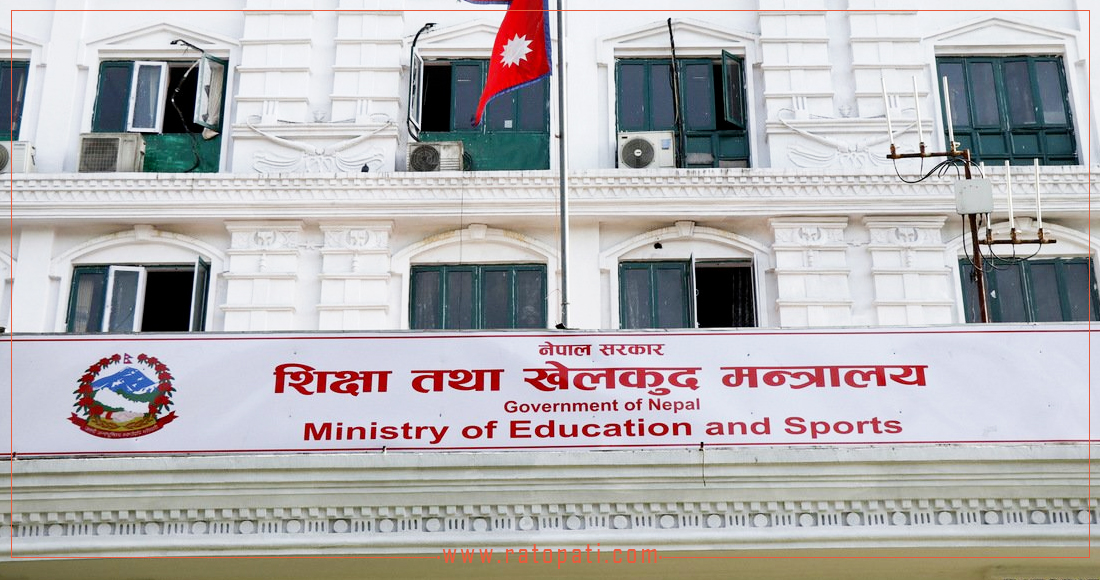
In response to the Judicial Council's letter, the Commission refused to grant consent for judge appointments, stating that the Election Code of Conduct is in effect. The letter was sent to the Council by Mohan Raj Joshi, a legal officer at the Commission. The section cited by the Commission also appears to be flawed.
The letter sent to the Judicial Council stated, “We request, as per the decision, that the appointment of judges proposed by the Council cannot be carried out in accordance with Section 5(d) of the said Code of Conduct, as the Election Code of Conduct, 2082, has been enforced by the Commission since 2082/10/4 BS.”
This section of the Code of Conduct stipulates that programs such as laying foundation stones, inaugurations, surveys, feasibility studies, or granting grants for such purposes should not be conducted. This section contains no mention of appointments. Rather, Section 5(f) of the Code mentions that no financial benefits or rewards, including the creation of new posts, filling vacant posts, or increasing allowances, should be provided.
The prohibitive clause of the same section of the Code of Conduct also includes a provision that does not hinder regular recruitment processes conducted by the Public Service Commission, Provincial Public Service Commissions, Judicial Service Commission, Teacher Service Commission, Nepal Police, Armed Police Force Nepal, and the Nepali Army, provided the Commission is informed.
This specific news has been automatically translated by AI. As a result, there may be some inaccuracies or language errors.