Kulman Ghising's Ujyalo Nepal Party Reasserts Independence After Brief, Tumultuous Alliance with RSP

Kathmandu. As the country heads into elections, the drive to build alternative political forces is intensifying in Nepali politics. Amidst disillusionment with established parties and hope for new faces, many new forces are emerging and fading.
There has long been an established narrative in Nepali politics: smaller parties are destined to merge or dissolve into larger ones. However, Kulman Ghising, who won the hearts of citizens by cutting through the darkness of load-shedding, is challenging this narrative.
Kulman has broken off his 12-day unity with the Rastriya Swatantra Party (RSP) and is setting off alone in the electoral arena scheduled for the upcoming Falgun 21. Calling the short and dramatic unity attempt with RSP an 'accident,' he has now revived his own party, Ujyalo Nepal Party, to enter the electoral fray.
The unity agreement between RSP and Ujyalo was signed on Poush 14, the last day for submitting the closed list of proportional representation candidates as the election process for Falgun 21 began. However, the unity was dissolved on Poush 26, just 12 days later. Following the dissolution, Kulman transitioned from being the patron to the chairman of the Ujyalo Nepal Party.
After becoming the party chairman, Kulman, with Kathmandu Mayor Balen Shah as a witness, interpreted the unity with RSP as an accident rather than a true merger. He stated, 'It wasn't unity; it was an accident.'
The unity between Kulman's party and RSP resulted in a 'neither here nor there' situation for 12 days. In Kulman's own words, Ujyalo Nepal Party went into a 12-day coma. But after the unity broke, Kulman has revived the party from its 12-day coma and is moving forward alone on the difficult but self-respecting path of alternative politics to save his existence and the 'chimney' (chim) election symbol.
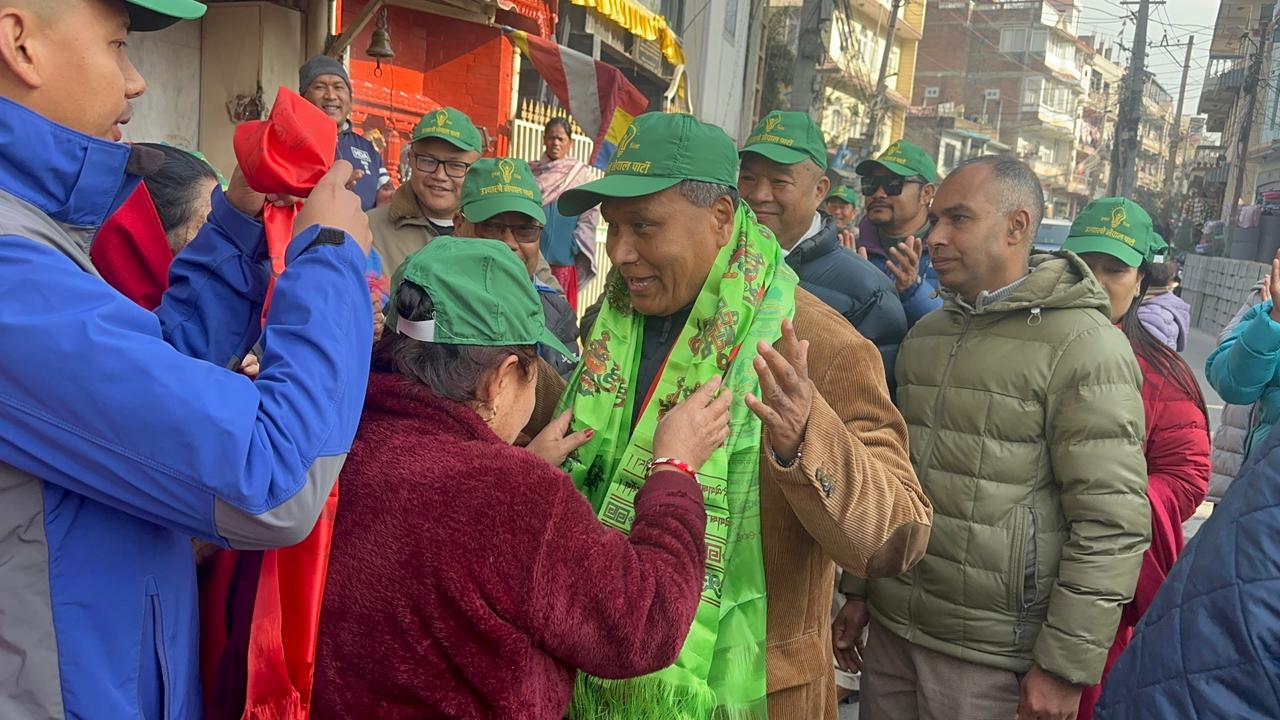
The 12-Day 'Coma' and Crisis of Existence
On Poush 14, when the agreement for unity between Rabi Lamichhane and Kulman Ghising was signed, with Kathmandu Metropolitan City Mayor Balen Shah as a witness, this agreement was considered a grand convergence of alternative forces for Nepali politics. But that enthusiasm faded abruptly in 12 days. The standing together of three popular faces in Nepal was a big message to the old political parties. However, it further confirmed the example that political unity in Nepal does not last long.
On Falgun 3, 2075 BS, the CPN (Maoist Centre) and CPN (UML) announced their unity to form the Nepal Communist Party (NCP), but the Supreme Court's verdict 33 months after the formation of NCP forced UML and Maoist back to their previous states.
The appeal of Kulman, Rabi, and Balen uniting was no less than that of the NCP era. But that appeal did not last even 12 days. After the unity between RSP and Ujyalo Party could not be sustained, Ghising claimed that the unity effort was merely a trap to merge Ujyalo into RSP.
After the unity dissolved, Kulman has consistently stated in public programs, 'We hadn't even completed a few months since our party was formed, but in between, we went into a coma for 12 days. The unity was a game to erase our existence. We did not want to surrender our identity and agenda by handing them over to someone else; therefore, we came out of that accident, learning a lesson.'
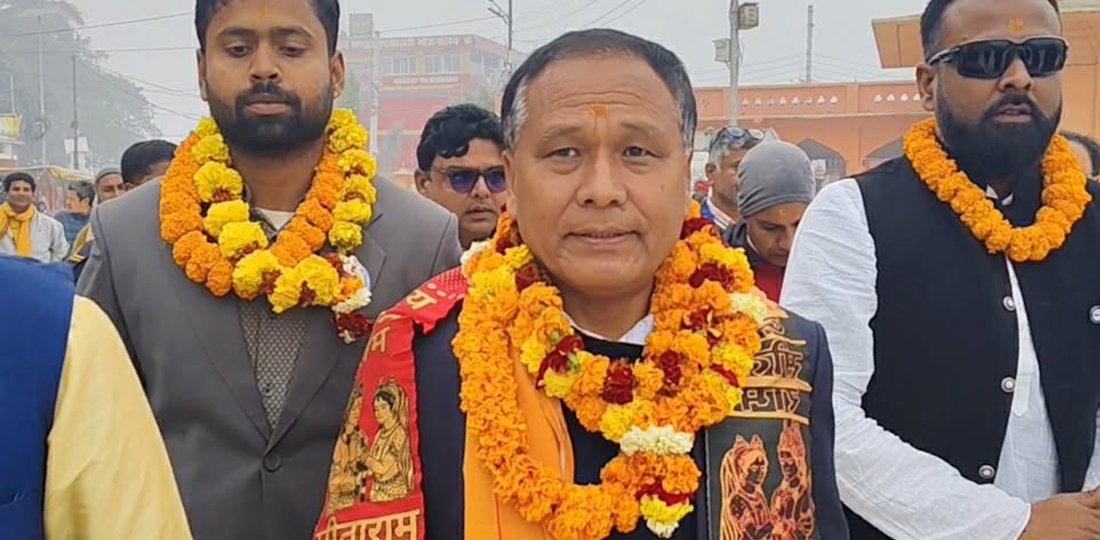
Search for Self-Respect Amidst Fear of Merger
RSP stated that Ujyalo Nepal's demands could not be met, but Ghising's understanding is different. He felt that unity without honorable participation in RSP was merely dissolution. He concluded that politics that jeopardizes the party's name, flag, and 'chimney' election symbol cannot bring change to the country. While some consider this decision a political risk, Ghising calls it a fight for existence.
However, he stated clearly, 'Ujyalo Nepal Party will not merge with anyone now. Rather, other forces may come to join us. We will never let this party's name and the election symbol 'chimney' disappear anywhere again.'
Kulman Ghising has taken this incident very seriously. In his election campaign programs, he interprets the 12 days as the time the party spent in a coma.
'Our party hasn't even completed three months since its formation, but in between, we went into a coma for 12 days. We suffered a lot because of that coma,' Ghising is heard complaining, 'We even felt like we made a mistake by uniting, but now we have recovered from that accident.'
_M6pS4XtgQc.jpg)
Entering the Electoral Arena from Zero After Failing to Secure Proportional Representation
The dissolution of the unity with RSP was a major blow to Ujyalo Nepal. Some even predicted the party would not recover from this shock, but Kulman Ghising was undeterred. He instructed his leaders and cadres to rise from the ground up. He views the crisis that hit the party as a test of resilience as he enters the electoral field.

Amidst predictions that the party would disintegrate after the unity broke, Kulman adopted a more aggressive strategy. Ujyalo Nepal Party has fielded candidates in 121 constituencies for the House of Representatives across the country. Ghising himself is contesting from Kathmandu-3, while Central Committee member Jitram Lama is competing from Bhaktapur-2. Ujyalo has fielded candidates in all constituencies in the Kathmandu Valley.
When the party unified with RSP, Ujyalo submitted its proportional representation list simultaneously; it did not submit a separate list. But when the unity failed, Ujyalo missed out on the proportional representation slot. Due to this technical complication in the proportional representation category, Kulman has collaborated with the Rastriya Parivartan Party. Through this collaboration, Ujyalo has taken the election symbol 'Basuri' (flute) for its proportional representation, indicating that no matter the pressure, the party will not withdraw from the electoral process and is determined to establish itself as an alternative force.
Ujyalo leader and candidate from Bhaktapur-2, Jitram Lama, stated that the party is now moving forward with its election campaign in its own way. He claimed that instead of dwelling on unity issues, the party is strengthening itself and moving forward. Admitting that going into unity with RSP in the past was a mistake, he said, 'We shouldn't have gone there, but we did. Whatever happened, we recognized the people in time, that was the mistake. We shouldn't dwell on that issue now; we must move forward quickly.'

Kulman Also on Nationwide Tour with Election Campaign
The wave started in Kathmandu by Ujyalo Nepal has now reached Madhes Province. During his election campaign in Janakpurdham, Kulman presented his clear agendas. Interacting with Madhes voters, he said, 'We have not entered politics to make someone the Prime Minister. We have come to lead the country ourselves and become the harbinger of change.'
He stated that although people voted for individuals and parties in the past, it is now time to think about the prosperity of the nation. Portraying Ujyalo Nepal as a true new party following the Gen Z movement, he urged trust in the new. 'Yesterday, we removed the darkness and brought light; now it is time to remove the darkness of politics,' he said. He is trying to win over voters by linking his past image with politics.
During the campaign, Ghising attempted to establish his agenda in Madhes. 'We have come to lead the country, not to make someone the Prime Minister,' he said. He also commented on the expensive fanfare that new parties are engaging in during the elections. He emphasized the need to contest elections with low expenditure and be frugal. He concluded that it is unfortunate that new parties are following the example of the old ones by engaging in unnecessary spending and publicity.
That 12-day agreement brokered by Balen Shah became an expensive political lesson for Kulman. The path he has chosen, abandoning the fear of merger, is certainly difficult. But it sends a message that he is not ready to compromise his ideology and existence for position and power.
For Kulman, this election is not just a matter of winning or losing; it is an example of how an alternative force can preserve its self-respect. Kulman is not just in the race to become a Member of Parliament; his goal is the executive leadership of the country. 'We are competing in many seats, and after the upcoming election, Ujyalo Nepal will lead the country,' he stated.
However, this claim sounds ambitious. For Kulman and his party, who are currently touring the country, the upcoming election is not just a competition but also a trial by fire to prove their existence and relevance.
This specific news has been automatically translated by AI. As a result, there may be some inaccuracies or language errors.