Nepali Congress General Secretary Pradeep Poudel Unveils 15-Point Economic Reform Agenda


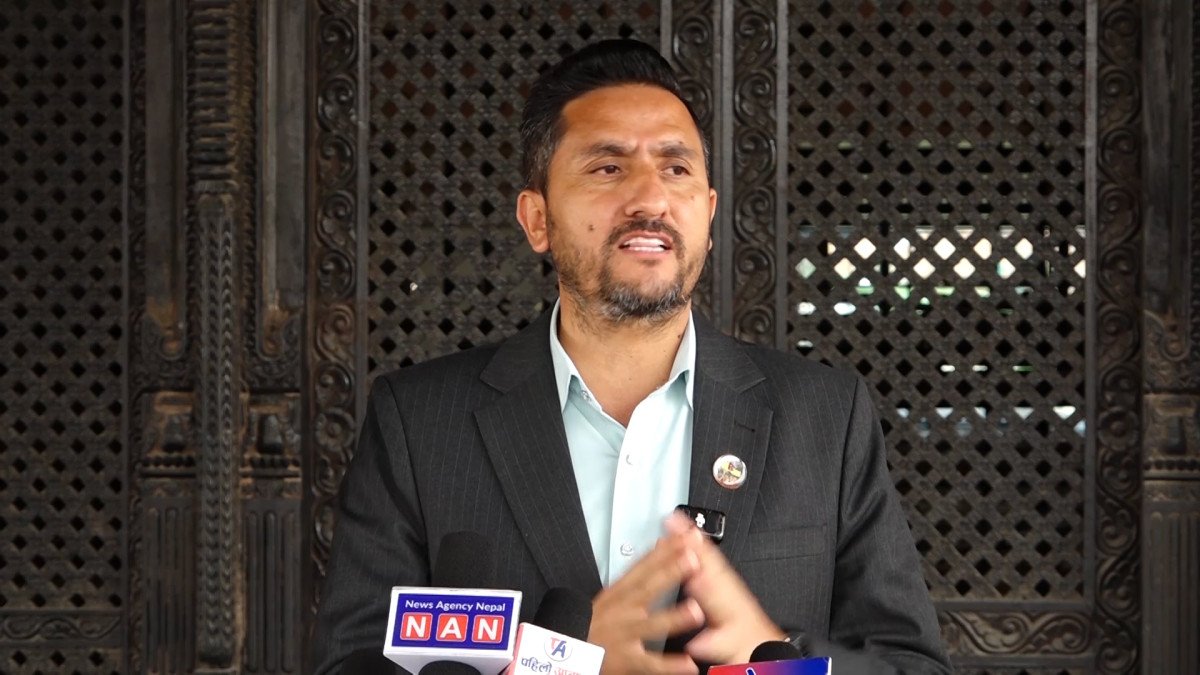
Kathmandu. Nepali Congress General Secretary Pradeep Poudel has put forward his 15-point concept regarding economic reform. Stating that the Nepali Congress is committed to changing the 'operating system' to convert dreams into results, rather than just presenting dreams, he shared his views on the policies needed for economic improvement and prosperity.
In a video statement, he mentioned the need to shift the country from a distribution-oriented and dependent economy to a production-oriented, self-reliant, and savings-based economy.
He argued that systemic reform in the current economy is necessary for this. He emphasized building institutional and strong systems instead of individualistic politics, ensuring ease for citizens in this process.
General Secretary Poudel stated that a knowledge-based economy must shift focus from exporting traditional labor and sweat to exporting intellectual capital and knowledge.
He believes that opportunities should be democratized by connecting small entrepreneurs, youth, and talent from remote areas directly to the global market through the use of technology.
He argued that it is necessary to develop an integrated system by making education, banking, law, and foreign policy within the economic ecosystem complementary to each other, and to transform universities into 'research and innovation centers'.
Highlighting legal hurdles as a major factor in Nepal's economic development, General Secretary Poudel pointed out the necessity of reinstating dozens of cumbersome laws that hinder development and investment through a supreme umbrella act for the second phase of economic reform and legal renaissance.
Stating that a lack of coordination between ministries and administrative delays impede the pace of the economy, he emphasized the need to implement time-bound procedures through fast-track services. 'A special tribunal arrangement is necessary to resolve legal disputes related to industry, business, and investment quickly and efficiently,' he said.
He argued that the role of the state should be that of an impartial adjudicator and facilitator, not a producer of players in the economy.
General Secretary Poudel discussed the necessity of 21st-century democratic socialism, arguing that socialism means ensuring a strong safety net so that no one falls into the pit of poverty and deprivation, rather than hindering anyone's progress.
Under this, he argued, the guarantee of equal access to education and health for all should be ensured, while healthy competition in economic progress should be encouraged.
Furthermore, he termed the situation where Dalits, women, and marginalized communities are given special concessions and priority to make them 'capable competitors,' rather than leaving them solely to the mercy of the market, as 21st-century democratic socialism.
General Secretary Poudel argued for the importance of intellectual capital, and the need to legally recognize the opportunities created by ride-sharing, e-commerce, and digital platforms under the digital economy, and to encourage 'startups'.
He expressed confidence that promoting healthy competition will directly benefit the general consumer as the dynamism of the private sector increases the quality of goods and services and reduces prices.
General Secretary Poudel introduced the concepts of economic diplomacy and geo-economic bridges in his statement. He stated that the tradition of relying solely on foreign aid must be broken, moving towards investment from foreign aid, and adopting diplomacy that attracts trade and investment.
General Secretary Poudel highlighted the necessity of utilizing the Nepali diaspora to connect the knowledge, skills, and capital of Nepalis living abroad to nation-building through 'brain gain'.
This specific news has been automatically translated by AI. As a result, there may be some inaccuracies or language errors.

_awwsnsycsy_zbGiZB4Kf5.jpg)
_DRK2NCS4RD.jpg)