Familiar Rivals Face Off Again in Gulmi-1 By-election Amidst Shifting Political Dynamics
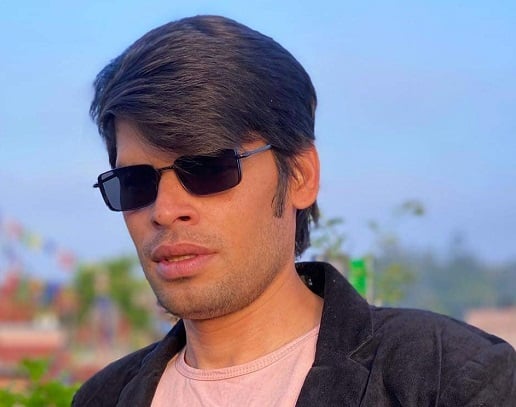

Kathmandu. In Gulmi-1, a constituency historically favoring the left-wing, familiar rivals from the Nepali Congress and CPN-UML are once again contesting the House of Representatives election scheduled for Fagun 21.
The contest features the seasoned leader Pradeep Kumar Gyawali from UML and the intellectual leader Dr. Chandra Kant Bhandari from Congress. Former Minister and former Deputy Secretary-General of UML, Gyawali, is entering his sixth electoral battle. He was elected in 2056, 2064, and 2074 BS.
He served as the Minister of Tourism in 2063 BS and the Minister of Foreign Affairs in 2074 BS.
Bhandari is in the fray for the fourth time. In 2070 BS, Bhandari entered parliament for the first time after defeating Gyawali. He was defeated by Gyawali in the 2074 BS election. In the 2079 election, Sudarshan Baral from the Nepali Communist Party is challenging the incumbent, Bhandari, who defeated Gyawali in the previous election.
Baral, who was the Lumbini Province Chairman of the erstwhile CPN (Maoist Centre), was elected as a Constituent Assembly member from Gulmi-1 in 2064 BS after defeating Gokul Bista. In the second Constituent Assembly election of 2070 BS, Baral was defeated by Congress candidate Krishna Bahadur Chhantel Thapa. Baral is considered popular and unblemished in Gulmi, leading to an analysis suggesting a favorable atmosphere for him.
This time, the new party Rastriya Swatantra Party (RSP) has fielded Sagar Dhakal in the electoral arena. In the 2079 election, Dhakal contested as an independent from Dadeldhura with the aim of defeating former Prime Minister Sher Bahadur Deuba.
However, he was defeated by Deuba, who had been continuously winning since 2048 BS. This time, Deuba did not receive a ticket from Congress. Claiming his mission was accomplished, Dhakal is now contesting from his home district, Gulmi. In the previous election in this constituency, RSP's Damodar Bhandari was a candidate. While Bhandari won with 33,744 votes, his closest rival Gyawali received 32,152 votes, and RSP's Bhandari secured 1,882 votes.
Analyzing the proportional representation votes from 2079 BS, UML leads with 28,453 votes. Congress is second with 23,413 votes. RSP is third with 8,116 votes, while the Maoist Centre is fourth with 6,257 votes. Rastriya Janamorcha received 1,224 votes, RPP received 876 votes, and Unified Socialist received 256 votes. In the previous election, Congress was supported by the Maoist Centre and the Unified Socialist Party.
Gulmi-1 comprises Kaligandaki Rural Municipality, Satyawati Rural Municipality, Ruru Rural Municipality, Chhatrakot Rural Municipality, Gulmi Durbar Rural Municipality, Chandrakot Rural Municipality, and Wards No. 7, 8, 9, 10, 11, 12, 13, 14 of Resunga Municipality.
Contenders' Own Claims
Congress candidate Bhandari states that the real and virtual grounds are different. Currently campaigning in the constituency, he acknowledges that the upcoming election will be challenging as the new generation has grown up alongside technology.
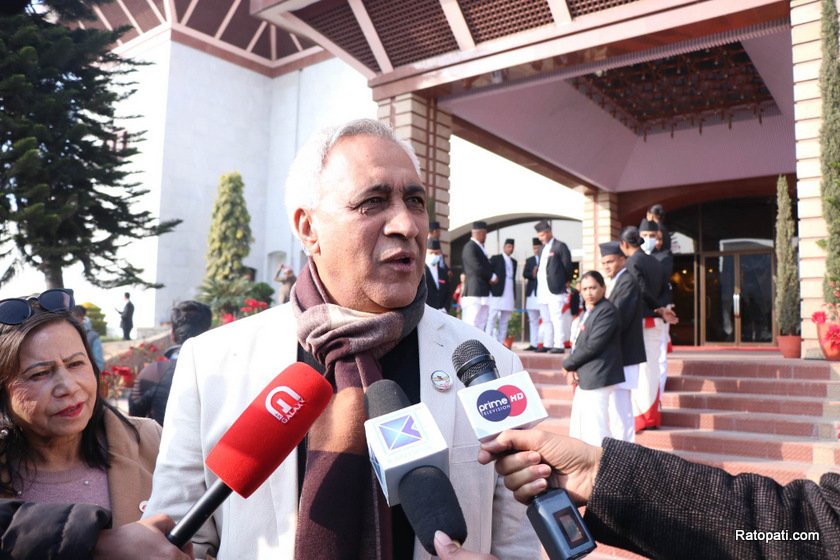
“The real world and the virtual world are different. While there is a wave for the new in social media, it is not visible on the actual ground. Certainly, the current generations have grown up with technology. We are just entering that space. The youth in cities and those living abroad seem to favor the new,” he told Ratopati. “But as of today, the influence of the virtual world has not been seen on the actual ground. It is not possible to say what will happen right now; we need to wait a week or two for that. The vote in our constituency has not been swayed. Compared to other constituencies, we have maintained a healthy competition here from the beginning. This time too, regardless of who wins or loses, we will set a positive example for how an election competition should be.”
Bhandari's competitor, UML candidate Gyawali, asserts that the electoral atmosphere is quite favorable for UML. He mentioned that campaign programs are being held cordially among competitors, so it is not possible to state the current standing of anyone. “The electoral atmosphere is good so far. The competition is proceeding in a clean manner. There is no definitive situation yet,” he said.
_h8O06nZtcy.jpg)
Meanwhile, Nepali Communist Party candidate Sudarshan Baral, contesting the federal House of Representatives election for the third time, claims that the votes diverted from Congress and UML by RSP will benefit his party. He stated, “The atmosphere for our party is getting better this time than before. The presence of RSP is seen to be affecting the votes of Congress and UML. Based on that, we will come in first. Voters are looking at us favorably.”
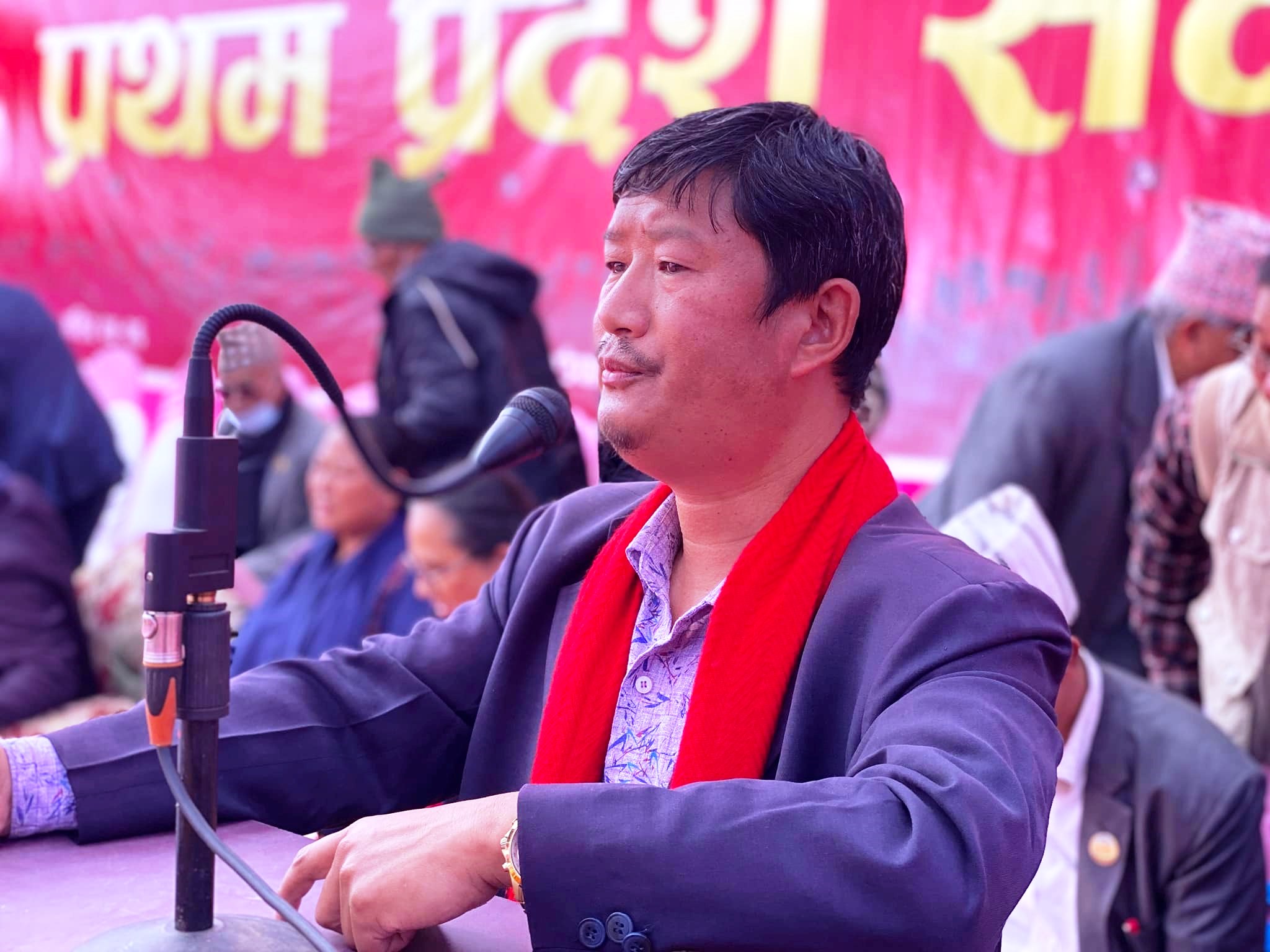
RSP candidate Sagar Dhakal was busy with election programs, so a reaction could not be obtained. However, District Chairman Bhojraj Pandey claims that RSP will 'clean sweep' both constituencies this time.
“Sagar Dhakal is a national icon. In the 2079 election, he contested against Sher Bahadur Deuba from Dadeldhura and gained sympathy by securing 13,000 votes. This time he is contesting from his own district,” Pandey said. “Congress and UML have achieved nothing in the last 34 years. Voters, disappointed by the activities of the old parties, seem inclined towards a change in votes this time. We see a good wave in our favor here; we will win both seats.”

What Do Analysts Say?
However, Madhav Neupane, a professor at Tri-Chandra College, analyzes that the main competition this time will be between Congress and UML. He estimates that the wave for RSP across the country on social media might have some impact. Neupane analyzes that the atmosphere is unfavorable for UML this time. He understands that voters are angry with Gyawali because he was a continuous advocate for KP Oli's faction during the Gen Z rebellion, where Oli led the government.
Conversely, he understands that Congress's atmosphere is gradually building because the party went into the election after a leadership change right before the polls, and Chandra Bhandari has been giving positive feedback towards the new leadership.
“Local leaders have reported that UML leader Pradeep Gyawali is facing some difficulty in election campaigning this time. There is some dissatisfaction among party workers and the general public due to his closeness with KP Oli and some decisions made during the UML government's tenure. There are also discussions that some old UML workers have left the party or become inactive,” he said. “But Chandra Bhandari's momentum appears to be increasing day by day. He seems to benefit from the fact that Gagan Thapa has been put forward as a prime ministerial candidate within the party and the changed slogan of Congress after the special general convention. Congress seems more united this time than before, and Chandra Bhandari's personal image is also having a positive impact.”
Neupane analyzed that although the competition appears triangular (UML, Congress, and RSP) looking at the social media atmosphere, the main clash on the ground reality will be between Congress (Bhandari) and UML (Pradeep Gyawali). He stated that while Sagar Dhakal is widely discussed on social media, he is not that strong on the ground reality. “It has been reported that even in his ward (Ruru area, Johang), which is considered a stronghold of Congress, he is not receiving the expected support. Local estimates suggest it will be difficult for him to secure the large number of votes (20-25 thousand) needed to win the election,” he said.
Neupane states that although Nepali Communist Party candidate Sudarshan Baral is a popular leader with a clean image, it will be challenging for him to win due to his party's relatively smaller vote bank.
“The Maoist Centre's secure vote bank (around 8-9 thousand) is likely to be in his favor, but since the main competition is between Congress and UML, it is challenging for him to gather additional votes to win,” he said.
Neupane concluded that while the competition looks triangular (UML, Congress, and RSP) based on the social media atmosphere, the main confrontation on the ground reality is expected to be between Congress (Bhandari) and UML (Pradeep Gyawali).
Past Scenarios
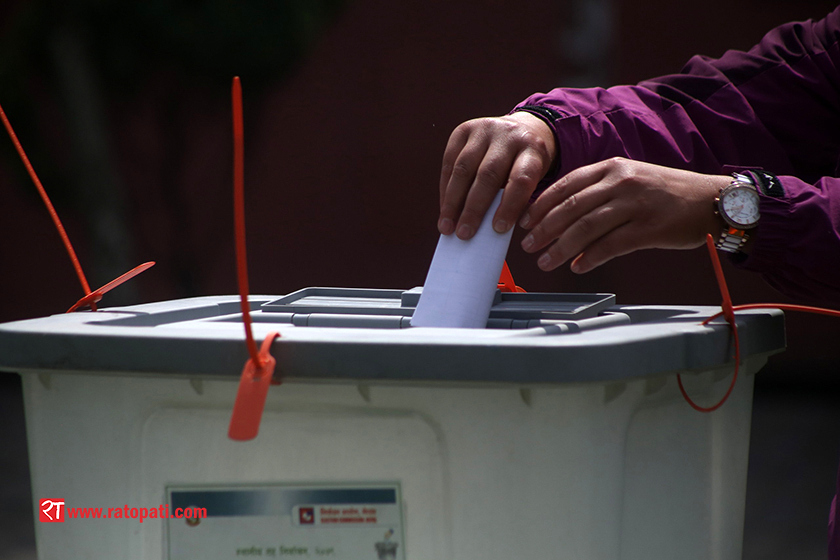
In 2048 BS, when Gulmi had three constituencies, Congress won all of them. In 2051 BS, UML captured all three constituencies. In the 2056 BS election, UML maintained its dominance in all three constituencies. At that time, Fatik Bahadur Thapa won in Constituency No. 1, Pradeep Gyawali in Constituency No. 2, and Gokul Bista in Constituency No. 3.
These three continued their tenure in the 2063 BS Interim Parliament. In the first Constituent Assembly election of 2064 BS, Maoist Centre won in Constituency No. 1 and 3, while Pradeep Gyawali won in Constituency No. 2. In 2070 BS, Congress won in Gulmi Constituency No. 1 and 2. Gokul Bista won in Gulmi-3. Bhandari of Congress won after defeating Gyawali.
In 2074 BS, Gyawali won in Gulmi-1 and Gokul Bista in Gulmi-2. In the 2079 BS election, Bhandari won in Gulmi-1, while UML's Bista won in Gulmi-2.
This specific news has been automatically translated by AI. As a result, there may be some inaccuracies or language errors.

-pm-office_YZG9ToBodL.jpg)