Historical Overview and Current Contenders in Dang-1 Constituency Ahead of By-election

Kathmandu. The Nepali Congress has fielded candidates in six out of the seven House of Representatives elections held in Dang Constituency No. 1 since the 2046 People's Movement. In the 2079 election, the Congress did not field a candidate because the constituency went to the CPN (Unified Socialist) due to an electoral alliance between the Congress, the then CPN (Maoist Centre), and the CPN (Unified Socialist).
In the six elections where the Congress fielded a candidate, they won four times in that constituency. In this area, which has a majority Tharu community, the Congress won in the 2048, 2051, 2056, and 2070 elections. In the two elections they lost, they were the closest competitors.
In the 2048 election, when Congress candidate Hari Prasad Chaudhary won, CPN-UML candidate Ashok Kumar Chaudhary was the closest competitor. Hari Prasad also won in 2051, with Parashu Narayan Chaudhary of the Rastriya Prajatantra Party as the closest rival. The Congress won in the 2056 election even after changing its candidate. When Congress candidate Khadka won, Parashu Narayan Chaudhary, who was the candidate from the Rastriya Prajatantra Party, was the closest rival.
After the then Maoists ended the 10-year armed conflict and entered parliamentary politics, CPN (Maoist Centre) candidate Indrajit Tharu won the first Constituent Assembly election in 2064. The closest rival was Congress candidate Khum Bahadur Khadka. Historian Sudeep Gautam, author of the book 'History of Dang Deukhuri', states that Khadka came second even after registering his candidacy and then withdrawing it.
The Congress made a 'comeback' in the constituency in the Second Constituent Assembly election held in 2070. When Congress candidate Parbati DC Chaudhary won the election, CPN-UML candidate Revatiraman Sharma Ghimire was the closest rival. The Second Constituent Assembly promulgated the constitution in 2072. Subsequently, Dang, which previously had five constituencies, saw its number reduced to three. Then, in the House of Representatives election held in 2074, an alliance was formed between the CPN-UML and the then CPN (Maoist Centre). In that alliance, the contest was between UML leader Metmani Chaudhary and Congress candidate Sushila Chaudhary. When Metmani won, Sushila became the closest rival.
In the 2079 election, an alliance was formed between the Congress, the then Maoist Centre, and the Unified Socialist. That constituency fell to the Unified Socialist. Metmani Chaudhary, the candidate from the alliance, won.
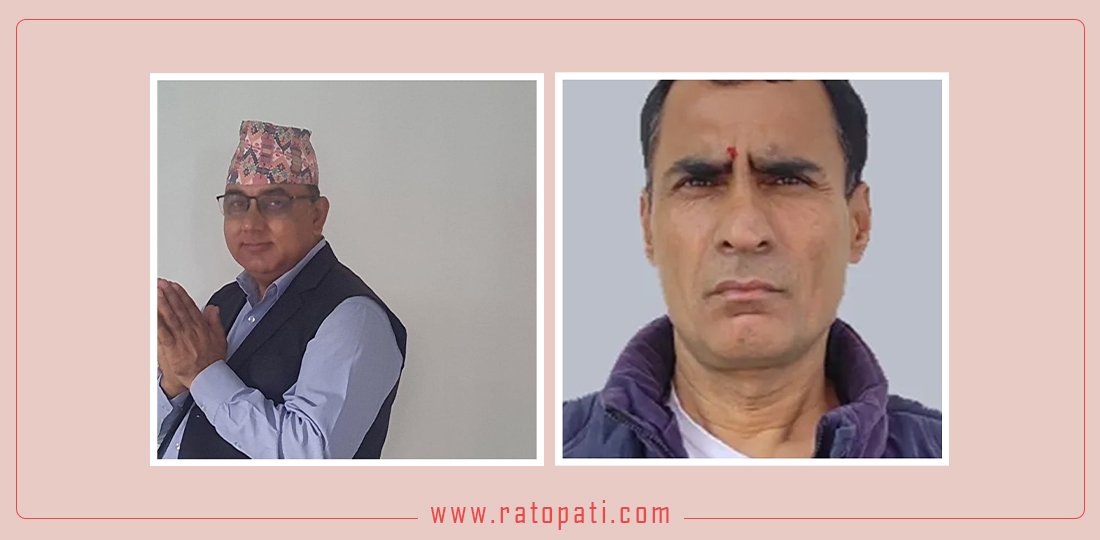
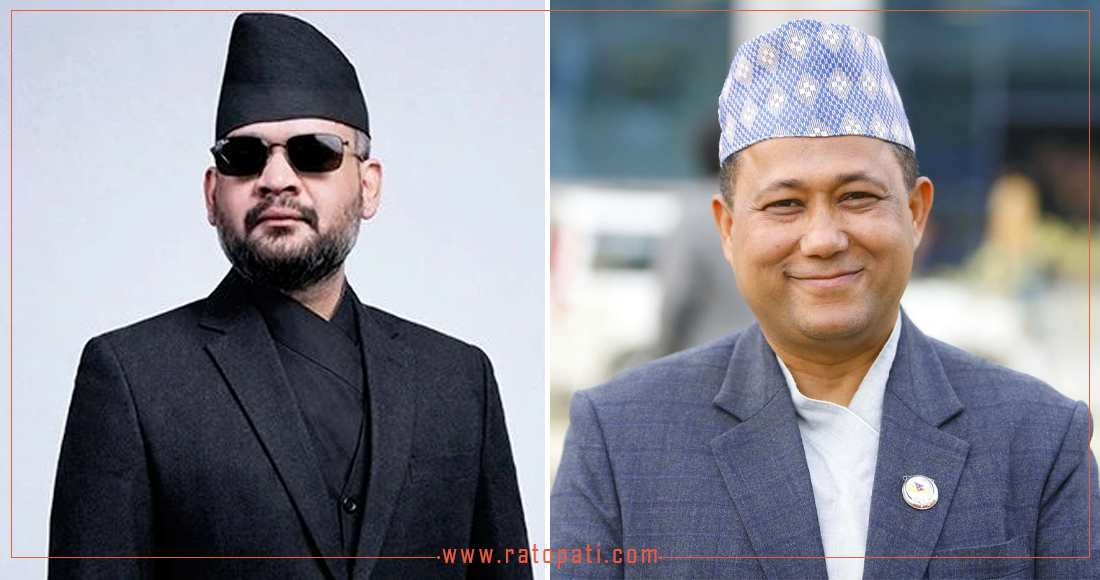
In the House of Representatives election scheduled for Falgun 21, 14 candidates are competing in this constituency. Candidates who have registered include Yogendra Chaudhary, Joint Secretary of the Congress; Revatiraman Sharma from the CPN-UML; Metmani Chaudhary from the CPN; Devraj Pathak from the Rastriya Swatantra Party; Ganesh Prasad Acharya from the Rastriya Janamorcha; Prakash Shahi from the CPN (Maoist) led by Netra Bikram Chand; Binay Bisi from the Rastriya Prajatantra Party; Khum Bahadur Gaha Magar from the Mongol National Organisation; Min Bahadur Thedi Magar from the National Republican Nepal; and Navinkumar Shahi from the Nepal Workers and Peasants Party.
Among the 14 candidates in the competition, 4 are local residents of Gadwa Rural Municipality. This rural municipality falls within this electoral constituency. Congress candidate Yogendra, CPN candidate Metmani, RSP candidate Devraj, and RPP candidate Binay are permanent residents of Gadwa.
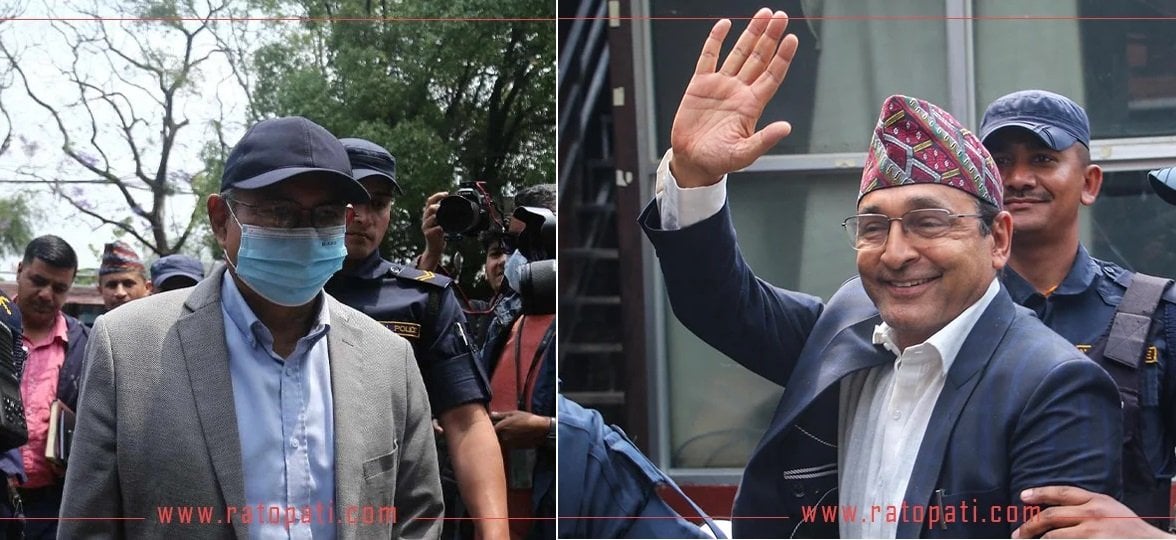
Former Chief Minister of Lumbini Province, Kul Prasad KC, has filed an independent candidacy. Congress candidate Chaudhary was a member of the Constituent Assembly under the proportional representation system from the then Madhesi Jan Adhikar Forum, Democratic led by Vijay Kumar Gachhadar. After joining the Congress, Chaudhary became close to Sher Bahadur Deuba and recently became a Joint Secretary by participating in the special general convention led by the then General Secretary Gagan Thapa. This is his first time contesting as a candidate from the Congress. Yogendra had previously contested from the Federal Democratic National Forum but could not win.
CPN-UML candidate Sharma is a member of the party's Accounts Commission. Sharma was elected as a member of the Lumbini Provincial Assembly in 2074 from Dang Constituency No. 1 (2) with 19,354 votes.
CPN candidate Chaudhary has won from this constituency twice. He was elected from this constituency in the 2079 and 2074 elections. He is also a former Minister of Urban Development.
Rastriya Swatantra Party candidate Pathak was also a candidate from this constituency in the 2079 election. Former Chief Minister KC was affiliated with the CPN. After not getting a ticket from the party, he filed an independent candidacy. KC served as the Chief Minister of Lumbini Province from Shrawan 28, 2078, to Poush 27, 2079.
Among the 14 candidates in the competition, 4 are local residents of Gadwa Rural Municipality. This rural municipality falls within this electoral constituency. Congress candidate Yogendra, CPN candidate Metmani, RSP candidate Devraj, and RPP candidate Binay are permanent residents of Gadwa.
Geographical Status of the Constituency
Dang-1 comprises four rural municipalities and Wards No. 1, 2, 3, and 5 of Ghorahi Sub-Metropolitan City. The entire area of Gadwa Rural Municipality, Rapti Rural Municipality, Rajpur Rural Municipality, and Lmhi Municipality falls under this constituency.
Arithmetic of Local Level, House of Representatives, and Provincial Assembly Elections of 2079
In the local level elections, the Congress won the Mayor and Deputy Mayor positions in Lamhi Municipality, which falls under this constituency. Congress candidate Jograj Chaudhary won the Mayor position with 9,317 votes, while the then CPN (Maoist Centre) candidate Basanta Raj Sharma received 7,285 votes. In the Deputy Mayor race, Congress's Laxmi Yogi won with 8,737 votes, while the then CPN (Maoist Centre)'s Ganga Pandey received 5,848 votes.
In the municipality with 9 wards, the Congress won the ward chairperson positions in all wards except one. Congress won in Wards 1, 2, 3, 4, 6, 7, 8, and 9, while the then CPN (Maoist Centre) won in Ward No. 5.
The Congress also won the Mayor and Deputy Mayor positions in Rajpur Rural Municipality. Congress's Sharad Kumar Budhathoki won with 3,980 votes, and the then CPN (Maoist Centre)'s Chakrabahadur Buda was the closest rival with 3,167 votes. In the Deputy Mayor race, Congress's Dhanpatidevi Yadav won with 3,836 votes, while the then CPN (Maoist Centre)'s Pushpa Yadav received 3,348 votes.
In the rural municipality with 7 wards, the CPN-UML won the chairpersons of Wards 1 and 5, the Congress won Wards 2 and 4, and the Maoist Centre won Wards 3, 6, and 7.
In the 2079 House of Representatives election, Metmani Chaudhary of the then CPN Unified Socialist was elected, securing 26,576 votes. Chaudhary was the joint candidate of the Congress–Maoist–CPN (Unified Socialist). The closest rival, CPN-UML candidate Shanta Chaudhary, received 21,493 votes.
In Gadwa Rural Municipality, the Mayor position was won by the then CPN (Maoist Centre) and the Deputy Mayor position by the Congress. Maoist's Yamanarayan Sharma Pokhrel won the Mayor position with 6,909 votes, while Congress's Sarvajeet DC received 6,167 votes. In the Deputy Mayor race, Congress's Sharadakumari Chaudhary won with 5,881 votes, and CPN-UML's Sitakumari Chaudhary received 4,830 votes. In this rural municipality with 8 wards, the CPN-UML won the chairpersons of Wards 1 and 8, the Maoist Centre won Wards 2, 3, 4, and 6, and the Congress won Wards 5 and 7.
In Rapti Rural Municipality, the Maoist Centre won the Mayor position and the CPN-UML won the Deputy Mayor position. Maoist's Prakash Bista won the Mayor position with 6,898 votes, while CPN-UML's Jagat Prasad Pokharel received 5,700 votes. In the Deputy Mayor race, CPN-UML's Kamlapati Chaudhary won with 6,674 votes, while Congress's Hari Prasad Bhusal received 5,496 votes.
In the rural municipality with 9 wards, the Congress won only Ward No. 3. The then Maoist Centre won Wards 2, 6, 8, and 9. The Maoist Centre won a total of 12 wards, while the CPN-UML won the chairpersons of Wards 1, 5, and 7. In the wards of the Sub-Metropolitan City falling in this constituency, the chairpersons of Wards No. 1, 3, 4, and 5 were all won by the CPN-UML.
Direct Votes in the 2079 House of Representatives Election
In the 2079 House of Representatives election, Metmani Chaudhary of the then CPN Unified Socialist was elected, securing 26,576 votes. Chaudhary was the joint candidate of the Congress–Maoist–CPN (Unified Socialist). The closest rival, CPN-UML candidate Shanta Chaudhary, received 21,493 votes.
Rastriya Swatantra Party candidate Devraj Pathak received 13,798 votes, Nagarik Unmukti Party's Surendra Chaudhary received 8,019, Rastriya Prajatantra Party's Lila Budhathoki received 1,439, and Hamro Nepal Party's Ganga Chaudhary Satgaonwale received 1,093 votes.
In the Provincial Assembly, Indrajit Tharu of the Maoist Centre and Nepali Congress's Anurag Khadka were elected as candidates from Ward 1 (A) and 1 (B) of Dang, respectively, from the alliance parties. Maoist candidate Tharu won with 13,419 votes, while the closest rival, CPN-UML candidate Gangaram Bhattarai, had 11,780 votes.
Congress's Khadka won by securing 16,222 votes, while CPN-UML candidate Kul Bahadur KC received 13,170 votes.
Proportional Representation Votes in the 2079 Election Now
CPN-UML: 17,969
Congress: 15,067
Then CPN (Maoist Centre) (Now CPN): 11,452
Rastriya Swatantra Party: 11,410
Nagarik Unmukti Party: 7,179
Then Unified Socialist: 3,218
Rastriya Prajatantra Party: 1,798
Rastriya Janamorcha: 1,614
Voter Count
According to the Election Commission's data, there were 133,734 voters in 2079. The Commission's data also mentions that 73,147 votes were cast. The data published by the Commission states that 5,268 more voters have been added compared to the 2079 election.
What Analysts Say?
Political analyst Sudeep Gautam, author of the book 'Dang Deukhuri Golden History', states that the competition in this constituency, which has a Tharu community majority, will be among the candidates from the Congress, CPN-UML, CPN, and RSP. He suggests that since a rebel candidacy has been filed against CPN candidate Metmani Chaudhary, the competition might be more intense among the other three candidates.
'Looking at the votes received and the organization in the elections since 2048, the competition appears to be between the Congress and the CPN-UML. In this constituency with a Tharu majority, the votes for the CPN and the Rastriya Swatantra Party are also significant,' Gautam told Ratopati. 'In terms of organization, Congress and CPN-UML are competitors. The CPN candidate has won the previous two elections. The Rastriya Swatantra Party has also received a good number of votes in the election. This suggests a competition among four parties. Since there is a rebel from the CPN, the competition among three parties might be fierce.'
Former Chief Minister KC filed a rebel candidacy after not receiving a ticket from the CPN. Gautam suggests that KC's independent candidacy might create difficulties for Metmani by splitting votes.
This specific news has been automatically translated by AI. As a result, there may be some inaccuracies or language errors.