Kathmandu-4: Battleground Heats Up as Congress Heir Faces Tough Test Amidst Shifting Political Dynamics


Kathmandu. As the House of Representatives election scheduled for February 21 approaches, election-focused activities have increased across the country. Among these, Kathmandu-4, a constituency that is always in the news, stands out.
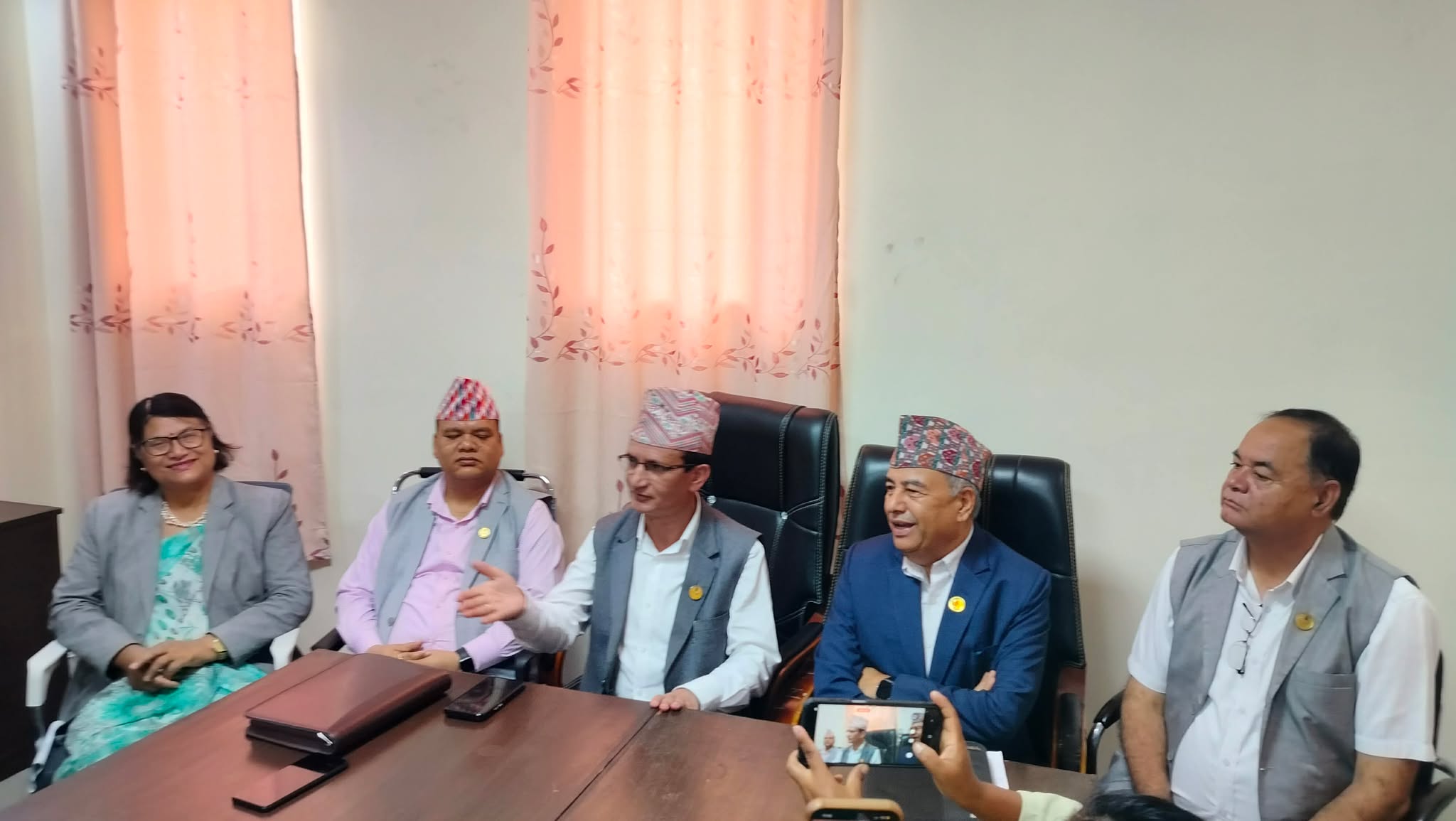
This constituency is considered an area with a dense population of the intellectual class, middle-class employees, and businesspeople. Gagan Thapa, an influential leader of the Nepali Congress, had established this area as his strong base and achieved national stature here. However, this time he has left this constituency to choose Lalitpur-4. Gagan has made the election here even more interesting by putting forward young leader Sachin Timalsina as his successor in Kathmandu-4.
- Heavy Challenge for Gagan's Successor
The Nepali Congress faces a major challenge in retaining its 'fortress' in Kathmandu-4 this time. When Gagan Thapa won the 2079 election by securing 21,302 votes, he had the strong support of the then Left-Democratic Alliance. The situation has changed now. Sachin Timalsina, considered 'close' to Gagan, has been entrusted with the responsibility of upholding the Congress legacy in this constituency.
The biggest challenge for Sachin is the comparison of his personality with that of Gagan Thapa. The future of the Congress will be determined by how much voters accept Sachin as an alternative to Gagan. It is difficult to say right now how much Sachin can convert the votes Gagan received due to his work as Health Minister and his national image in his favor. Although the Congress organization and the structure built by Gagan might make things somewhat easier for Sachin, the encirclement by the opposition is very tight.
The absence of Gagan Thapa's direct presence in Kathmandu-4 has made the Congress defensive, while intense competition is expected amidst Rajan Bhattarai's organizational strength and Pukar Bom's 'new wave'.
- Rajan Bhattarai's Effort for a Comeback
Rajan Bhattarai, Secretary of the CPN-UML, is known as an intellectual leader in this constituency. For Bhattarai, who came second in the 2079 election by securing 13,855 votes, this is a contest. Bhattarai, who was defeated in previous elections due to Gagan Thapa's 'mass appeal', sees Gagan's absence this time as the biggest opportunity.
The UML has a very tight and disciplined organizational network in this area. Learning lessons from past defeats, Bhattarai has intensified door-to-door campaigning this time. His main claim is that although Gagan Thapa spoke big things at the center, he did not pay attention to local development. The UML's 'solid' votes and the division of opposition votes could be the main basis for Bhattarai's victory, but the fear of how many votes the newly emerging power, 'RSP', will cut remains.
- Pukar Bom's Entry Ensures a Three-Way Showdown
The Rastriya Swatantra Party (RSP), which became the third force by securing 9,412 votes under the proportional representation system in the 2079 election without contesting directly, has presented itself very aggressively this time. RSP has nominated Pukar Bom from this constituency, who is a young activist active in socio-political awareness since the Bibeksheel campaign.
Pukar Bom's personality has particularly attracted young voters and conscious citizens fed up with traditional parties. Considering the nearly 10,000 proportional votes RSP received in the last election and the current public sentiment, Pukar Bom appears as a main competitor. The issues he raises regarding anti-corruption and good governance align with the psychology of the voters in this area.
If dissatisfied votes from both Congress and UML polarize in favor of Pukar Bom, it cannot be ruled out that RSP might win in Kathmandu-4 this time.
- What Does the 2079 Result Show?
Looking at the direct election results of the 2079 House of Representatives election, Gagan Kumar Thapa (Nepali Congress) was elected with 21,302 votes among the top 5 candidates. Rajan Bhattarai (CPN-UML) in second place received 13,855 votes, while Dr. Thakur Mohan Shrestha (RPP) in third place received 4,050 votes.
Similarly, Arjun Kumar Prasai (Independent) in fourth place received 2,308 votes, and Archan Shamsher Rana (Hamro Nepali Party) in fifth place received 1,214 votes.
In that election, the difference between Gagan Thapa and Rajan Bhattarai was 7,447 votes. However, the votes of the CPN (Maoist Centre) and CPN (Unified Socialist) were also added to the Congress vote in this margin. Since those parties are fielding separate candidates now, the Congress lead is not secure. Furthermore, the approximately 4,000 votes secured by independents and smaller parties this time will play a decisive role in where they go.
The proportional representation vote count clearly shows the real organizational base of the parties. In 2079, among the proportional votes of the 5 main parties in this constituency, the Nepali Congress had the highest with 11,808 votes, while the CPN-UML had the second highest with 10,560 votes.
Similarly, the Rastriya Swatantra Party had 9,412 in third place, the Rastriya Prajatantra Party had 6,881, the CPN (Unified Socialist) had 1,713 votes, and the CPN (Maoist Centre) had 1,564 votes.
The Congress, which received 21,000 votes directly, appears to have only 11,000 actual votes in this area, while the UML has 10,500. This means there is only a difference of 1,248 votes between Congress and UML. The RSP's proportional vote here is not much less than that of UML and Congress. This indicates that the competition in Kathmandu-4 is no longer 'bipartisan'. It has completely turned into a 'tripartite' showdown.
- How much is the influence of the CPN candidate?
In this election, parties including the Maoist Centre and Unified Socialist have united to form the 'Nepal Communist Party' (CPN). CPN has nominated Indra Kumar Bhusal as the candidate. In the 2079 election, these two parties supported the Congress. With Bhusal in the field now, the Congress's direct vote is expected to decline somewhat compared to the previous election.
Whether Bhusal can keep the communist voters united will also affect the victory or defeat of Rajan Bhattarai.
Surendra Raj Bhandari of the Rastriya Prajatantra Party (RPP) also has a good hold in this area. The 6,881 proportional votes received by RPP in 2079 show a large share of nationalist votes in this constituency. Based on the arithmetic of the previous election, the total votes of independent candidates could reach around 5,000, which could be the main deciding factor for victory and defeat.
- Local Anger - 'They only came to ask for votes, not to work'
Voters in Kathmandu-4 stated that the main issue in this area is the poor state of development and infrastructure. According to local Kumar Devkota, the problem of rivers entering settlements, lack of drainage, and muddy roads are common problems in this area.
Residents, especially in the Budhanilkantha and Kopan areas, have been suffering from floods and mud for years. According to local Sarita Khatri, the public is extremely angry because the roads have been in a dilapidated state for two years and leaders have only offered assurances.
Many allege that although Gagan Thapa made a big impact at the center, he failed to solve this basic problem in his constituency. This public anger might benefit 'new' candidates carrying commitments to 'work' over 'established' leaders this time.
Local Nishan Dahal is also very frustrated with the working style of the leaders. The narrative that 'leaders only come during elections and never look back otherwise' is established in the neighborhoods here. While some good work done by Gagan Thapa in health is praised, overall, there is a disillusionment with 'old parties'.
Local Binda Shrestha said, 'Whoever comes now, we need someone who guarantees development and employment.' She mentioned that there is no opportunity for the youth to do anything in the country, and politics appears only as a game for power.
The election in Kathmandu Constituency No. 4 looks very exciting this time. The absence of Gagan Thapa's direct presence has made Congress defensive, while intense competition is expected amidst Rajan Bhattarai's organizational strength and Pukar Bom's 'new wave'. Voters here seem to be scrutinizing local development issues, youth dissatisfaction, and the changed political equation this time.
This specific news has been automatically translated by AI. As a result, there may be some inaccuracies or language errors.