Candidates in Kaski Focus on Development vs. Legislation Amid Election Campaigning
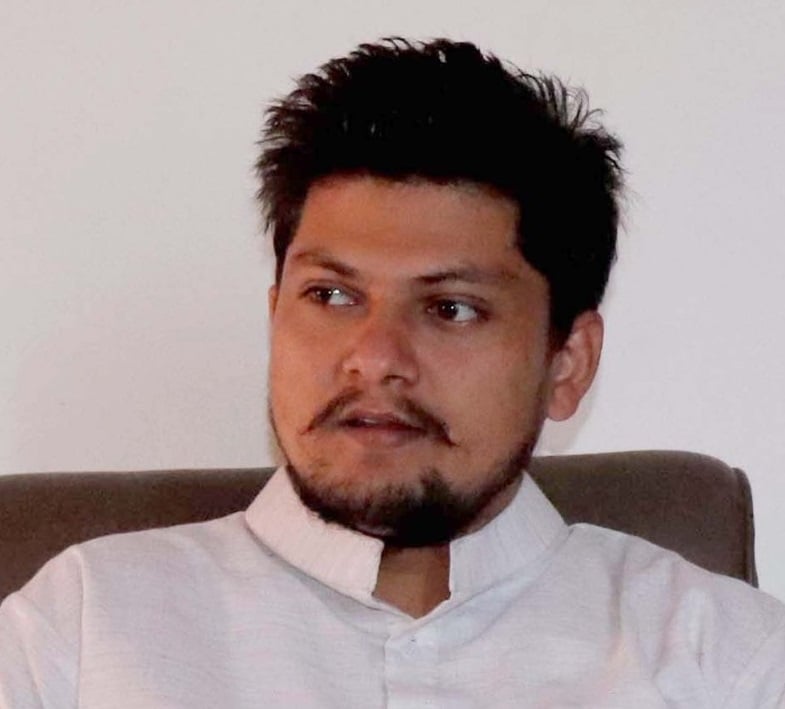

Pokhara. Early on Monday morning, Reshmi Acharya, the UML candidate for Kaski-2 constituency, posted a video on social media with the caption, "It's not about talking, it's about showing through work. The nation must be saved. Such suggestions are continuously coming in."
She informed that the collection of suggestions for drafting her election manifesto is in its final stages. In the video she posted, she was seen taking notes of the public's demands while holding a notebook.
Her party colleague, Bidhya Bhattarai, who was elected from the same constituency and became a minister, argues that the role of a parliamentarian should be more focused on lawmaking than on development construction. However, she concedes that Nepal's social and economic context desires parliamentarians to act as development agents.
"The primary job of a parliamentarian is to raise citizens' issues in parliament, discuss bills, and hold the government accountable, but the scene changes when you go to the villages," Bhattarai said. "Our political culture has become such that one receives respect in the village for bringing resources and budget, but not for creating policies, rules, and laws to organize life."
Bhattarai states that this problem arises because political parties fail to properly train their cadres and voters about the role of a parliamentarian. "A parliamentarian promises to build a road, but the contract for building the road is held by the government," she said. "When the contractor fails to work, the parliamentarian is blamed, but the parliamentarian does not have the authority to take action against the contractor. However, they do have the authority to create the laws for taking action. We have failed to explain this."
Khadkaraj Poudel (Ganesh), the RSP candidate in Kaski-1, has made creating an environment where everyone can live in the country his main agenda. "Not blame, but policy. Not fear, but trust, and not power, but service," is his core agenda.
Poudel claims that the Gen Z movement of Bhadra 23 and 24 was due to the older generation of leaders, and the RSP has emerged as an alternative to those leaders. Although he discusses development problems when meeting voters, on social media, he is posting statuses revolving around the Gen Z movement.
RSP leader Shiva Nepali, who became a proportional representation MP from the same constituency, suggests that current candidates should completely abandon development and make lawmaking their main agenda. "Even now, candidates are going around saying, 'I will do this for you, I will build that road.' That is not actually the job of a parliamentarian," he said. "But our practice is that budget goes to the constituency of the person who has connections with the ministry and bureaucracy. If we remain silent saying we will only make laws, the constituency suffers."
He mentioned that in the initial phase, they struggled to secure budgets and that relationships with the bureaucracy determined many outcomes. "I had to run around to bring the budget. When even a 3 million rupee project was secured during my term, I felt as happy as if I had won a lottery," he said. "But candidates now must have the courage to focus on policy formulation instead of becoming development agents. If I were running, I would ask for votes saying the same thing."
Manoj Gurung, the Congress candidate for Kaski-3, has made his previous role in social service and development construction the main agenda for seeking votes. He states that he has initiated development works through various agencies even when not holding any position. "I have stood with the people during all the crises that the country has faced. I have helped them as much as possible," Gurung stated briefly. "I managed development works even without being an MP; now that I will be an MP, it will be even easier to do so."
He emphasizes focusing on both lawmaking and development construction.
Durga Bikash, the Constituent Assembly member from the same constituency, believes that development should also be a high priority for parliamentarians. Citing her tenure as an example, she shared her experience of being able to secure 15-20 projects in a single year if one can establish connections. "It's not that parliamentarians do no development work. They look at clauses in parliament. They also lobby ministries to secure projects," she said. "During my work in Kaski Constituency No. 3, I initiated work ranging from opening road tracks to building bridges."
She suggested that current candidates should focus on agriculture and production-oriented budgets rather than making overly grand promises. "The public should not ask for things bigger than their needs, and parliamentarians should not make promises they cannot keep," she said.
The election scheduled for the upcoming Falgun 21 has increased activity in all three constituencies of Kaski. Candidates are reaching the doorsteps of the public from early morning till evening to seek votes. Some have brought their manifestos with them, while others are still in the process of writing them. In Nepal, not much work is done according to the manifesto, yet they do not stop making promises before the citizens.
Not just manifestos, candidates also have notebooks and pens in their hands. If the public demands something, they note it down. In the process of seeking votes, candidates have made water taps, electricity, roads, bridges, and drain construction their main agenda.
Constitutionally, the main role of a parliamentarian is in the legislature, the forum for lawmaking, but in practice, candidates are presenting themselves as development agents. Former Minister and Congress leader Yagya Bahadur Thapa argues that as long as the electoral system does not change, parliamentarians cannot be separated from development. He states that although the main job of a parliamentarian is policy and lawmaking, in practical politics, no parliamentarian can survive by ignoring development construction.
"It is one thing to say in intellectual discussions that parliamentarians should only make laws. But the awareness level of voters demands roads, water, and bridges through the parliamentarian," Thapa said. "A parliamentarian has no peace just by saying, 'I am in a place for policy making.' This is their helplessness and compulsion."
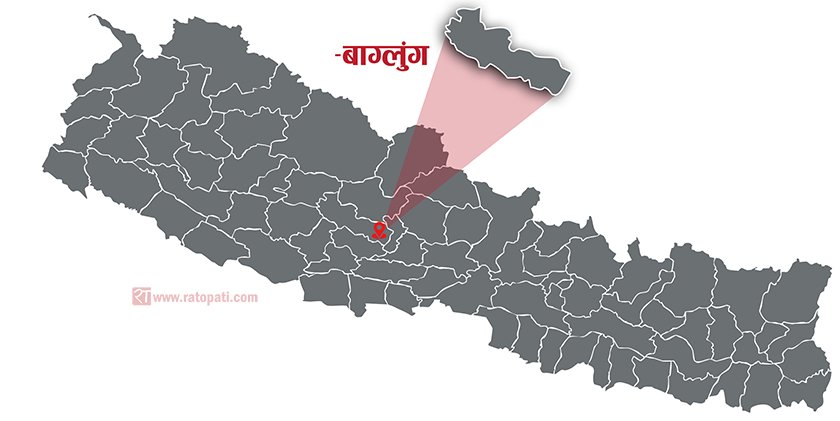
According to Thapa, it is natural for the public to expect development because parliamentarians have access to ministries and their words carry weight. "In the context of Nepal, a parliamentarian cannot go to their constituency while neglecting development construction; this is the reality," he said. Kaski is also the capital district of Gandaki Province.
This specific news has been automatically translated by AI. As a result, there may be some inaccuracies or language errors.
_yqgfuxCCb8.jpg)


_3SBwO86n8n.jpg)