Federation Presents Key Demands to Political Parties, Citing Economic Distress


Kathmandu. The Federation of Nepalese Chambers of Commerce and Industry (FNCCI) has presented its suggestions to political parties through a special manifesto. The Federation made this demand while addressing a press conference in Kathmandu on Saturday.
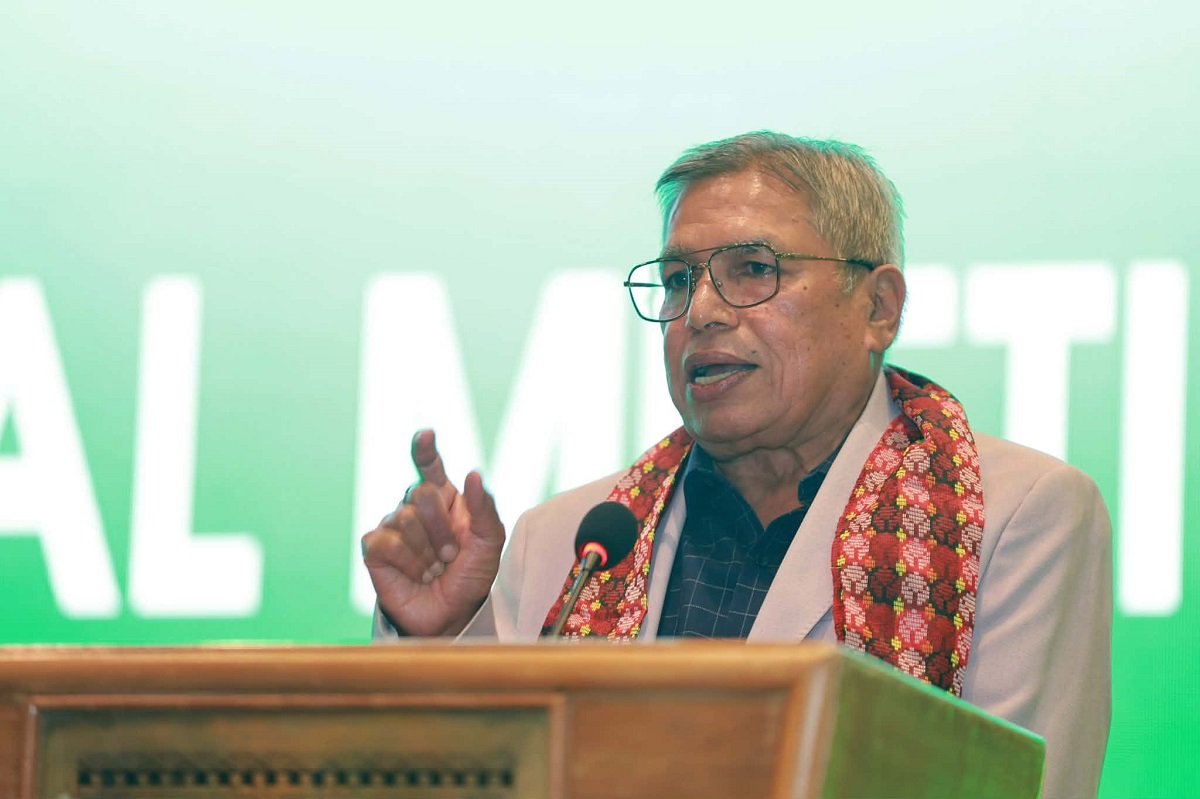
Speaking at the press conference, FNCCI President Chandra Prasad Dhakal stated that the private sector, which contributes 81 percent to the economy and 86 percent to employment, is being neglected, and therefore, the private sector's proposals must be incorporated.
He mentioned that the private sector's morale has reached its weakest point in history due to the country's unstable politics and frequent protests, and demanded immediate reforms, including a 'Private Sector Protection and Promotion Plan' along with various legal and policy reforms.
He also revealed statistics showing that the private sector incurred losses of approximately NPR 80 billion and suffered physical damage amounting to NPR 38 billion due to recent protests.
Declare Security and Industry 'Peace Zones'
The private sector has demanded that industries and business establishments be declared 'Peace Zones'. They are demanding a legal provision that prohibits any form of violent activity or strikes within industries. Furthermore, it has been proposed to establish an 'Industrial and Commercial Security Directorate' under the Armed Police Force for the security of industrialists, along with corresponding units in the districts.
Delay in Investment Promotion Decade and LDC Graduation
The Federation suggests declaring an 'Investment Promotion Decade' to attract domestic and foreign investment and guarantee policy stability. Additionally, considering Nepal's preparation for graduation from Least Developed Country (LDC) status in 2026, and taking into account the impact of the current economic recession and protests, a request has been made to postpone this graduation period by three years.
Abolition of Imprisonment for Economic Offenses
The private sector strongly demanded a system where economic offenses are penalized only with financial fines, rather than imprisonment equivalent to criminal charges. Suggestions were also given to immediately enact a law regarding the recovery of credit sales and to implement an integrated revenue code.
Smart Government Services and Abolition of Renewals
A demand was made to add a business icon to the Citizen App and ensure that all processes, from registration to closure, are managed through the same app within one year. Furthermore, it has been proposed to abolish the cumbersome annual renewal requirement for businesses that regularly pay taxes, effective from the next fiscal year.
Tax System Reforms and Exemptions
The Federation suggested reducing the high rate of personal income tax (39 percent) and lowering the tax rate on manufacturing industries by 5 percentage points over 5 years. The manifesto also included demands to increase the tax exemption limits for the education fees of two children and for home loan repayments.
Startups and Youth Entrepreneurship
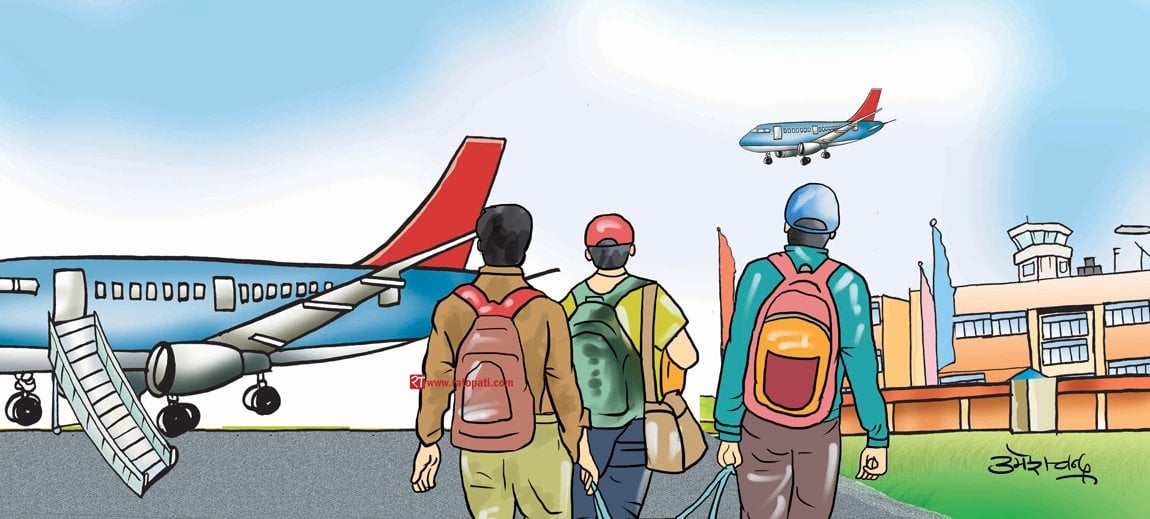
The Federation also proposed operating a '100 Startups, 100 Investors' program to curb youth migration. They demanded that the current tax exemption facility provided to startups be available for 10 years, followed by a 50 percent exemption for the subsequent 5 years. Additionally, a provision was requested to make loans up to NPR 10 million available based on project collateral.
Furthermore, the Federation demanded that the tax exemption period for hydropower projects be extended until 2092, that the private sector be immediately allowed to engage in electricity trading, that hotels, resorts, and theme parks built in hill stations receive a 50 percent income tax exemption for the first 5 years, that the construction of the Nijgadh International Airport be given high priority, and that the Gautam Buddha and Pokhara airports be operated with the participation of the private sector.
The Federation concluded that the 'Three-Pillar Economy' and the socialist-oriented system have negatively affected foreign investment, and therefore, the country should now move towards an 'Innovation-based Inclusive Liberal Economy through Public-Private Partnership'.
This specific news has been automatically translated by AI. As a result, there may be some inaccuracies or language errors.