Analyzing Potential Outcomes of a US Military Strike on Iran


The United States appears ready to attack Iran within days. While potential targets can largely be guessed, the outcome remains uncertain.
Therefore, if no last-minute deal is reached with Tehran and President Donald Trump orders a military strike, what consequences could arise?
1. Targeted and Precise Attack, Minimal Casualties, and Transition to Democracy
The US Air Force and Navy would carry out limited and precise strikes targeting the military bases of Iran's 'Islamic Revolutionary Guard Corps' (IRGC) and its paramilitary wing, the 'Basij', as well as ballistic missile launch and storage sites, and Iran's nuclear program.
The already weakened regime would collapse, ultimately leading to the establishment of a real democracy, from which Iran could reconnect with the global community.
This is an extremely optimistic scenario. Western military interventions in Iraq and Libya failed to bring about a smooth transition to democracy. Although brutal dictatorships ended there, they led to years of chaos and bloodshed.
The situation in Syria, where President Bashar al-Assad was overthrown by its own revolution in 2024 without Western military support, looks better so far.
2. Regime Survival but Softening of Policies
This can broadly be called the 'Venezuela Model,' where the regime remains in power despite strong US action, but its policies soften.
In Iran's context, this means the Islamic Republic stays in power (which will not satisfy many Iranians), but it will be forced to stop supporting violent militias in the Middle East, limit its domestic nuclear and ballistic missile programs, and reduce repression against protests.
Again, this possibility is low.
The leadership of the Islamic Republic has resisted change for 47 years. It seems unlikely that it would change its course now.
3. Collapse of the Regime and Rise of Military Rule
Many consider this the most likely outcome.
Although the regime is clearly unpopular with the masses and years of protests have weakened it, there is a vast and widespread security apparatus with vested interests in maintaining the status quo.
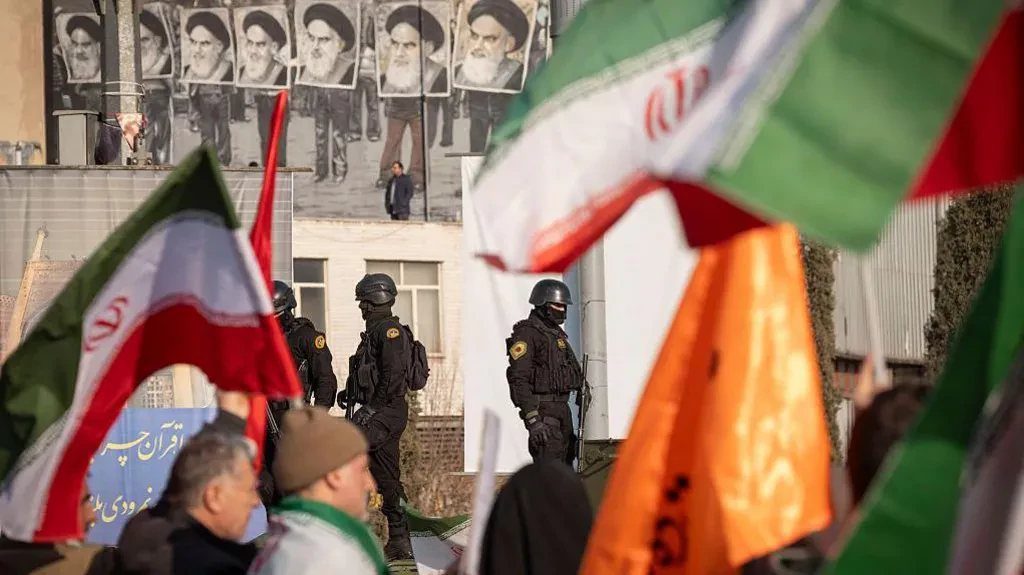
The main reason protests have so far failed to topple the regime is the lack of a major defection from the ruling side, while those in power are ready to use any force and cruelty to stay in power.
In the uncertain situation following a US attack, there is a possibility of a strong military government emerging in Iran, primarily composed of IRGC officials.
4. Retaliatory Attack by Iran on US Forces and Neighbors
Iran has vowed revenge for a US attack and stated, 'Our finger is on the trigger.'
It is clear that Iran cannot withstand the power of the US Navy and Air Force, but it can attack using its arsenal of ballistic missiles and drones hidden in caves, underground tunnels, or remote mountains.
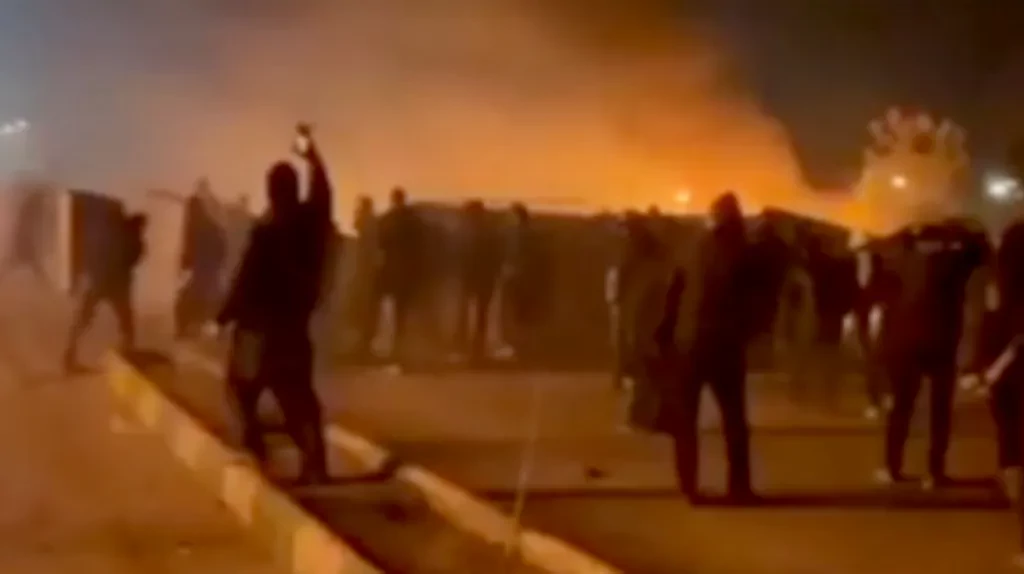
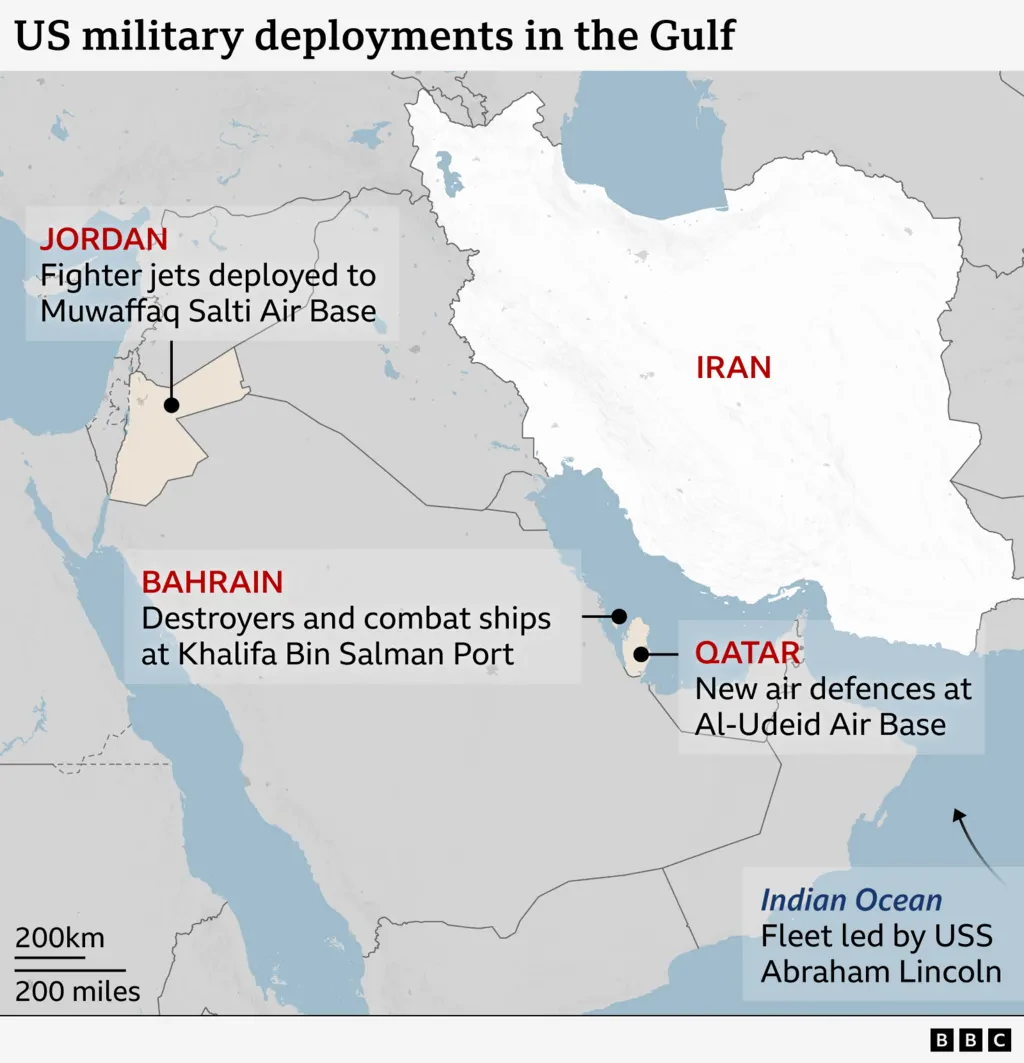
In the Arab region of the Gulf, there are US bases and facilities, especially in Bahrain and Qatar. But Iran could target the critical infrastructure of any nation it deems an ally in the US attack, such as Jordan.
The devastating missile and drone attack on Saudi Aramco's petrochemical plants in 2019 (for which an Iran-backed militia claimed responsibility) showed how vulnerable the Saudis are to Iranian missiles.
All of America's Arab neighboring allies are naturally afraid that they might be affected by US military action.
5. Iranian Retaliation by Mining the Gulf
This has been a potential threat to global shipping and oil supply since the Iran-Iraq War of 1980-88. At that time, Iran mined the waterways, and the British Royal Navy helped remove them.
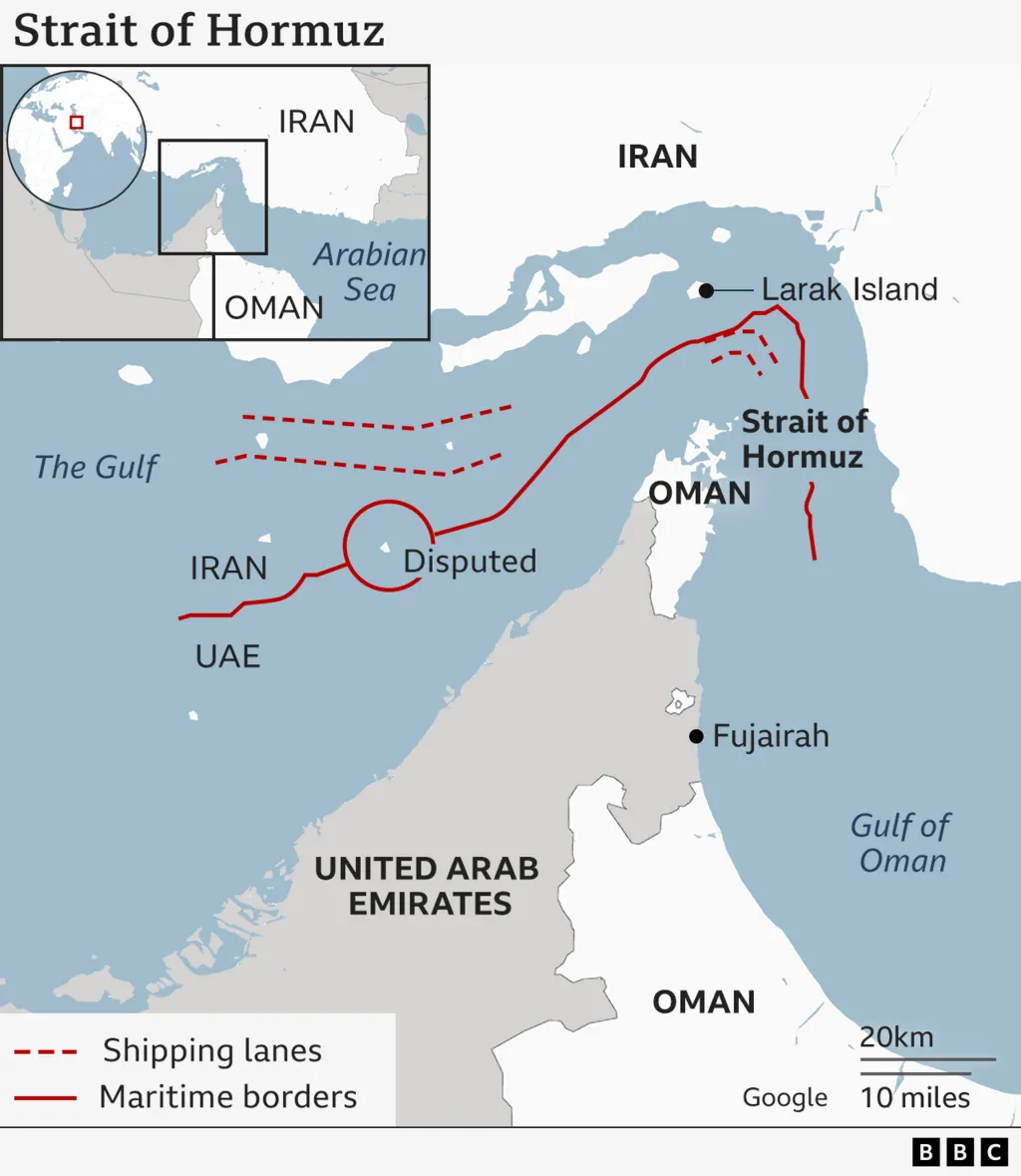
The narrow 'Strait of Hormuz' between Iran and Oman is a critical chokepoint. About 20% of the world's Liquefied Natural Gas (LNG) and 20-25% of oil and petroleum products pass through this strait every year.
Iran has practiced rapidly laying mines in the sea. If it does so, it will certainly affect world trade and oil prices.
6. Retaliation by Sinking a US Warship
A US Navy Captain on a warship deployed in the Gulf once told me that he is most concerned about Iran's 'swarm attack.'
In this scenario, Iran sends so many explosive drones and high-speed torpedo boats at a single or multiple targets simultaneously that the US Navy's strong defense system might not be able to destroy them all in time.
The traditional Iranian Navy in the Gulf has long been superseded by the IRGC Navy, some of whose commanders were even trained at Dartmouth during the Shah's era.
Iranian naval teams have focused their training on unconventional or 'asymmetric' warfare styles to overcome or evade the technological advantages of their main enemy, the US Fifth Fleet.
The sinking of a US warship and the capture of surviving crew members would be a major humiliation for the US.
Although this scenario is considered unlikely, the 2000 suicide attack by Al-Qaeda in the Yemeni port of Aden destroyed the multi-billion dollar destroyer 'USS Cole,' killing 17 US Navy personnel.
Prior to that, in 1987, an Iraqi jet pilot mistakenly fired two Exocet missiles at the US warship 'USS Stark,' killing 37 sailors.
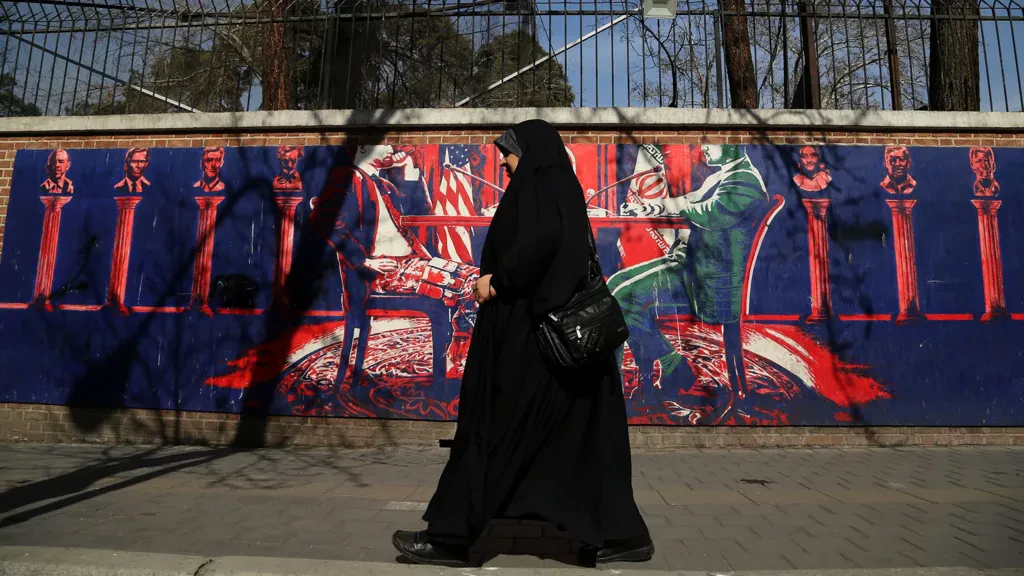
7. Regime Collapse and Chaos
This is a very real threat and is the main concern for neighbors like Qatar and Saudi Arabia.
Along with the possibility of a civil war like those experienced by Syria, Yemen, and Libya, there is also the risk that ethnic tensions could turn into armed conflict as Kurds, Baluch, and other minorities seek security in a power vacuum amidst chaos and uncertainty.
Most countries in the Middle East, especially Israel, wish to see the end of the Islamic Republic. Israel has already inflicted heavy damage on Iran's proxies across the region and perceives an existential threat from Iran's suspected nuclear program.
However, no one wants to see the Middle East's most populous nation (about 93 million people) descend into chaos, leading to a humanitarian and refugee crisis.
The biggest danger now is that President Trump, having amassed such a large force near Iran's border, might decide to attack out of fear of being seen as backing down. And the end of a war started this way will not be clear, and its consequences could be unpredictable and harmful.
This specific news has been automatically translated by AI. As a result, there may be some inaccuracies or language errors.