Nepal's Finance Ministry Prepares Mid-Year Budget Review Amidst Low Spending and Potential Cuts


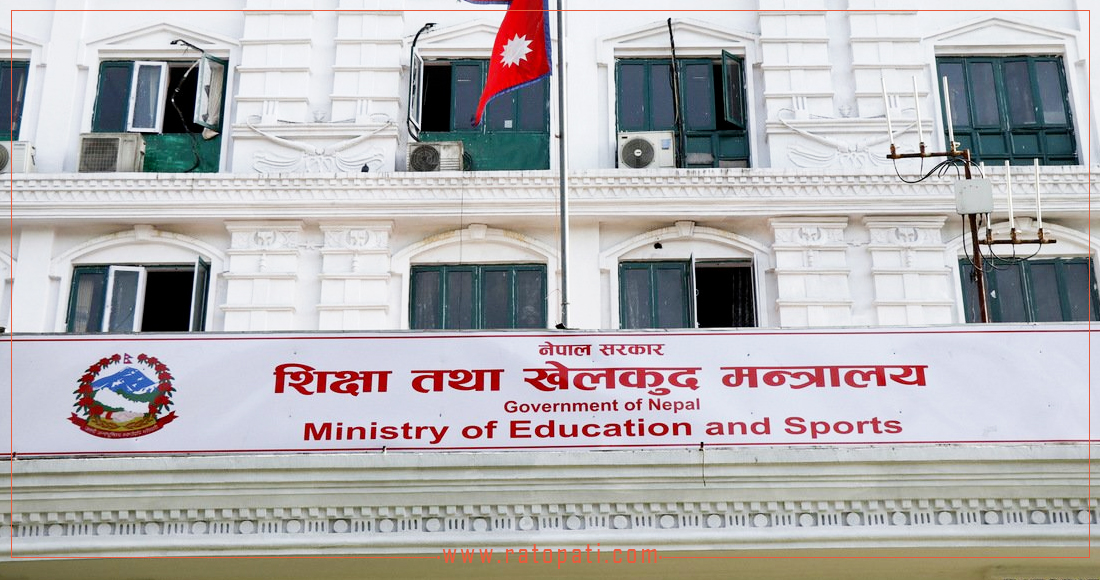
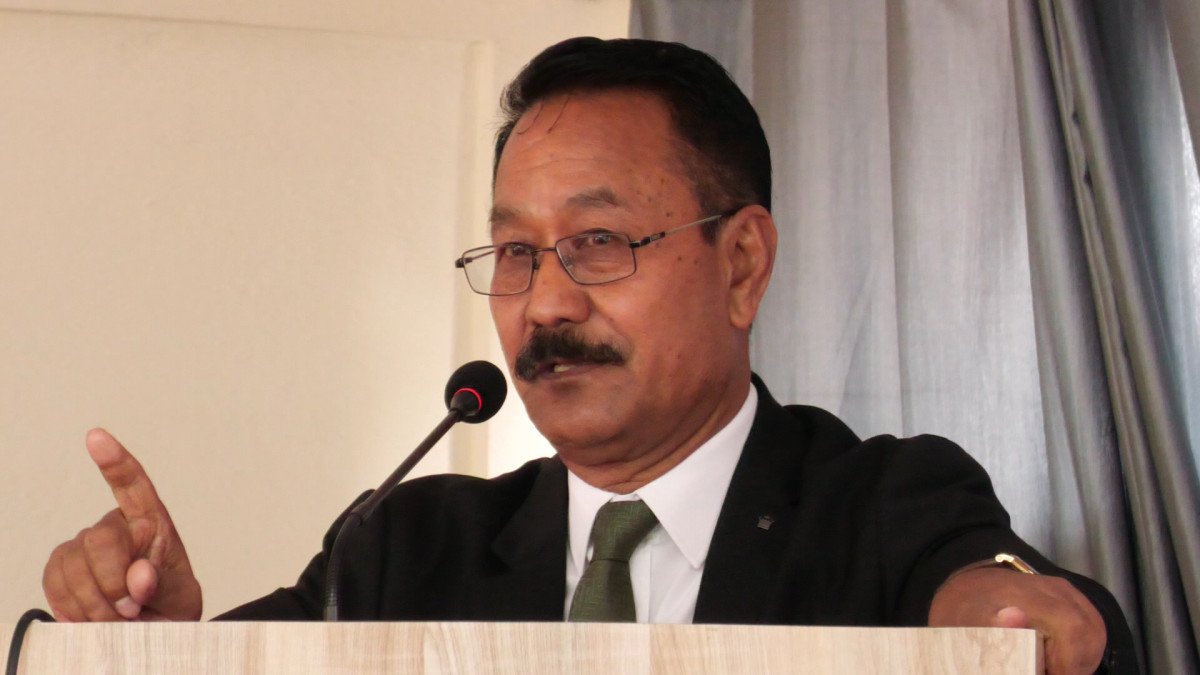
Kathmandu. The Ministry of Finance is preparing to publish the mid-year review of the current fiscal year's budget by Magh 25. The ministry began the mid-year budget review process in the second week of Poush. The ministry is working under the coordination of Suman Dahal, Chief of the Budget and Program Division.
Ministry Spokesperson Tankaprasad Pandey stated that the ministry is analyzing the mid-year budget review and the initiatives taken to resolve issues encountered during budget implementation. According to him, the committee is rapidly preparing the mid-year budget review.
Ministry Spokesperson Tankaprasad Pandey informed that the budget review work is progressing rapidly and is targeted to be completed between Magh 20 and 25. Spokesperson Pandey said, 'We plan to finish the review between the 20th and 25th. After the committee prepares the report by the 20th, the plan is to finalize and publish it by the 25th.'
After receiving the actual details for the first six months (Shrawan to Poush) of the current fiscal year, the ministry is preparing for the mid-year review by evaluating the status of budget implementation, revenue collection, and expenditure.
Spokesperson Pandey mentioned that the review committee is currently analyzing data and writing the report, and the review will be published within the stipulated time.
He added that the report will outline the steps needed to make the budget implementation for the remaining period result-oriented. According to him, the ministry has a legal provision to complete the review by the end of Magh. Therefore, preparations are underway to finalize and publish the report by Magh 25.
The Economic Procedure and Financial Responsibility Act mandates that the mid-year evaluation report of the budget and program must be published by the end of Magh every year. The Act also stipulates that the Ministry of Finance must prepare such a report at least 15 days before the publication date.
It appears almost certain that the size of the budget brought by the government for the current fiscal year will be revised downwards, similar to previous years. Budget implementation has not proceeded smoothly due to the Gorkha Janajeevan (Ganja) movement on Bhadra 23 and 24 following the government's budget announcement. The movement has added other financial burdens. Liabilities not included in the budget have been added to the current government.
This is why budget implementation and potential budget cuts seem certain for the budget presented by the government. Following the Ganja movement, the government needs to mobilize up to 30 billion rupees for the elections scheduled for Falgun 21. This necessitates cutting the development budget.
The Ministry of Finance is working with the strategy of withholding the budget of 120 billion rupees allocated for 53 projects to arrange funds for the elections on Falgun 21 and the reconstruction of government structures destroyed during the Ganja movement.
The government has also recently unfrozen some necessary funds. However, the government is simultaneously reviewing and mobilizing the budget for the elections. The government has a tradition of revising expenditure estimates every six months of the fiscal year. This practice was continued last year as well. This year too, the size of the budget brought for the current fiscal year 2082/083 is expected to decrease.
In the previous fiscal year 2081/082, the then Finance Minister Barshaman Pun presented a budget of 18 kharba 60 arba 30 crore rupees. The then Deputy Prime Minister and Finance Minister Bishnu Poudel revised the annual budget size downwards by 9.01 percent through the mid-term review of that fiscal year.
The then Finance Minister Poudel stated that the budget amount presented by Pun could not be spent and revised the estimated expenditure downwards by 9.01 percent, or about 2 kharba, to 16 kharba 92 arba 73 crore 35 lakh rupees. This revised amount was 90.99 percent of the initial allocation.
The then Finance Minister Poudel presented a budget of 19 kharba 64 arba 11 crore for the current fiscal year. A large portion of this budget was frozen before it could be implemented. For the past ten years, the budget size has consistently been reduced through the mid-year budget review.
Out of the total allocated budget, the current expenditure accounts for 11 kharba 80 arba 98 crore (60.1 percent), capital expenditure for 4 kharba 7 arba 89 crore (20.8 percent), and financial management for 3 kharba 75 arba 24 crore (19.1 percent). It is estimated that the government can revise this budget based on the progress made in the last six months.
According to the Ministry of Finance, the committee formed for the mid-year budget review includes Deputy Secretaries from the Financial Sector Management and Institution Coordination Division, Economic Policy Analysis Division, and Planning, Monitoring, and Evaluation Division.
Additionally, there are Deputy Secretaries from the International Economic Relations Division, Revenue Management Division, all Deputy Secretaries from the Budget and Program Division, Deputy Secretary from the Financial Federalism Coordination Division, Deputy Secretary from the Office of the Auditor General, and Deputy Secretary from the National Planning Commission.
A Director from the Nepal Rastra Bank and a Deputy Secretary from the Public Debt Management Office are members of the committee, while a Deputy Secretary from the Central Budget (Budget and Program Division) serves as Member-Secretary. Ministry Spokesperson Pandey informed that this team has been working continuously according to this arrangement.
- Budget Implementation
The status of budget expenditure and income up to the end of Poush for the current fiscal year shows a very disappointing situation. According to the Office of the Auditor General, budget implementation up to the end of Poush amounted to 6 kharba 90 arba 21 crore rupees.
With this budget implementation, the government incurred a budget deficit of over 1 kharba 2 arba. That is, only 5 kharba 88 arba 51 crore rupees in revenue was collected up to the end of Poush. Furthermore, only 38.38 percent of the allocated budget was implemented up to the end of Poush.
The target for revenue collection for the fiscal year was set at 15 kharba 33 arba 44 crore rupees. However, only 5 kharba 88 arba rupees, or 38.38 percent, has been achieved by the end of Poush. The Auditor General stated that during the review period, ordinary revenue collected was 5 kharba 77 arba 40 crore, while tax revenue was 51 arba 61 crore, and non-tax revenue was 61 crore 28 lakh.
For the review period, achievement in grants was only 13.3 percent, amounting to 7 crore 10 lakh rupees.
While the estimated revenue collection by the end of Poush was 7 kharba 11 arba 21 crore, the actual collection was only 5 kharba 78 arba 94 crore, which is 81.40 percent of the estimated target.
Looking at the data for Poush month alone, the target for revenue collection was 1 kharba 90 arba 77 crore, but only 1 kharba 69 arba 16 crore was collected, which is 88.67 percent. Compared to the revenue collection of 6 kharba 72 arba 81 crore up to the end of Poush in the last fiscal year (2081/082), this year's progress appears even weaker.
- Development Spending Disappointing
Capital expenditure by the government also appears sluggish following the budget freeze decision. The government is showing significant weakness in development budget spending, which is a key area of budget implementation. Only 12.12 percent of the allocated budget for capital expenditure was spent up to the end of Poush.
A budget of 4 kharba 7 arba 88 crore rupees was allocated for development budget in the current fiscal year. However, development expenditure up to the end of Poush amounted to only 49 arba 42 crore. This is a very disappointing situation.
The government had presented a massive budget of 19 kharba 64 arba 11 crore rupees for the current fiscal year, but by the end of Poush, the total budget expenditure was only 6 kharba 90 arba 21 crore 54 lakh rupees. This is only 35.14 percent of the annual target.
While development spending was 16 percent during the same period last year, it has declined by 4 percent this year. This state of development spending raises questions about the government's capital capacity.
On the other hand, the status of current expenditure (administrative expenditure) is comparatively high. Out of the 11 kharba 80 arba 98 crore budget allocated for current items, 4 kharba 87 arba 14 crore 31 lakh rupees was spent by Poush, which is 41.25 percent of the target.
Similarly, out of the 3 kharba 75 arba 24 crore 20 lakh rupees budgeted for the financial management heading for the current fiscal year, 1 kharba 53 arba 64 crore 49 lakh rupees was spent by Poush. Expenditure under this heading is 40.95 percent of the annual allocation.
This specific news has been automatically translated by AI. As a result, there may be some inaccuracies or language errors.