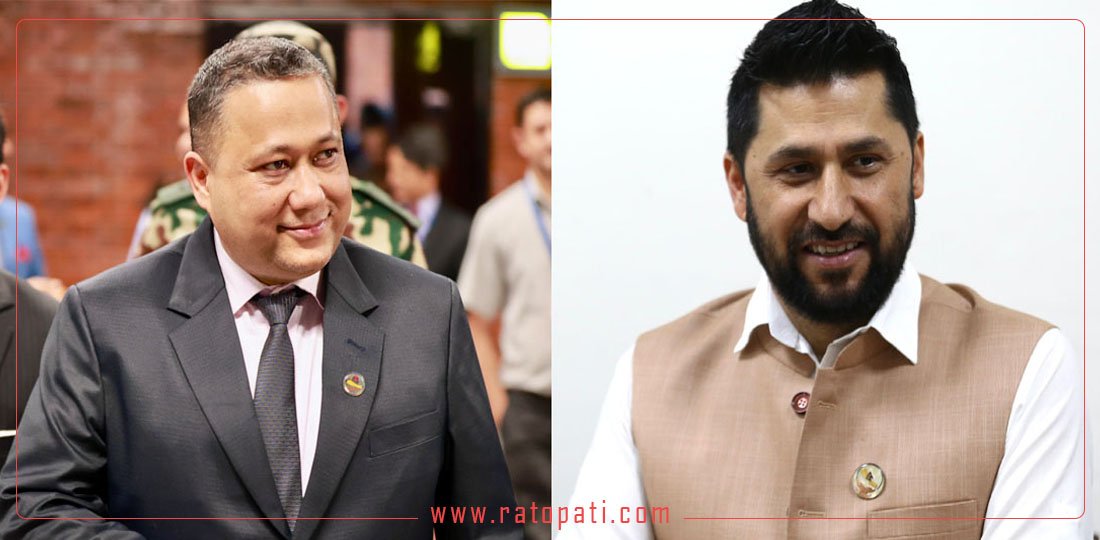
"We have good relations with everyone, but no country can replace India's position" – Upendra Yadav, Chairman of Janata Samajbadi Party

_7hbrqmsq2a_6RhN5L0Mtd.jpg)
Upendra Yadav, former Foreign Minister and a key Madhesi leader, claims that the world began recognizing Madhes only after he assumed ministerial office. He argues that the Madhes movement drew global attention to the region's issues. In an edited interview, Yadav discusses international perspectives on Madhes, evolving foreign ties of Madhes-based parties, and geopolitical dynamics.
Q: As Foreign Minister, how did you perceive Madhes' international relations?
"International relations exist between nations. Madhes is part of Nepal, so the world views it through Nepal’s lens. However, Madhes remains an internal colony—its people endure economic exploitation, social domination, and systemic marginalization. Our languages aren’t taught in schools, and our communities lack access to national resources. Until this oppression ends, Nepal cannot progress."
Q: How does the world perceive Madhes in Nepal?
"The international community recognizes Nepal’s discriminatory policies against Madhesis and indigenous groups. Reports and books have exposed this. During the Madhes movement, global media and researchers flocked here to study our struggle. The world now acknowledges Madhes as an oppressed region."
Q: What foreign ties do Madhesi parties and organizations have?
"Formal diplomacy is the state’s domain, but political parties build their own networks. Our party, for instance, is part of the Progressive Alliance (132 parties worldwide). Through this, we highlight Madhesi issues globally. While Madhesi groups engage with diaspora organizations, our relations with India remain unique due to shared culture, history, and geography."
Q: Why does Madhes lean more toward India than China?
"India and Nepal share inseparable civilizational ties—language, ethnicity, and religion bind us. No other country can replace this. That said, we maintain balanced relations: good with China, the U.S., and Europe, but none rival India’s cultural proximity. Recently, China has shown interest in Madhes, but its influence is limited."
Q: Is your party closer to China, as rumored?
"Good relations don’t imply alignment. We engage equally with China, India, and the West—but always prioritize Nepal’s interests. Diplomacy isn’t about picking sides; it’s about leveraging partnerships for our people’s welfare."