Finance Minister's Promise on Electricity Price Unfulfilled as 5% VAT Implemented

Kathmandu. Finance Minister Dr. Swarnim Wagle's announcement that the price of electricity would not increase for the end consumer has remained just a speech.< /p>
Finance Minister Wagle had announced in the budget for the current fiscal year (2083/084) that a 5 percent value-added tax (VAT) would be imposed on domestic consumers who consume more than 50 units of electricity. After this announcement was opposed in the house, he announced that the price of electricity would not be increased in a way that would affect the end consumer.< /p>
As Finance Minister Wagle's announcement remained limited to a speech, the provision to impose 5 percent VAT on electricity has come into effect since Friday. The Economic Bill has a provision for a 5 percent VAT on electricity for end consumers.< /p>
The Inland Revenue Department has considered domestic consumers as end consumers, and the department has stated that only they will be subject to a 5 percent VAT. According to the department, all other types of consumers will have to pay VAT at a rate of 13 percent.< /p>
According to the provision in the Economic Act, the department has prepared a procedure and defined what an end consumer is. According to the procedure, if the electricity used by a consumer is not used for commercial and industrial purposes, but only for domestic purposes, it is considered an end consumer.< /p>
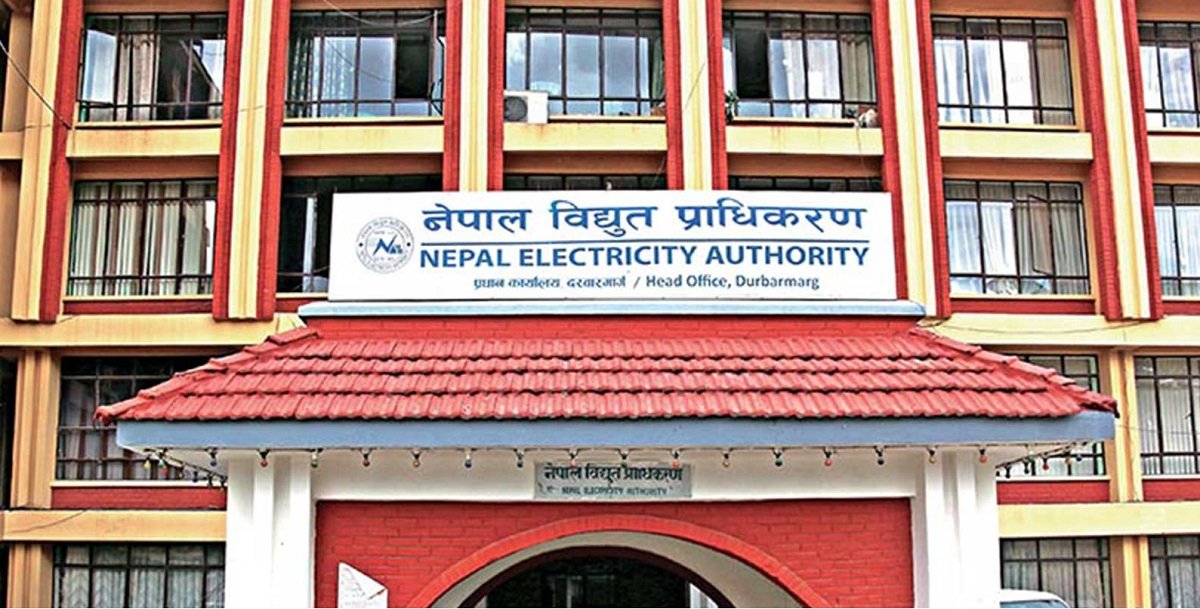
The department has stated that if electricity is used in other production activities, it will not be considered an end consumer in the procedure. According to the department, the Nepal Electricity Authority has also developed its billing system accordingly.< /p>
As the new fiscal year has already begun, from Shrawan 1, domestic consumers who consume more than 50 units of electricity will be billed with an additional 5 percent VAT, while others will be billed with 13 percent VAT, informed the acting executive director of the Nepal Electricity Authority, Dirghayu Shrestha.< /p>
According to him, as per the provision in the Economic Act, VAT is not applicable to domestic consumers for up to 50 units. VAT is only applicable to consumption above that. According to him, if a consumer has consumed 60 units of electricity, VAT has started to be applied only to 10 units.< /p>
However, in response to the issues raised by the members of parliament in the House of Representatives and the National Assembly, Finance Minister Wagle had announced that he would get the Electricity Regulatory Commission to reduce the electricity price, thereby preventing an increase for consumers.< /p>
Finance Minister Wagle had repeatedly stated in parliament and public forums, 'By Shrawan 1, we will adjust the electricity price so that there is no burden on the end consumer. We are looking at two or three options. First, we will request the Electricity Regulatory Commission to adjust the electricity price. Even a reduction of 50 paisa per unit would be a relief.'< /p>
However, the budget for the fiscal year 2083/084 has started to be implemented. The budget came into effect last Friday. Although 49 days have passed since the budget was presented, and three days have passed since it came into effect, Finance Minister Wagle has not taken any initiative to provide relief to the end consumers of electricity as announced.< /p>
According to sources, the Finance Minister has not even discussed this matter with the Minister and Ministry of Energy, Water Resources and Irrigation during this period. A source said, 'I am not aware of any discussion by the Finance Minister regarding the adjustment of electricity prices. We also heard the announcement in parliament. There have been no other discussions or concrete decisions beyond that.'< /p>
The Electricity Regulatory Commission determines electricity tariffs, but the law brought through an ordinance when the current government came into power has left the commission without office bearers. Due to the commission being without office bearers, the process related to adjusting electricity prices has not been able to move forward. The commission has stated that no process related to electricity price adjustment has moved forward at the Electricity Regulatory Commission.< /p>
Meanwhile, the acting executive director of the Electricity Authority, Shrestha, also stated that there has been no concrete progress so far in the process of adjusting electricity tariffs announced in the budget. 'The Electricity Regulatory Commission handles tariff matters, and there has been no discussion there yet,' Shrestha said.< /p>
According to him, when adjusting electricity prices, the commission moves forward with the process after the Nepal Electricity Authority makes a proposal, but the authority has not even discussed the matter of tariff adjustment.< /p>
However, following the Finance Minister's announcement, preparations were underway to adjust the old electricity tariffs. The government had stated that it would move forward with homework to adjust electricity prices by setting separate tariffs for the rainy and dry seasons, but the Ministry of Finance does not determine electricity tariffs.< /p>
Electricity tariffs are adjusted and determined by the Electricity Regulatory Commission based on the proposal of the Electricity Authority, as per Section 40 of the Electricity Act, 2049. The commission adjusted the tariffs in Mangsir 2078, and the tariff rates came into effect from Poush of the same year. It has been more than 6 years since the tariffs were last adjusted.< /p>
The Nepal Electricity Authority Act, 2041 also mentions that the tariff can be increased by up to 5 percent annually if necessary.< /p>
Finance Minister's Defensive Move: 49 Days of Uncertainty
The Finance Minister announced that those consuming more than 50 units of electricity would be brought under the VAT net. Following that announcement, the government faced strong criticism from parliament to the streets. MPs protested, stating that the 50-unit limit was very low and would directly impose a financial burden on ordinary middle-class families using induction stoves.< /p>
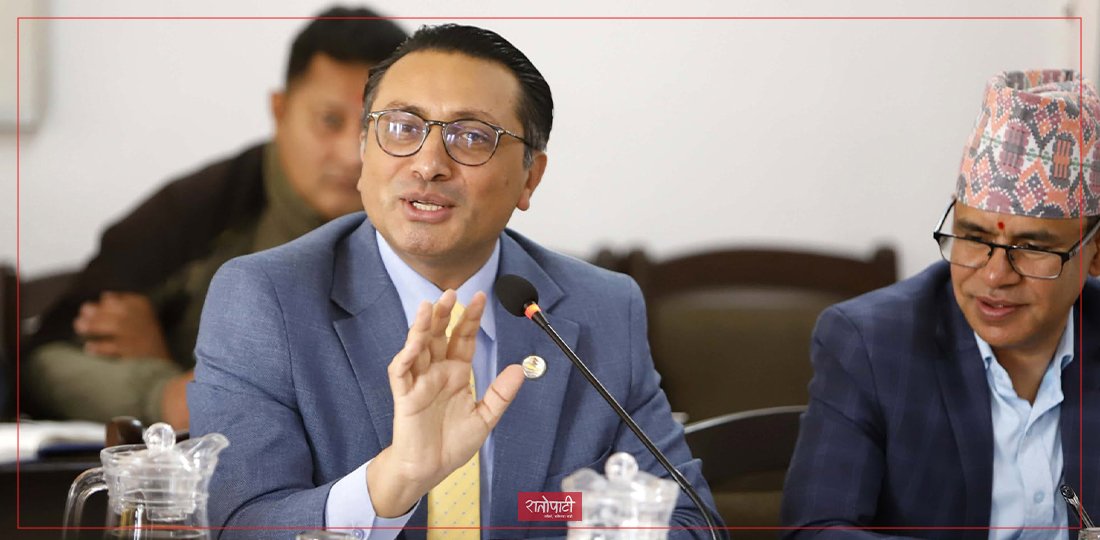
The Finance Minister was accused of imposing a tax contrary to his own policy of promoting electric vehicles and induction stoves. Finance Minister Wagle claimed that the current government had the courage to implement the long-standing effort to impose VAT on electricity. He argued that any government could not impose VAT on electricity, and that the current government, with a two-thirds majority, had the courage to do so, stating it was necessary.< /p>
He also mentioned that the 50-unit limit would be increased to 100 or 150 units, but he has remained silent on that matter as well. Consumers will now have to pay VAT according to the provision in the budget. With the imposition of a 5 percent VAT on electricity, end consumers will now have to bear the burden of more than a 5 percent price increase.< /p>
When Were Electricity Tariffs Determined?
The currently implemented tariff system sets different rates for different categories of consumers. Customers who install a 5 Ampere single-phase meter have to pay Rs. 3 per unit for consumption between 11 to 20 units and a demand charge of Rs. 30.< /p>
Those consuming 21 to 30 units have to pay Rs. 6.50 per unit, those consuming 31 to 50 units have to pay Rs. 8 per unit, and those consuming 51 to 100 units have to pay Rs. 9.5 per unit.< /p>
Similarly, for consumption between 151 to 250 units, the rate is Rs. 10, and domestic consumers who consume more than 400 units of electricity pay Rs. 12 per unit. Now, the 5 percent VAT provided for in the budget will be added.< /p>
The history of electricity tariff adjustment is not very long. In the past, tariffs were increased or decreased to increase consumption when the financial condition of the Electricity Authority was weak.< /p>
The largest and most burdensome price increase for consumers occurred in Shrawan 2073. The Electricity Tariff Determination Commission had increased the tariff rates by an average of 18.35 to 19 percent effective from Shrawan 2073.< /p>
At that time, the Electricity Authority was in severe financial crisis and was compelled to manage load shedding by importing expensive electricity from India. After that increase, the per-unit price for 5 Ampere customers for consumption between 51 to 150 units was raised to Rs. 10, and the price for consumption above 400 units was set at Rs. 13.< /p>
Prior to that, due to tariffs remaining stable for 11 years from 2058 to 2069, tariffs were increased by an average of 20 percent in 2069.< /p>
However, in recent years, with the increase in electricity production in Nepal, the trend of reducing tariffs began. After the establishment of the Electricity Regulatory Commission, the tariff rates have been reduced twice.< /p>
The current tariff rates, adjusted in Mangsir 2078, provided relief to many consumers. At that time, for extremely poor customers consuming up to 20 units, the energy charge was made free, and only the minimum service charge was set at Rs. 30.< /p>
For those consuming more than 400 units, the per-unit price was reduced by Rs. 1 to Rs. 11. Prior to that, in 2077, the commission had also reduced the tariff by an average of 10 percent.< /p>
This specific news has been automatically translated by AI. As a result, there may be some inaccuracies or language errors.