Khimti-1 Hydropower Project Share Ownership Transfer Process Resumes

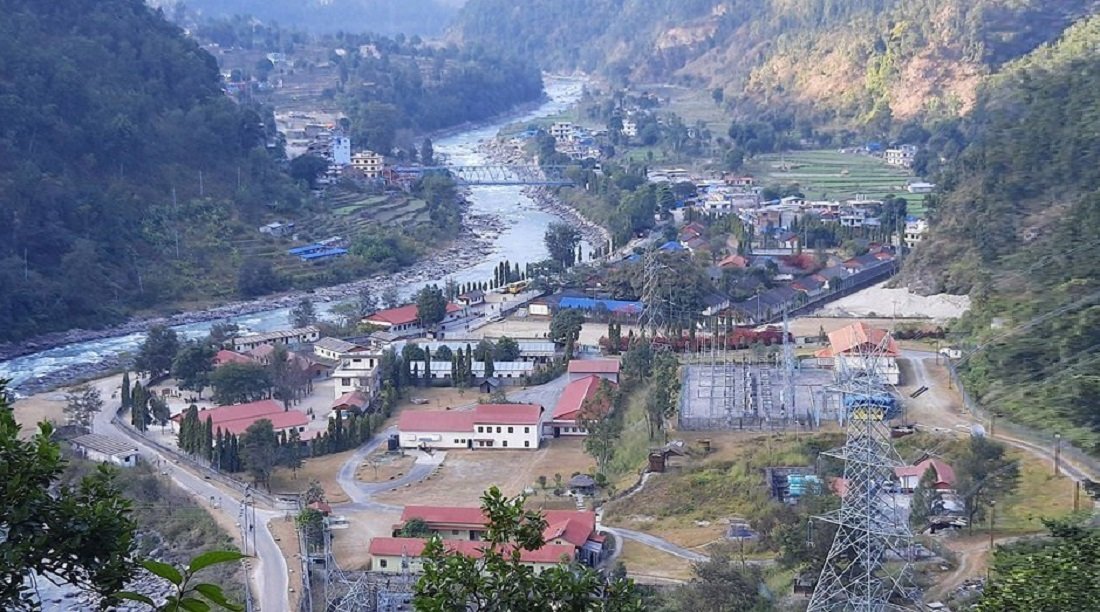
Kathmandu. 5 years ago, 60 MW Khimti-1 Hydropower Project's half ownership should have come under the Nepal Electricity Authority. As per the electricity purchase agreement signed with the authority on January 1, 2052 BS, 50 percent shares of this project were supposed to come under the authority's ownership five years ago. However, after bringing this project under the government, the company to operate the project should have been established. The transfer of 50 percent shares of Khimti to the authority remained in uncertainty for five years. Both the government and the authority have failed in this. As per the agreement with the authority for the hydropower project, half of the project's ownership should come under the authority's name 20 years after commercial production begins. An agreement was made to operate the project for an additional 20 years by establishing a new company by the authority and the promoter company. The new electricity purchase rate, royalty, and tax payments were supposed to be finalized with that company. However, that work could not be done for five years due to disputes. Although it was supposed to come under the authority's name, this process has not yet been finalized due to various policy and technical misunderstandings. However, with the formation of the current government, the board meeting chaired by Energy Minister Biraj Bhakta Shrestha reconstituted the negotiation committee last Friday to advance the share ownership transfer process. The Authority's Board of Directors has reconstituted the negotiation committee to re-accelerate the stalled discussions on the transfer of share ownership of the Khimti Hydropower Center and its future operation and management. The reconstituted committee is chaired by Authority Board Member Anshu Kiran Shahi. This committee is preparing to formally negotiate with the promoter company Himal Power Limited on issues including project ownership, new electricity purchase agreement (PPA), royalty, and tax payments. In the past, the authority had repeatedly held discussions and consultations with Himal Power. However, the process could not move forward due to disagreements on issues such as project ownership, new electricity purchase agreement (PPA), royalty, and tax payments.
As per the electricity purchase agreement (PPA) signed between the Electricity Authority and the promoter company on January 1, 2052 BS, half of the project's ownership should be transferred to the Nepal Electricity Authority after 20 years of commercial production.The authority has stated that it is preparing to finalize issues such as project ownership, new electricity purchase agreement (PPA), royalty, and tax payments through negotiations, as the authority has formed a negotiation committee. The authority has stated that it will provide a way out of the stalled process and resolve old issues quickly. With the reconstitution of the new negotiation committee, the authority's acting executive director Dirghayu Kumar Shrestha believes that the door to formal dialogue will now open. Shrestha said that the authority has formed a new committee to manage Khimti, one of the first large projects in Nepal's private sector. Shrestha informed that with the selection of new board members in the committee, which has been vacant for a long time, discussions on project share ownership and electricity rates will move forward. 'The old committee was vacant, now the new board of directors has formed a new team with a mandate,' Shrestha said, 'Even if formal negotiations have not started yet, we are preparing to conclude this positively.' Khimti has been developed by Himal Power Limited under the Build, Own, Operate, Transfer (BOOT) model. The project started commercial electricity production on June 27, 2057 BS. As per the electricity purchase agreement (PPA) signed between the Electricity Authority and the promoter company on January 1, 2052 BS, half of the project's ownership should be transferred to the Nepal Electricity Authority after 20 years of commercial production. As per this condition of the agreement, half of Khimti-1's ownership should have been formally transferred to the authority on June 25, 2077 BS. However, even after five years have passed since the deadline, the formal share transfer to the authority has not happened. As per the agreement, for the remaining 30 years (the project's total license period is 50 years), the authority and the promoter company are supposed to jointly operate the project by establishing a new company. This process has been stalled for a long time due to the inability to reach an agreement on the articles of association and regulations required for the establishment of the joint company. Main Reasons for Delay in Transfer The main reason for the ownership transfer process being stalled for the past five years has been the lack of agreement between the two parties on the operating structure, management framework, and decision-making process of the new joint company.
In the initial phase after the deadline expired in 2077 BS, the promoter company refused to attend negotiations and discussions, citing the COVID-19 pandemic as an excuse. Even after the pandemic situation normalized, agreements could not be reached on the drafts of the articles of association and regulations in the repeated discussions with the authority, the authority stated.The promoter Himal Power is still seeking its own monopoly or greater authority in the company's operating structure and management. However, since the Electricity Authority will acquire 50 percent share ownership, it has been maintaining its stance for equal managerial authority and participation in the decision-making process based on the principle of equality. The authority argues that decision-making power should be equal once the share ratio is equal. In the initial phase after the deadline expired in 2077 BS, the promoter company refused to attend negotiations and discussions, citing the COVID-19 pandemic as an excuse. Even after the pandemic situation normalized, agreements could not be reached on the drafts of the articles of association and regulations in the repeated discussions with the authority, the authority stated. Authority officials claim that the company has been presenting arguments for some technical and financial arrangements that differ from previous agreements. Concrete agreements have not been reached on aspects such as the technical evaluation of the project, potential new PPA rates, and the economic and financial analysis of the company. However, the authority has already prepared a study report covering all these aspects and sent it to Himal Power. The newly formed committee has stated that it is preparing to advance negotiations by continuing the efforts made in the past. Acting Executive Director of the Authority, Shrestha, says that the negotiations will proceed with the main priority on the issues that remained unresolved between the authority and the company in the past. He said, 'Discussions have been held between the authority and the project in various phases in the past on aspects such as technical evaluation, PPA rates, and the company's economic and financial analysis. We will discuss these issues and seek an agreement.' Dollar PPA and Financial Burden on the Authority The initial electricity purchase rate for the Khimti Hydropower Project was set at 5.2 US cents per unit, which was later increased to 5.9 cents through an agreement. Due to the dollar-denominated PPA, the authority had to bear a significant financial burden as the value of the US dollar continuously increased. The authority has been spending approximately 5 billion rupees annually on the Khimti project alone for electricity purchase, royalty, and taxes. As the dollar's value increased, the authority had to buy electricity from Khimti at up to 14 rupees per unit. The authority has been bearing all the risks of bank charges and foreign exchange fluctuations related to royalty and tax payments that the project has to make to the government. Due to the strict 'take or pay' condition in the agreement, in some cases, the authority was compelled to buy electricity from Khimti.
Now that an agreement has been reached on ownership transfer and a new purchase rate has been set, the reconciliation of remaining payments will be done. Although the authority has felt relieved after the risk of dollar payment was removed, it has not yet established its legal and formal ownership in the project.Currently, the former Himal Power is operating the project. However, as the old PPA period requiring payment in dollars has expired, the authority has been paying the promoter company only 2 rupees per unit as an interim rate for the past five years, the authority stated. The electricity purchase amount for this project, which produces about 350 million units of electricity annually, is not paid in dollars. This has provided some financial relief to the authority. Now that an agreement has been reached on ownership transfer and a new purchase rate has been set, the reconciliation of remaining payments will be done. Although the authority has felt relieved after the risk of dollar payment was removed, it has not yet established its legal and formal ownership in the project. Investor Structure Himal Power currently has the largest share ownership of Statkraft (SN Power), owned by the Norwegian state-owned power company. In addition, Norway's Alsthom Power AS and GE Energy AS also have investments in it. As a Nepali promoter, Butwal Power Company has a 17 percent ownership in it. The authority had also been paying approximately 500 million rupees annually as royalty to the project. This project, which received tax exemption for 15 years, had a total construction cost of 145.2 million US dollars. The issue of transferring 50 percent share ownership of the Khimti-1 Hydropower Project is not just related to the management of a hydropower plant. It clarifies the future of projects operating under the BOOT model in Nepal and the credibility of public-private partnerships in Nepal. The newly reconstituted negotiation committee now needs to hold intensive negotiations with the promoter Himal Power to finalize the articles of association of the joint company. Maintaining the principle of equal ownership, the major challenge for the negotiation team will be to ensure a fair distribution of the new electricity purchase rate (PPA rate), royalty, and tax liabilities. Balancing both national interest and respect for private sector investment, it is imperative to bring this long-stalled process to a conclusion as soon as possible.
This specific news has been automatically translated by AI. As a result, there may be some inaccuracies or language errors.