US-China trade talks: what's under debate
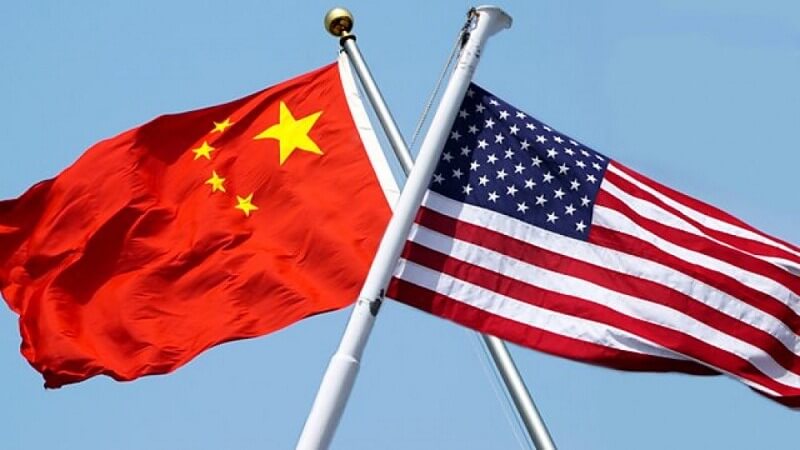
BEIJING– US and Chinese officials wrapped up days of trade talks in Beijing on Friday with plans to resume negotiations in Washington this week as the world's top two economies try to smooth out their thorny trade dispute. 
US President Donald Trump said the talks were going "extremely well", while his advisors deep in the details warned there was still "much work" to do. 


Beijing and Washington have already imposed duties on more than $360 billion in two-way trade, which are weighing on their manufacturing sectors and have shaken global financial markets. 


Trump has said he may extend a March 1 deadline after which tariffs on $200 billion worth of Chinese goods are set to more than double. Here is a breakdown of the main sticking points: 
- IP theft & tech transfer - 


Washington contends Beijing has encouraged theft of American intellectual property while forcing US companies to turn over trade secrets for market access. 


Beijing has long denied the charges but is working to step up punishments for IP theft, fast tracking a new foreign investment law which explicitly bans forced technology transfer. 


It is also gradually increasing the scope of industries where foreign firms can operate without a Chinese joint venture partner. 


It is unclear if the moves will be enough to appease the Trump Administration. The FBI recently said it is investigating Chinese economic espionage across the US while the Justice Department is leading a name, shame and prosecute campaign against Chinese spying and theft. 


US prosecutors recently ensnared Chinese tech giant Huawei with charges of trade secret theft, including an alleged programme to reward technology theft from rivals. 
- Industrial policy - 
China's industrial policy has raised concerns -- especially a "Made in China 2025" initiative that aims to make the Asian giant into a global leader in emerging technologies like artificial intelligence, through generous state support for domestic firms. 


Beijing and the Chinese state media have played down the policy this past year as it roused controversy, but for China the trade tensions have only reinforced the need to increase self-sufficiency in crucial technology like semiconductors. 
Indeed, a brief US ban on sales to state-backed telecom giant ZTE nearly killed the company last year. 
- State subsidies - 
In recent years China's state-owned companies have strengthened their domestic dominance -- flying in the face of Western demands for market reforms. 


Washington hopes China will lessen the role of the state in the economy and curtail generous subsidies for industries and companies. 


But economist Cui Fan of the University of International Business and Economics in Beijing cautioned China may not give ground if the US wants to discuss state subsidies beyond the remit of the World Trade Organization agreement. "I am afraid it will be difficult to completely solve this month," he said. 
- Trade deficit - 


China's politically sensitive trade surplus with the US last year hit a record $323.3 billion as the tit-for-tat tariffs kept Chinese buyers away from American agricultural and energy commodities. 


Beijing has pledged to pick up purchases of US soybeans and other goods and dangled a massive buying spree over negotiations to nudge the White House towards a deal. The White House Friday emphasised discussions on purchases to reduce the "large and persistent bilateral trade deficit". 
But any buying spree would have to rely heavily on the Chinese state-owned firms which Washington is battling to sideline. 


- Deal in sight? - 
The two sides are working towards a Memorandum of Understanding to detail their commitments ahead of a potential meeting between Trump and Xi. The test will be if Trump can get on board with a deal to address the trade deficit that defers structural changes. 


Earlier this month he told the American public a deal "must include real structural change to end unfair trade practises", but Chinese analysts say that will take time. 


"We are a slow moving country. Some patience is needed," said Zhang, adding negotiating China's entry into the WTO took more than a decade. Then there is the question of how to enforce whatever is agreed on. Beijing has long been wary of outside oversight. 
--- 

Related Articles

Koshi Province Government Allocates Budget for Small-Scale Projects Over Provincial Priorities

Koshi Province Government Allocates Budget for Small-Scale Projects Over Provincial Priorities

Biratnagar. The Ministry of Physical Infrastructure Development of the Koshi Province Government has seen a...
Nepal Rastra Bank Unveils Monetary Policy for FY 2081/82

Nepal Rastra Bank Unveils Monetary Policy for FY 2081/82

Kathmandu. Nepal Rastra Bank has unveiled the monetary policy for the current fiscal year 2081/82....
Prime Minister Balen Shah Discusses Economy with Private Sector

Prime Minister Balen Shah Discusses Economy with Private Sector

Kathmandu. Prime Minister Balen Shah has held discussions with the private sector to make the...
Prime Minister Balendra Shah Discusses Economic Reforms with Private Sector Representatives

Prime Minister Balendra Shah Discusses Economic Reforms with Private Sector Representatives

Kathmandu. Prime Minister Balendra Shah has discussed issues related to industry, business, investment environment, and...
NARC Acting Executive Director Emphasizes Integrating Farmer Experience with Modern Knowledge for Agricultural Research and Technology Development

NARC Acting Executive Director Emphasizes Integrating Farmer Experience with Modern Knowledge for Agricultural Research and Technology Development

Kathmandu. Nepal Agricultural Research Council (NARC) Acting Executive Director Dr. Shreemat Shrestha has stated that...
18 MPs Propose Amendments to Nepal Rastra Bank Bill

18 MPs Propose Amendments to Nepal Rastra Bank Bill

Kathmandu. Eighteen MPs have registered amendment proposals in the Nepal Rastra Bank (Third Amendment) Bill...
Gold and Silver Prices Decrease in Nepali Market

Gold and Silver Prices Decrease in Nepali Market

Kathmandu. On Wednesday, the prices of gold and silver decreased in the Nepali market.According to...
Prime Minister Holds Dialogue with Business Leaders on Economic Revitalization

Prime Minister Holds Dialogue with Business Leaders on Economic Revitalization

Kathmandu. Prime Minister Balendra Shah is holding a special dialogue with major industrialists and businessmen...