Mechinagar Municipality's Fecal Sludge Treatment Centers Operate Below Capacity

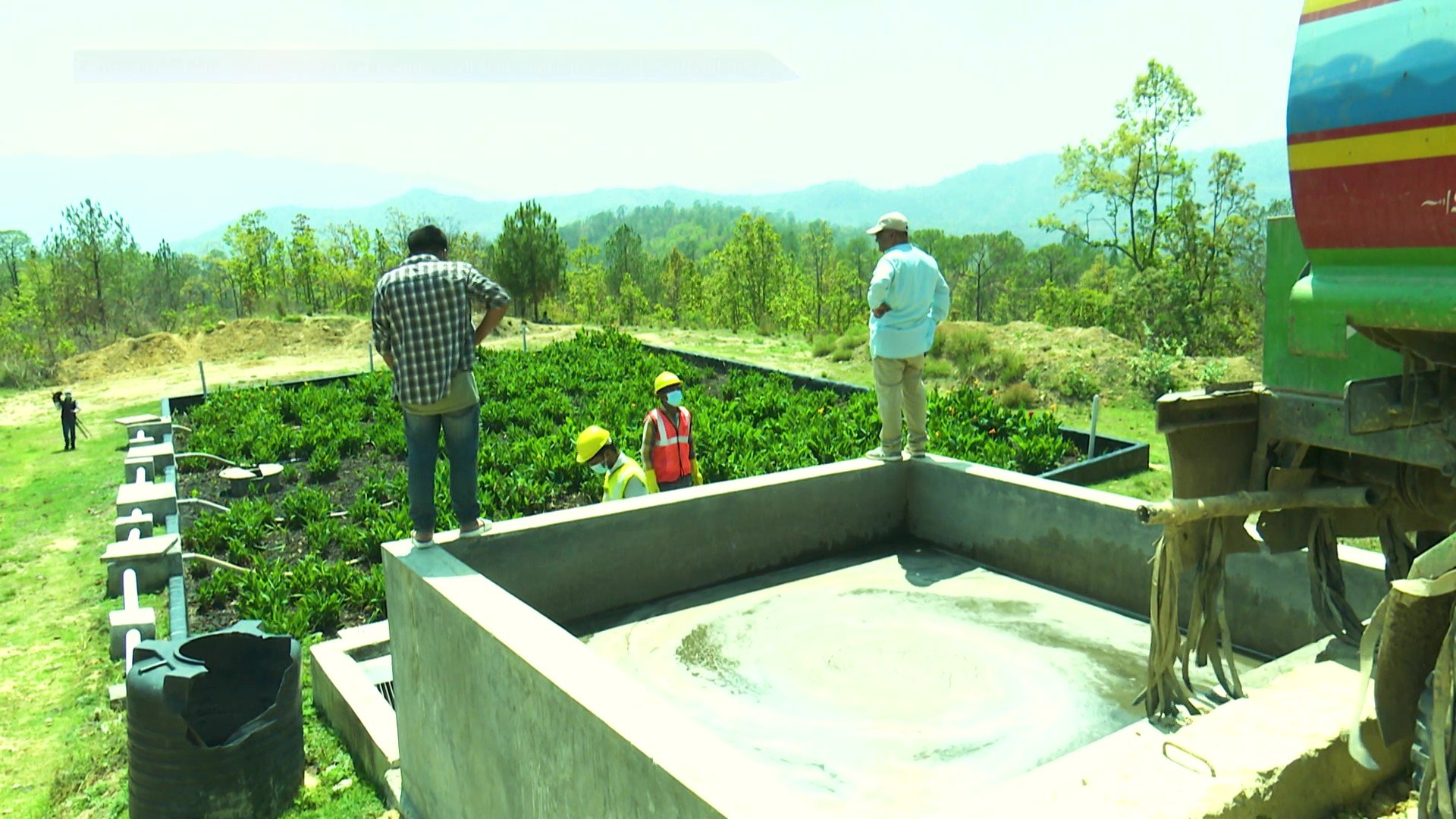
Jhapa. Two fecal sludge treatment centers constructed by Mechinagar Municipality with an investment of millions of rupees have not been able to operate at full capacity. The centers have not been able to operate as expected due to policy weaknesses, weak regulation of private septic tankers, and insufficient sludge collection.
The treatment centers were constructed seven years ago in Duhagadhi of Mechinagar-14 and in Bhansha Khola of Ward No. 7 with financial assistance from the Asian Development Bank and the Bill and Melinda Gates Foundation, and cost-sharing from the Ministry of Water Supply and local governments.
The center in Duhagadhi has the capacity to treat up to 27 cubic meters of fecal sludge daily, and the center in Bhansha Khola has the capacity to treat up to 12 cubic meters daily. The objective is to convert the sludge into compost fertilizer and safe water after treatment.
Premraj Ghimire, secretary of the Charali Small Urban Drinking Water and Sanitation Consumer Committee, said that although there are necessary infrastructure, tankers, and manpower, there is a problem in operating the center because there is no system to bring all the sludge to the treatment center. According to him, the income generated from service fees is not even enough to cover the operating expenses.
Deepak Prasad Pokharel, office chief of the Kakarbhitta Drinking Water Consumer and Sanitation Committee, also informed that although the center is not closed, it has not been able to operate at full capacity, and the operating expenses are higher than the income.
Mechinagar Municipality Mayor Gopal Chandra Budhathoki said that a policy will be introduced to make it mandatory to register private septic tankers with the municipality and to impose fines and legal action on those who discharge sludge indiscriminately. According to him, the municipality is preparing to bring the treatment center into full operation by implementing the Sanitation and Fecal Sludge Management Act and procedures.
Sanitation sector experts have warned that if the fecal sludge from septic tanks is not managed safely, it will have serious effects on environmental pollution as well as public health.
This specific news has been automatically translated by AI. As a result, there may be some inaccuracies or language errors.
_4aeHKPKE27.jpg)