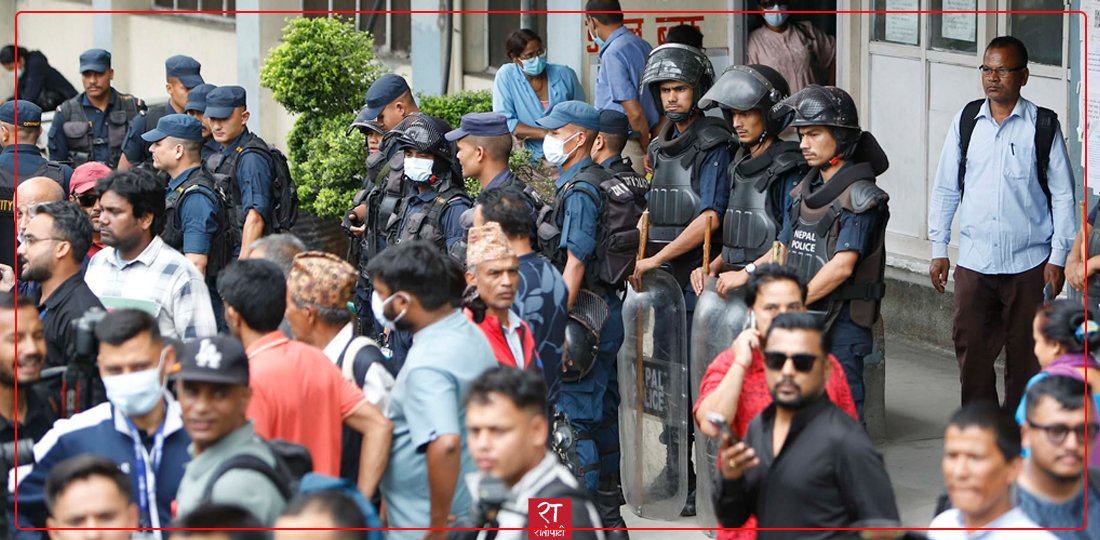
Poultry Farmer Suffers Loss Due to Bird Flu Outbreak

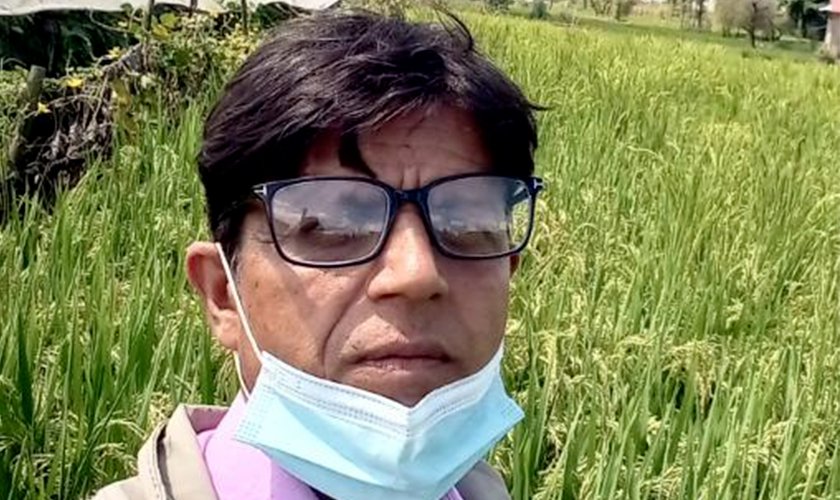
Not with great ambition, but with the simple thought of doing something in my own country, I started a poultry farming business. I filled the coop with local breed chickens. My and my family's livelihood ran well from this business.
Now there is silence at my farm located in Sirutar, Ward No. 1, Suryabinayak Municipality, Bhaktapur. I have no option but to sit and look at the scattered feed bowls and empty nests filling the coop.
Approximately 1.2 to 1.5 million rupees were spent on coop construction, living quarters, water, electricity management, and other infrastructure. In the coop with a capacity to hold 2,000 chickens, I had initially raised 1,000 local breed chickens.
Although local chickens lay eggs a bit late, they had good market demand. Out of 1,000 chickens, about 500 were of egg-laying age. These chickens had only started laying eggs for 2-3 months. The remaining 500 chickens were small chicks preparing to lay eggs. From these 500 mother chickens, 15 to 20 crates of eggs were being produced daily. A large amount of money was spent on raising these small and large chickens, feeding them, and providing medical treatment.
Generally, it costs 100,000 rupees to raise 100 chickens to egg-laying age. By this calculation, more than 5-6 lakh rupees were spent on 500 egg-laying chickens and more than 3 lakh rupees on small chicks, but my struggle did not last long.
- When they started dying, I sought veterinary help
In the initial days of last Bhadra, some chickens suddenly started falling ill. At first, I thought it was a common disease and bought medicine from the market, but instead of working, the death rate of chickens increased rapidly day by day.
When the chickens started dying in large numbers, with no other option, I informed the team from the Department of Animal Services. They came and took samples of chicken blood and discharge to the laboratory for testing.
When the report confirming bird flu came from the laboratory, it felt like the ground beneath my feet had collapsed. After bird flu was confirmed, a team from the Department of Animal Services arrived and on Bhadra 20, all 1,000 chickens in my farm, the feed, and the eggs were destroyed (disposed of) using scientific methods.
As I buried the chickens I had raised with my own hands, feeding them, I felt not only financial but also emotional pain.
I suspect that the disease entered my farm due to the feed. The person who supplied me with the feed had their farm destroyed due to bird flu a week before mine. After their chickens were destroyed, I thought I shouldn't use that feed, but they said it would be fine because the chicken transport vehicle and the feed transport vehicle were different.
Trusting them, I ordered 8 bags of feed for the last time, but the day after I put that feed in the coop, the chickens started dying. After that, I didn't have to use that feed anymore because the coop became empty. However, without sufficient laboratory testing, it is not legally possible to claim that the disease was 100% transmitted through the feed, but this coincidence will always haunt me.
On the other hand, there are bamboo thickets around the farm, where birds and crows used to come and go. There is another suspicion that the virus might have spread from those birds. Even though I didn't let the chickens out of the coop, it was impossible to stop the movement of birds. Bird flu has spread to other farms in my neighborhood, and a large number of chickens have been destroyed.
This epidemic has caused me a direct loss of 1 to 1.2 million rupees. If the chickens had been insured, I might not have faced such a huge financial blow. I had insured the coop and physical infrastructure, but when I tried to get insurance for the chickens, I was informed that chicken insurance is not available, so I couldn't get it. Due to the lack of insurance, the entire burden of compensation has fallen on me.
I am currently in a major financial crisis. I have submitted all the necessary documents and recommendations for relief and compensation to the ward office, municipality, and the Department of Animal Services. So far, there is no sign of relief from anywhere. The technical team had said they would inform me by phone, but no one has called yet.
Small farmers like us try to contribute a little to the country's economy through our hard work. If the government does not understand our pain and provide adequate relief in such a time of crisis, how can we rise again? I only pray to the government to assess my actual loss and provide some relief so that I can revive this business and my desire to work hard in my own land does not remain unfulfilled.
(Based on an interview with Dahal, who operates a poultry business in Bhaktapur, by Ratopati correspondent Amrit Chimariya.)
This specific news has been automatically translated by AI. As a result, there may be some inaccuracies or language errors.

_3qLgVMdOIh.jpg)