FIFA World Cup 2026: Netherlands vs Morocco Match Reflects Modern Football's Evolving Nationalities
Monterrey. The World Cup has always been a confluence of many things.
Every four years, it becomes a meeting point of history, immigration, and identity. Here, national teams tell stories that extend far beyond the field.
Some countries export ideas. Others export players. Nowadays, many countries are doing both.
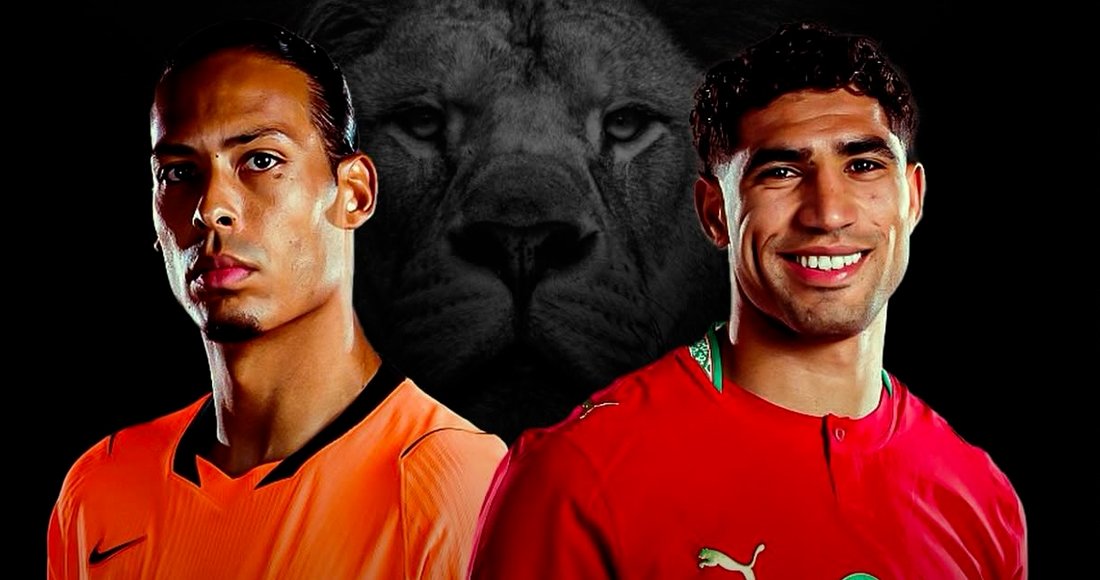
Few matches can present this relationship between football and society as vividly as the game between the Netherlands and Morocco in the 2026 World Cup.
On paper, this is an excellent match in the last 32.
The Netherlands arrived in Monterrey unbeaten, topping Group F with 7 points. In the process, they scored 10 goals, their highest ever in a World Cup.
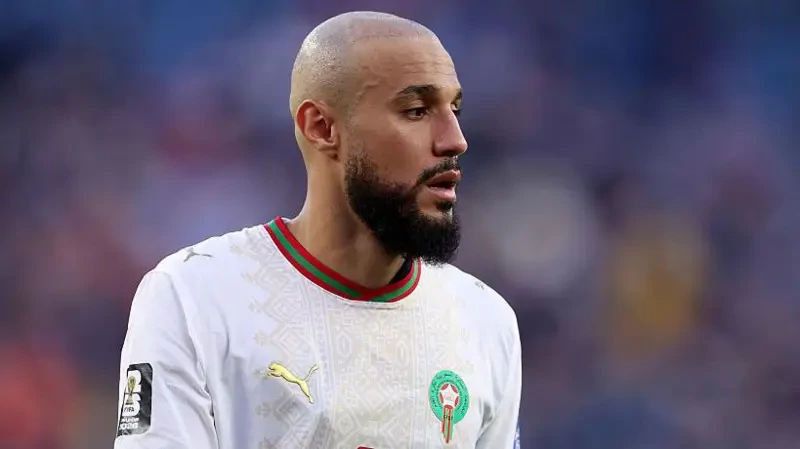
Morocco is also unbeaten. Having accumulated 7 points from a group with Scotland and Haiti, they were only behind Brazil on goal difference.
But the significance of this clash runs much deeper than the tournament's fixture list.
Football cannot exist separately from society. Across Europe, questions of identity, belonging, and heritage are becoming increasingly important. Few international rivalries can illustrate these issues as clearly as that between these two countries.
- One Choice Became Two
For decades, the natural destination for players born into Moroccan families on Dutch soil was the Netherlands.
If a player of Moroccan descent was eligible to play for the 'Oranje', the assumption was that they would choose the Netherlands. But this assumption no longer holds.
This story begins with Driss Bousatta. Born in the De Baarsjes area of Amsterdam, he became the first Dutch player of Moroccan descent to play for the Netherlands.
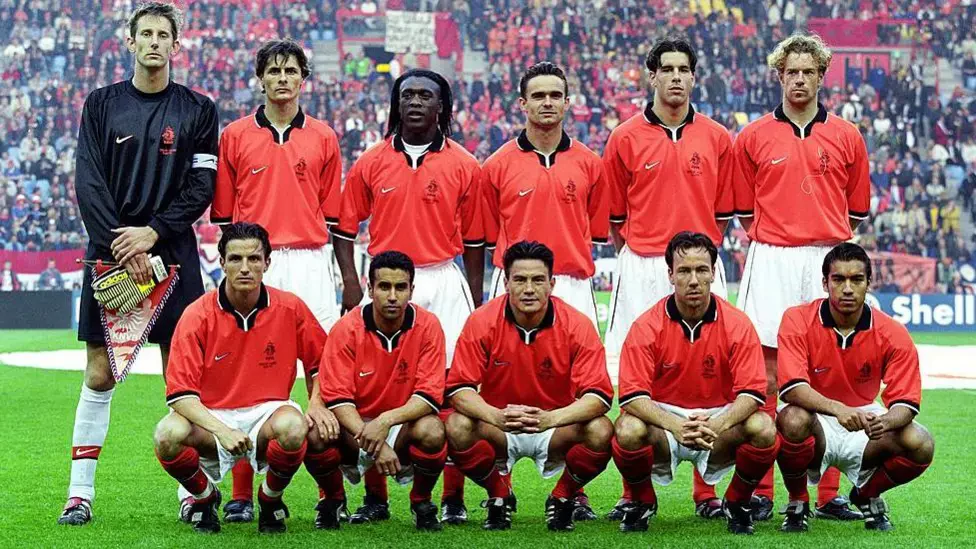
In November 1998, Frank Rijkaard gave him his debut against Germany. There was little need to ponder his international future because Morocco had never approached him.
Bousatta played only three games for the Netherlands before later playing two for Morocco. Under FIFA's rules at the time, he was allowed to do so because he had only played friendly matches for the Netherlands.
It would be wrong to view the change that has now occurred as being solely linked to politics.
For many dual-nationality players, the decision has always been a personal one. Their choices are shaped by family, culture, and opportunity, rather than by passports or public debate.
However, the relationship between the Dutch and Moroccan football federations has fundamentally changed.
The scale of this change is quite remarkable.
For the 2026 World Cup, almost one in four players was born outside the country they represent. Of the 48 teams in the tournament, eight have as many or more players born abroad than they do born domestically. This shows how modern international football is reflecting migration patterns.
Few countries have embraced this development as much as Morocco.
Nineteen of the 26 players in coach Mohammed Ouahbi's squad were born abroad. In their group stage match against Brazil, Morocco became the first team in World Cup history to field an entire starting XI born outside the country.
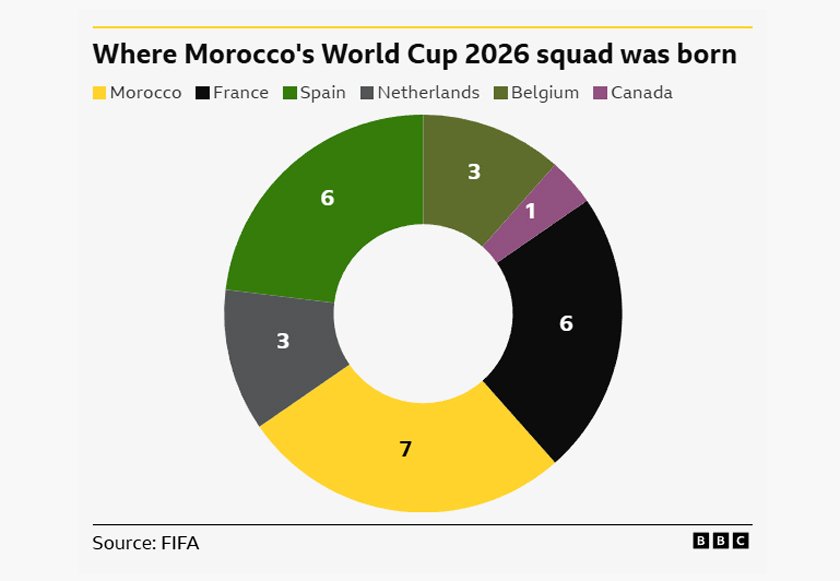
This is not just a demographic coincidence.
More than a decade ago, the Royal Moroccan Football Federation began investing heavily in identifying dual-nationality talent across Europe. Scouts were deployed in France, Belgium, Spain, and the Netherlands. Their job was not only to monitor talented young players but also to build strong relationships with the players and their families long before they reached senior team age.
According to former technical director of Morocco, Pim Verbeek, this selection process was not limited to the players alone. He stated that family played as significant a role as football in shaping the players' decisions.
This policy has transformed Morocco's international fortunes. By the 2018 World Cup, five members of their squad were born in the Netherlands. Four years later, when Morocco became the first African nation to reach the World Cup semi-finals, 14 of their 26-man squad were born abroad.
Change does not happen overnight. In the years after Bousatta, players like Khalid Boulahrouz and Ibrahim Afellay chose the Netherlands. They were attracted by the prospect of playing for traditional powerhouses in international football.
At the same time, Morocco was gradually changing its strategy. It began to build closer relationships with dual-nationality players long before they reached senior team age.
- A Changing Generation
Few decisions have illustrated this shift as clearly as Hakim Ziyech's.
Born in Dronten and raised entirely within the Dutch system, Ziyech represented the Netherlands at youth level. In 2015, he received a call-up to the senior team. He missed his debut due to injury, but what happened afterwards proved to be far more significant than missing a friendly.
As the Dutch coaching structure changed following Guus Hiddink's departure, Ziyech began to feel overlooked. Conversely, Morocco made him feel indispensable. Federation officials maintained constant contact, presented a long-term sporting vision, and positioned him as a key figure for the national team.
When Ziyech chose Morocco later that year, many in the Netherlands expressed surprise. But his explanation was quite simple.
He said, 'I have always felt Moroccan. Such decisions are made from the heart.'
Ziyech's decision changed perceptions on both sides.
Morocco had seen many of its best dual-nationality talents choose established European football powers. Suddenly, a star player from the Dutch league 'Eredivisie' decided to play for the Atlas Lions (Morocco) instead of the Netherlands.
Then others followed his lead. Noussair Mazraoui, born in Leiderdorp and raised in Ajax's academy; Sofyan Amrabat, raised in Huizen; and Anas Salah-Eddine, also raised in Dutch football, all chose the Moroccan national team. Ismael Saibari, born in Spain and having completed his football education at PSV Eindhoven's academy, also followed this path.
Whether these players could have made it into Ronald Koeman's strongest Dutch team is secondary. What is important is that these talented players, produced by the Dutch football system, are now strengthening the direct competitors of the Netherlands on the international stage.
- More Than a Knockout Game
The background to this story is larger than football itself. In the late 1960s, the arrival of Moroccans in the Netherlands intensified through labour agreements. Later, temporary workers became permanent communities due to family reunification.
Today, millions of Dutch citizens are of Moroccan descent. This has created generations who feel a sense of belonging to both countries.
However, international football forces one to choose only one option. For one player, that answer is the Netherlands, while for another, it is Morocco. No decision implies a rejection of the other country. Most often, the decision simply confirms where one feels most at home.
Perhaps this is Morocco's greatest achievement. The question of why a player born on Dutch soil chooses Morocco is no longer asked. Instead, the prevailing sentiment is, why wouldn't they choose Morocco?
Thirty-two years ago, Dennis Bergkamp's inspirational performance in the World Cup in America saw the Netherlands defeat Morocco. Today, the football relationship between these two countries looks very different.
The Netherlands remains one of the best nations for exporting football talent and ideas. Morocco, on the other hand, has become the most adept at importing that talent.
Their World Cup clash in Monterrey is not just a contest to reach the last 16. It is a new chapter in the story of modern football, where nationality is no longer an assumption, and the tradition of valuing only the birthplace has been broken. These two countries, linked by decades of migration history, are now facing each other on the biggest stage of sport.
This specific news has been automatically translated by AI. As a result, there may be some inaccuracies or language errors.