Supreme Court Prepares to Live Stream Court Proceedings

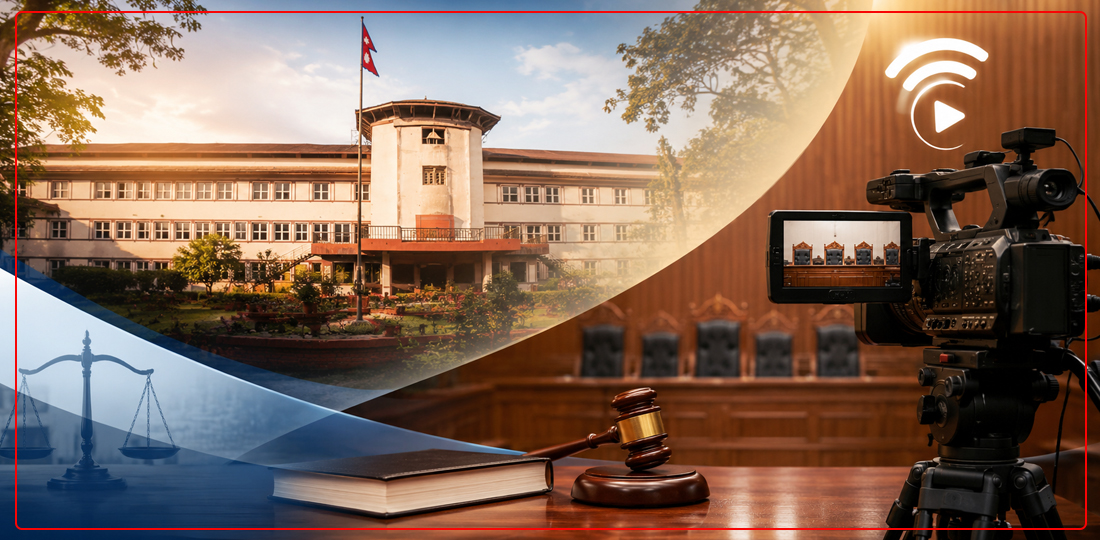
Kathmandu. The Supreme Court has started preparations to create a procedure for the 'live streaming' (live broadcast) of hearings in the courtroom. Following the approval of the communication policy by a full court meeting of the Supreme Court on Wednesday, preparations have begun to create a procedure to systematically move forward with 'live streaming'.
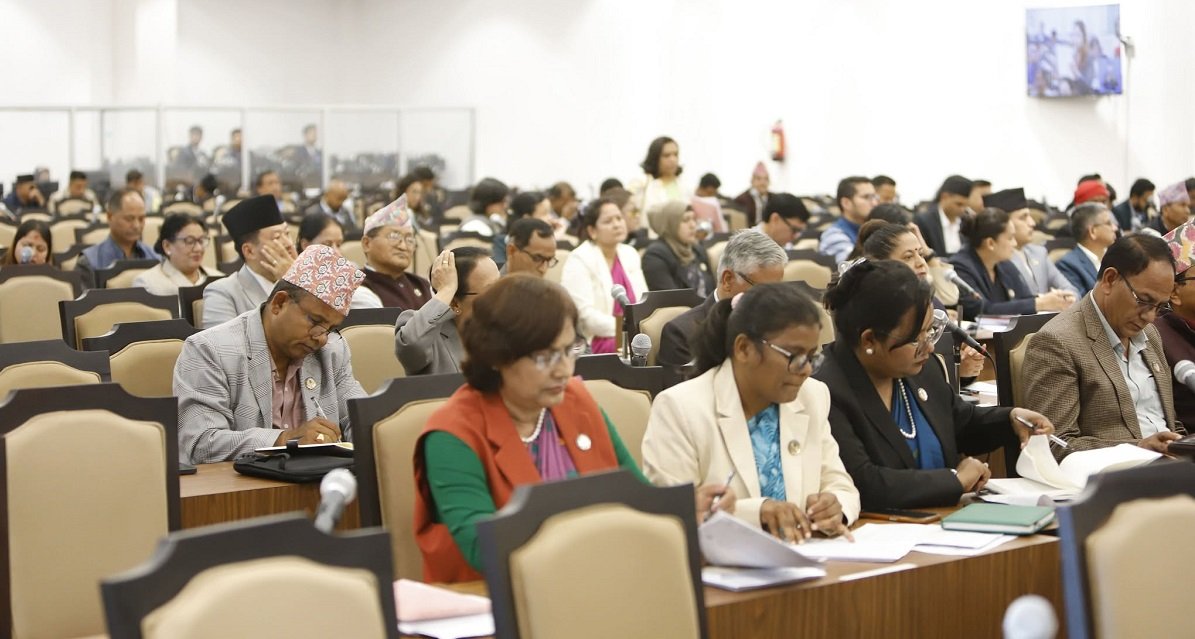
Previously, the Supreme Court had tested the live broadcast of a hearing in the courtroom for the first time on Jestha 25. After the 'trial live streaming' of the hearing held in the joint bench of Chief Justice Dr. Manoj Kumar Sharma and Justice Mahesh Sharma Paudel was successful, the Supreme Court administration has stated that preparations for a procedure are underway to make it regular.
According to Nirajan Pandey, Supreme Court Senior Registrar and Information Officer, work is underway to create a procedure for 'live streaming'. 'Just on Wednesday, the Judiciary's Information and Communication Technology Policy-2083 was approved by the Supreme Court full court meeting,' he said, 'Live streaming is also included in that communication policy.'
The policy states that excellence will be brought to the delivery of judicial services and work performance through the optimal use of information technology and electronic (digital) transformation. The policy includes a plan to develop infrastructure in phases in line with the objective of establishing e-judiciary.
'Preparations are underway for the work of live streaming. A procedure is being developed on what kind of matters will be live-streamed. Not all cases will be live-streamed,' said Senior Registrar Pandey. 'For example, civil cases, and some matters of personal privacy may arise. Live streaming will be done for cases of public concern.'
The Supreme Court had stated that this 'trial live streaming' was carried out in the process of implementing the commitment mentioned in the 10th point of clause 3.2 of the Chief Justice's action plan, 'to broadcast court hearings through information technology'.
The court has stated that information technology has been prioritized in accordance with the Judiciary's 'Information and Communication Policy, 2076' and the 'Fifth Five-Year Strategic Plan (2081-2086)'. It is mentioned that work is being done with the goal of establishing a 'paperless court' by 2082 under the 10-year master plan, and the court is gradually moving towards technology-friendly services.
However, the Janakpur High Court has already started the work of 'live streaming' (live broadcast) since Asar 9. The court started live broadcasting through a YouTube channel called 'Highcourt Janakpur'. The channel was opened on June 9.
The Janakpur High Court is conducting live broadcasts by deploying information technology (IT) staff. According to Senior Registrar Shambhu Bhujel, the work of 'live streaming' (live broadcast) has been started by creating regulations. According to the regulations, hearings in all benches except closed-door hearings and those requested by any party will be 'live-streamed' (live broadcast).
High Court Janakpur Registrar Bishwajang Sijapati, however, said that live streaming is being done after drafting the regulations. 'The honorable judges are studying it. The regulations have not been passed yet,' Registrar Sijapati told Ratopati. 'We have done live streaming after drafting the proposal.'
Although the trial live streaming test was successful, it is seen as necessary to address challenges such as the standard for broadcasting privacy rights, sensitive cases (e.g., rape, domestic violence, or cases involving minors), and technical security in the future when making it regular. The court is developing an action plan to proceed with live streaming by creating a clear standard on this matter.
Meanwhile, the Special Court has been live-streaming cases from the courtroom for the general public by opening a media center within the court premises. However, it has not allowed live streaming to be broadcast outside to the public media. Last week, the live streaming being broadcast from the media center in the case of money laundering against NCP UML Vice-Chairman Bishnu Poudel was broadcast on social media and media outlets after the bench allowed the broadcast.
Law student Vivek Chaudhary had also filed a writ petition on Bhadra 28, 2081, demanding that all citizens should be able to watch the hearings from the Supreme Court's open bench. In the writ petition filed by Chaudhary, on the preliminary hearing on Bhadra 31, Justice Kumar Regmi's bench had issued a show-cause order to its own administration. And, the case was given priority. However, even though nearly two years have passed, this case has not been heard despite being given priority. The next hearing for the writ is scheduled for Bhadra 7.
In this writ, the Registrar of the Supreme Court clarified that the Supreme Court cannot immediately implement the live broadcast of court hearings by issuing an order. The written response from the Chief Registrar of the Supreme Court mentions a lack of necessary technical infrastructure, legal structure, and skilled manpower for live broadcasting.
This specific news has been automatically translated by AI. As a result, there may be some inaccuracies or language errors.