Massacre of 11 Cultural Artists in Bangma Recalled 27 Years Later

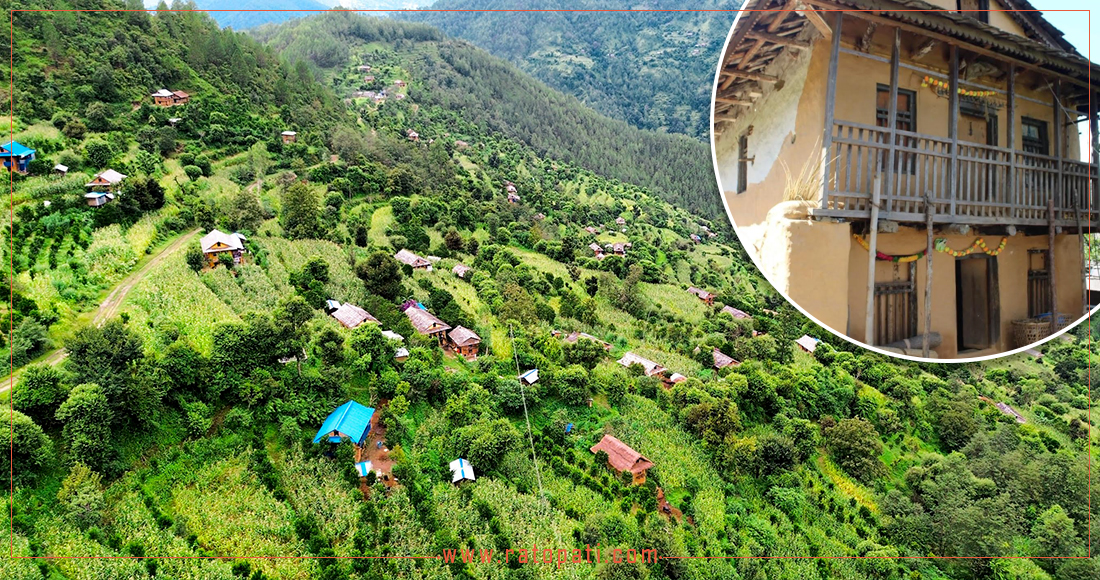
On Asar 8, 2056, 11 cultural artists were collectively murdered by the police in Madi-5 Bangma, Rolpa. Recalling the 'Bangma Massacre' that happened before my eyes when I was 12 years old, 27 years later, my eyes welled up.
In childhood, there was much talk in the village about Masane, Seuare, and Ranke ghosts. They were believed to dance mostly on hills and graves. Those who claimed to have seen them said, 'They danced in a long line with flames of fire and then disappeared.'
I used to sleep before dinner was cooked. One evening, my mother woke me up and said, 'Get up Manu. Look towards Simarangi on the opposite hill, what is dancing there.'
'Manu' is the name my mother called me.
Rubbing my sleepy eyes, I got up and went out to the verandah of the house. My father, mother, and all of us looked towards the hill of Simarangi. A long torch was seen burning on the dark hill. It gradually became longer, and some indistinct sounds were heard. Then it suddenly disappeared.
I also saw Masane, Seuare, and Ranke ghosts dancing. We children were scared by saying, 'The ghost will eat you!'
After some time, gunshots also started to be heard along with such torches. Sometimes the sound of bombs would shatter the silence of the night.
Slowly, I came to know that the scene we thought was a ghost dance was actually a Ranke procession organized by the CPN (Maoist).
After that, ghosts like Masane and Seuare disappeared from our village. They never danced again. Instead, Maoist Ranke processions and slogans of the republic began to echo on the hills at night – amidst the sound of guns and the smoke of bombs.
000
I was about nine or ten years old then. When going to Kathmandu or India for work, I used to go to Maji's house to stay with his friend. It was a five-minute uphill walk from our house. One evening, we were preparing to sleep after dinner. Two men with guns on their shoulders and handkerchiefs covering their faces entered the house.
'We are Maoists. There is a program in the village below. Come, let's go,' the voice sounded familiar. But seeing the guns, knowing or not knowing became secondary, and my body started to tremble.
The people were caught between two forces. During the day, the police would come with threats, and at night, the Maoists would come and talk about revolution, liberation, and change.
In the moonlight of the night, we walked downhill, they following behind. Villagers joined us. We reached the middle of the village. A Maoist program continued there until midnight. I don't remember exactly what was said in the speeches. But the sentence 'We are fighting to establish the people's rule' is still in my memory.
Much later, I found out that those who said 'We are Maoists' were our own uncles.
Maoist programs and torchlight processions at night became a regular sight in the village. We gradually got used to it.
Meanwhile, the police would come for patrol during the day, searching houses. They would take away vegetables and fruits from the fields, and if they found chickens, they would take them away. They would slap us a couple of times, asking if we had seen Maoists.
The people were caught between two forces. During the day, the police would come with threats, and at night, the Maoists would come and talk about revolution, liberation, and change. Gradually, the hearts of the villagers were leaning more towards the rebels of the night than the state of the day.
000
On Asar 8, 2056. I did not go to school that day because the corn in the sloped field in a place called Gursi was falling down. There was a well near the house for drinking water. There was a government-built tap for drinking water closer than the well, but there was no water coming from it anymore.
My mother sent me to fetch water. As I was going to the well with a pot, I saw a man sitting at the tap where there was no water. He had a small round object in his hand. Who was that man and what was the round object in his hand?
Filled with curiosity, I filled the pot and returned home.
Because we were on the hill, the scene of the police surrounding the house was clearly visible. Smoke also seemed to be rising from inside the house.
After eating Arni, my father, mother, sister, and I went up to weed the corn. It took about fifteen minutes to reach the field. The strong Asar sun was overhead. It was our daily routine to weed corn in that scorching sun.
000
It must have been around ten-thirty in the morning. We were finishing a section of the field. Suddenly, we heard the sound of 'Dyam-Dyam'. Then the sound of so many guns started that we all lost our senses. We left the field unfinished and hid inside the cowshed.
'Where is it firing like this?'
The sound seemed to be coming from nearby, but it was difficult to pinpoint. It sounded like it was coming from the settlement below our house.
My father was listening and looking to figure out where the sound was coming from.
After some time, it was known that the police had surrounded Maina's house. Maina's house was about five hundred meters below our house.
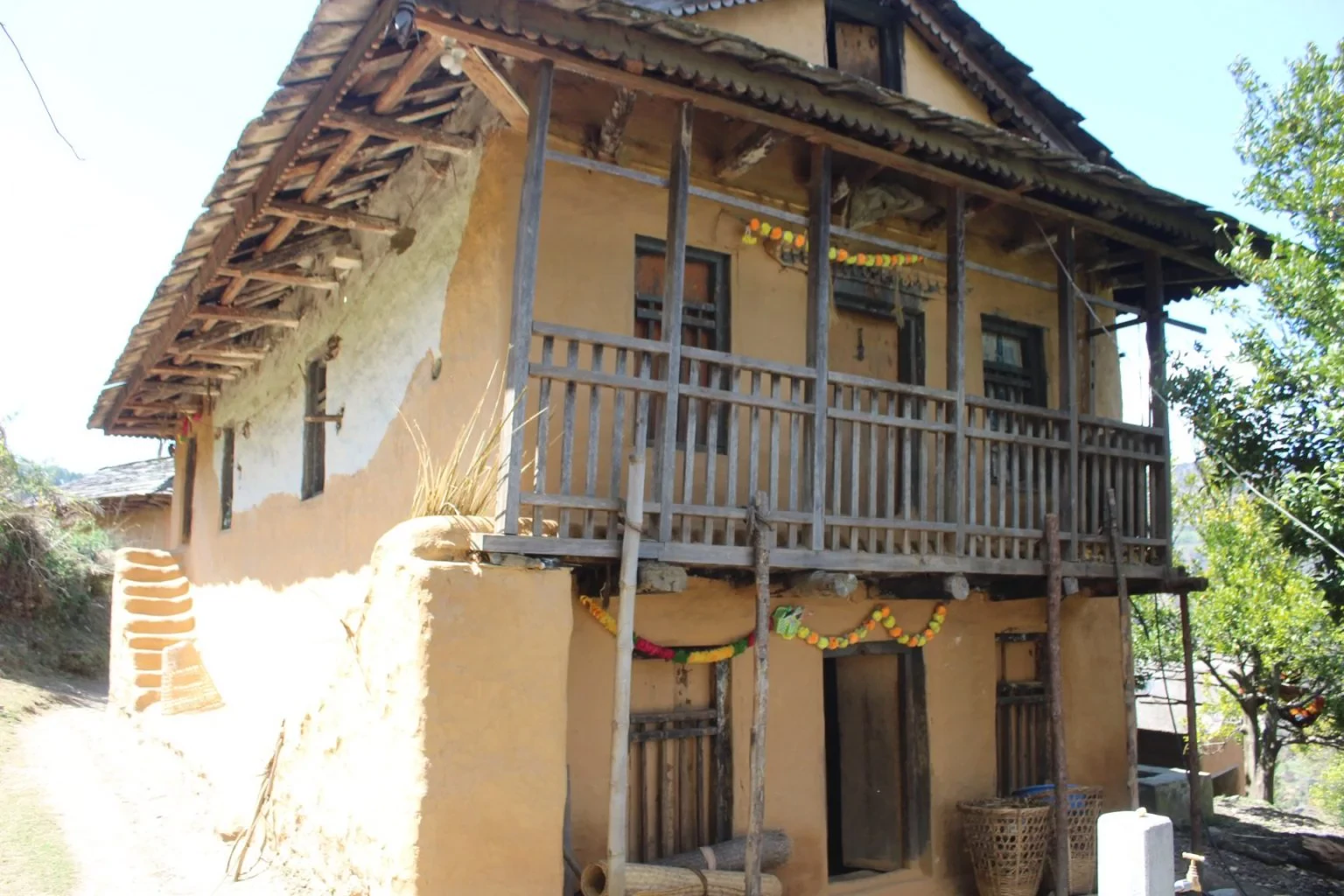
Because we were on the hill, the scene of the police surrounding the house was clearly visible. Smoke also seemed to be rising from inside the house.
After some time, the police who descended from the helicopter appeared right in front of us. We trembled, thinking they might kill us too. But they started running downhill, crossing ridges and jumping. Police were also seen jumping from the Rangsi Hamdhara post and heading that way. Police also reinforced from Ghartigaun.
The sounds of the police rifles increased. The explosions of guns and bombs were sometimes clearly heard. We had never heard such sounds before. We had never seen so many police before.
'A major incident has occurred in the village,' my father and other elders expressed deep concern.
The entire village, which seemed peaceful in the morning, had turned into a battlefield. It was heard that fights were rare even in Bangma village, known as a settlement of innocent people.
What would the elderly grandmother and the two small children in our house be doing?
From time to time, there was a sound like a bomb exploding. Perhaps an attempt at resistance was being made from inside.
My parents were also worried about that.
The neighbors who were weeding corn had already left their work. It was customary to keep cows and buffaloes in the 'Bhong' during the afternoon sun, but that day, all the cows and buffaloes were seen outside even in the scorching sun.
000
It was certain that Maoists were in Maina's house, and the police were attacking from all sides to kill them.
It had been about two hours since the police started the attack. Some neighbors came to our cowshed.
'What has befallen us?' our father and mother would sigh. The concern about what steps the expanding Maoist movement would take in this village was growing.
From time to time, there was a sound like a bomb exploding. Perhaps an attempt at resistance was being made from inside. Sometimes there was also a sound like screaming, perhaps someone was falling to the ground from a bullet.
The Asar sun was already making us sweat. On top of that, the continuous sounds of gunfire and explosions made us all terrified. Our bodies were drenched in sweat.
Around five in the afternoon, the sounds of bombs and guns began to subside slightly. Everyone's restlessness increased with the curiosity and worry about what might have happened there.
Just then, it looked like some people were being brought out of the house. Immediately, there was the sound of rifles. Someone seemed to fall in the courtyard. It looked like those brought out from inside were lined up and shot.
About eight hours later, towards the evening, the sounds of bombs and guns completely stopped.
Our gaze was fixed on Maina's house. We were helpless witnesses as the police entered the house and removed the bodies. They were dragging those bodies and piling them in the field below the ridge. It looked like eight or nine bodies. But no one knew for sure how many people were there, how many escaped and saved their lives, or how many were injured and killed.
After some time, the police took firewood from that house and carried it down. Smoke immediately began to rise. The bodies were burned.
'What will happen now?' this worry was bothering many. We were worried about when we would go to school.
After some time, another helicopter arrived. The police boarded it and left.
In the evening, we went down to our house. When we reached home, grandmother and sisters were terrified. The police had come and told them to 'lock the door, or you will die,' and not let them out. The livestock, of course, remained where they were tied, without grass or water.
The village was stunned by the horrific incident that happened in the neighborhood. The village was in mourning. Not even the sound of animals could be heard, let alone humans. The birds had stopped chirping.
The sound of rifles, the flight of helicopters, and the screams of people had stopped – the echo remained. But the fear and terror in our hearts were increasing.
'What will happen now?' this worry was bothering many. We were worried about when we would go to school.
000
The village had not yet woken up from the fear. The school had not opened. I had just been admitted to class 6. I had not yet gone to that school, which was an hour's walk away.
The next day or the day after, I don't remember exactly. The police came to the village again. They gathered all the men of the village and took them towards Maina's house. My father also went.
Fear spread further throughout the village.
Later, those who returned from there said that the police made the villagers dig large pits. As the bodies were placed in those pits, the number reached 11.
Only then did we find out that the police had murdered 11 people in that horrific incident.
Much later, I gathered the courage to walk that path, but the chilling feeling that arose in my heart whenever I saw that place never disappeared.
We were merely helpless spectators to the scene and sounds of that murder.
About a week later, some unfamiliar people appeared in the village. They went to the place where those 11 people were buried and planted a flag with a hammer and sickle and left. Perhaps they were Maoist cadres. They must have come to pay tribute to the martyrdom of their comrades.
When I went to school, I had to walk past the place where the mass grave of 11 people was located. Every time I approached that place, a strange fear would arise in my heart. It felt like 11 people were sleeping beneath those graves. Looking at that place, the sounds of guns, the roar of helicopters, and the terror of that day would return, and my body would tremble. My child's mind refused to go that way for a long time.
Much later, I gathered the courage to walk that path, but the chilling feeling that arose in my heart whenever I saw that place never disappeared.
000
As the situation gradually normalized, the aspects of the incident also began to unfold.
It turned out that the cultural artists had been murdered. It was the biggest massacre since the beginning of the Maoist People's War.
Those cultural artists, who were roaming the villages and spreading the call for revolution, were themselves murdered.
A Maoist team had reached Bangma early in the morning after performing a cultural program in Anbang, Bhabang. The team included cultural artists, people's militia, and cadres. The police, who had been tracking them, received the information.
As they were preparing to eat breakfast and rest, the police launched an attack from all sides.
Much later, I found out that those men were Maoists standing guard. The round object in his hand was a grenade.
The people's militia tried to resist with the muzzle-loading guns and grenades they had. The cultural artists resisted until the last moment with their songs, instruments, and dreams. They chose sacrifice over surrender. The cultural artists did not have modern weapons like the police, but they had the dream of people's liberation and ideological weapons, which inspired them to fight and sacrifice.
Out of the 22 people in the team, 11 broke through the cordon. 11 sacrificed their precious lives on the soil of Bangma. At a time when the People's War had just completed three years, the sacrifice of those revolutionary youths was a great loss to the People's War, but that very sacrifice gave birth to thousands of cultural artists, people's militia, and cadres.
Yes, on that Asar 8, 11 cultural artists were collectively murdered – we were mere spectators.
000
The murder was carried out under the 'Kilo Shera-2' operation launched by the state to suppress the Maoists. However, the Maoist war was not suppressed by that murder; it advanced further. It became successful.
Now, a monument has been built in Bangma in their memory. The mass grave has been preserved.
When I go to that place and every Asar 8 comes, that day comes before my eyes – the sound of 'Dyam-Dyam' gunfire, the helicopter flying, the police lining up and murdering artists with rifle bullets, and the scene of dragging bodies. And I remember those unfamiliar men I saw near the tap in the morning.
Much later, I found out that those men were Maoists standing guard. The round object in his hand was a grenade.
000
Even today, that day feels like yesterday, but that horrific incident of Asar 8, 2056, has become 27 years old. The sounds of that day still echo in my ears, and the scenes are still alive in my eyes. We can never forget that day, and future generations should not forget it either.
It is because of the sacrifice of those martyrs that the republic, federalism, secularism, and a proportional inclusive system with social justice have been established.
Heartfelt tribute on the 27th memorial day to the 11 cultural artists who sacrificed their precious lives on the soil of Bangma.
- 11 cultural artists murdered
Lalbhadur Sarki 'Baldev' (Korchabang), Kumari Gharti (Bhabang), Deumati BK (Bhabang), Durgi Banthā Magar 'Dhanu' (Bhabang), Sukraprasad Ghartimagar 'Jhankhar' (Korchabang), Govinda Ghartimagar 'Bishal' (Kotgaun), Dipendra Ghartimagar 'Sujan' (Bhabang), Sundar Ghartimagar 'Kapil' (Hwama), Durgasingh Ghartimagar 'Bikash' (Bhabang), Mangal Budhamagar 'Jharna' (Hwama), and Dilkumar Budhamagar 'Myand' (Korchabang).
This specific news has been automatically translated by AI. As a result, there may be some inaccuracies or language errors.