Rastriya Swatantra Party Deputy Chairman Swornim Wagle Calls First General Convention 'Beginning of Nepal's Political Renaissance'

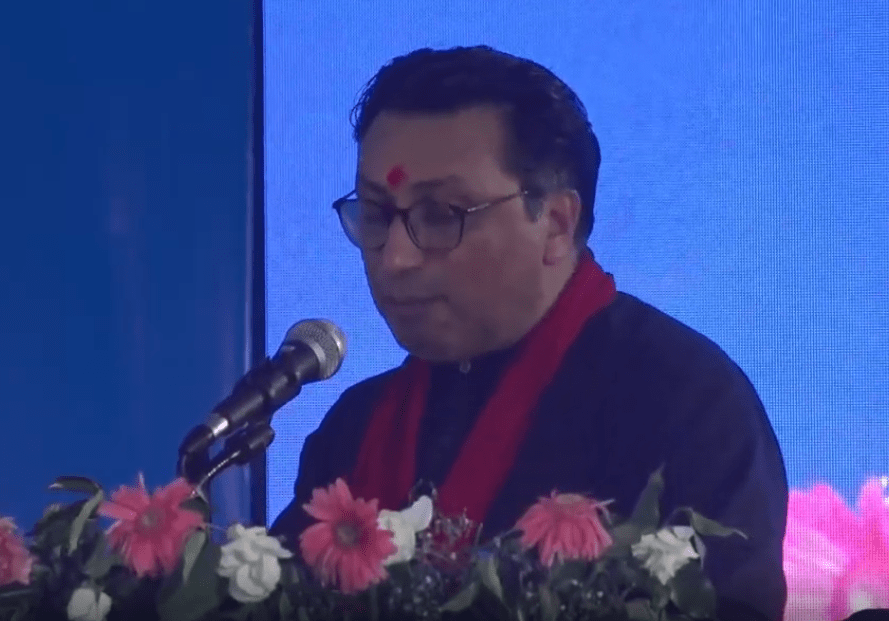
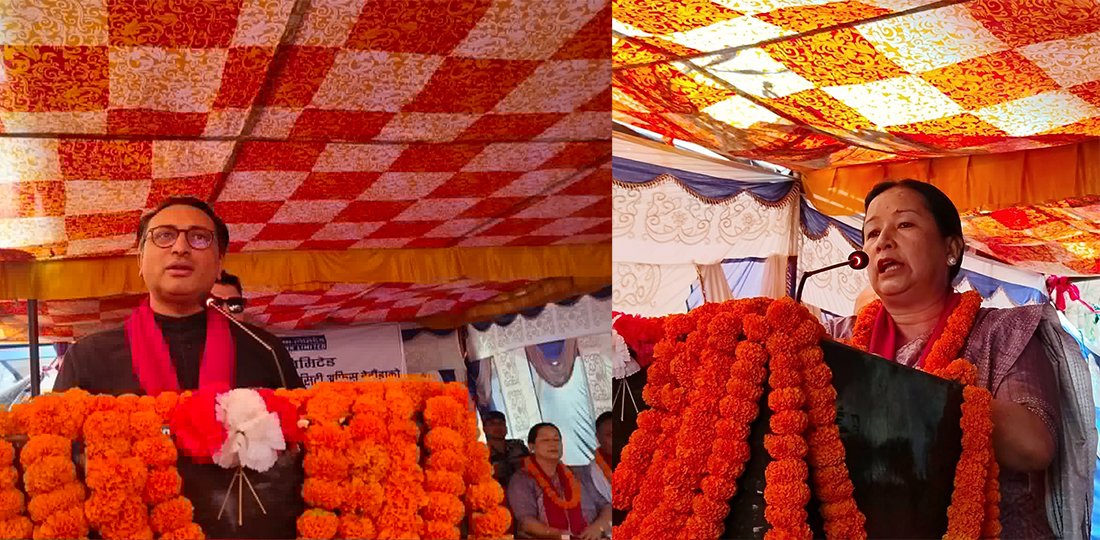
Chitwan. Rastriya Swatantra Party (RSP) Deputy Chairman Dr. Swornim Wagle has described the first general convention of RSP as the 'beginning of Nepal's political renaissance'.
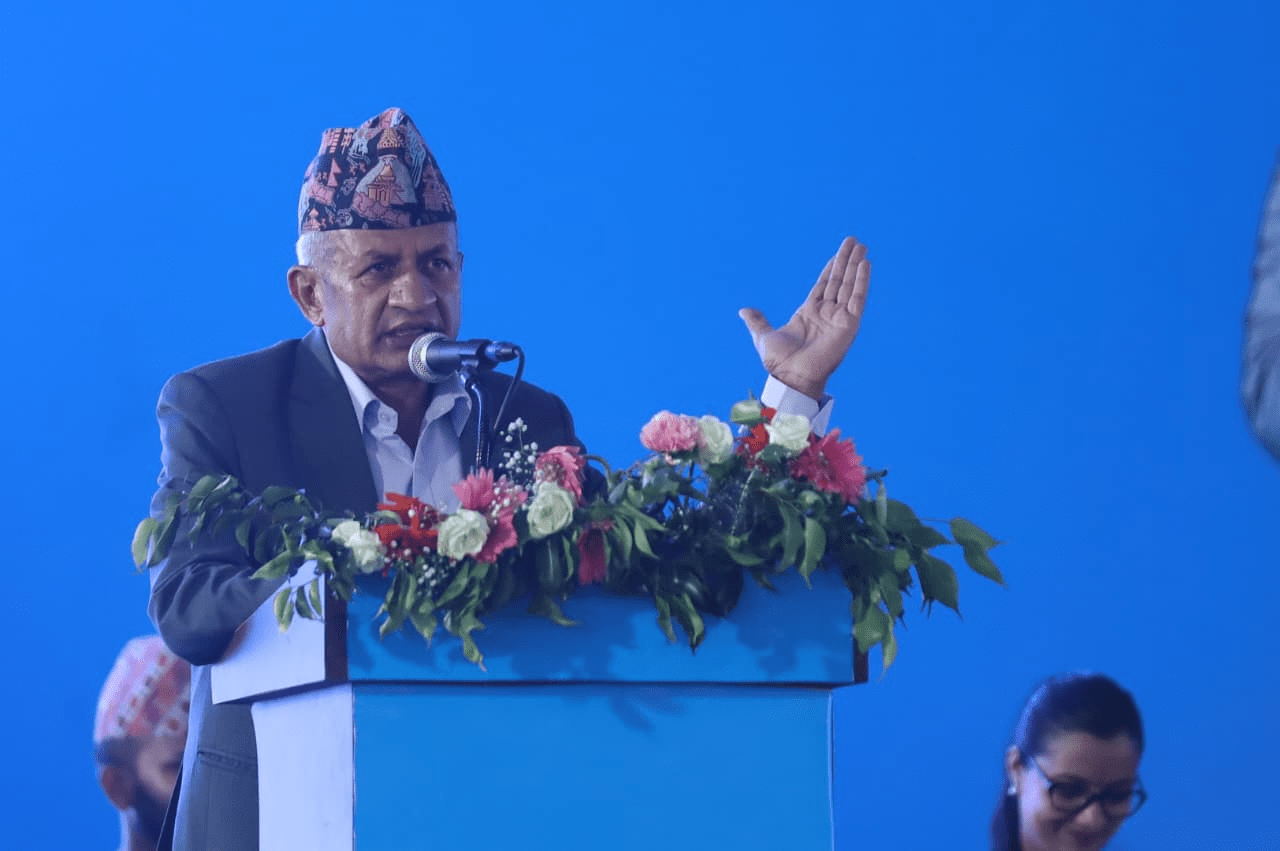
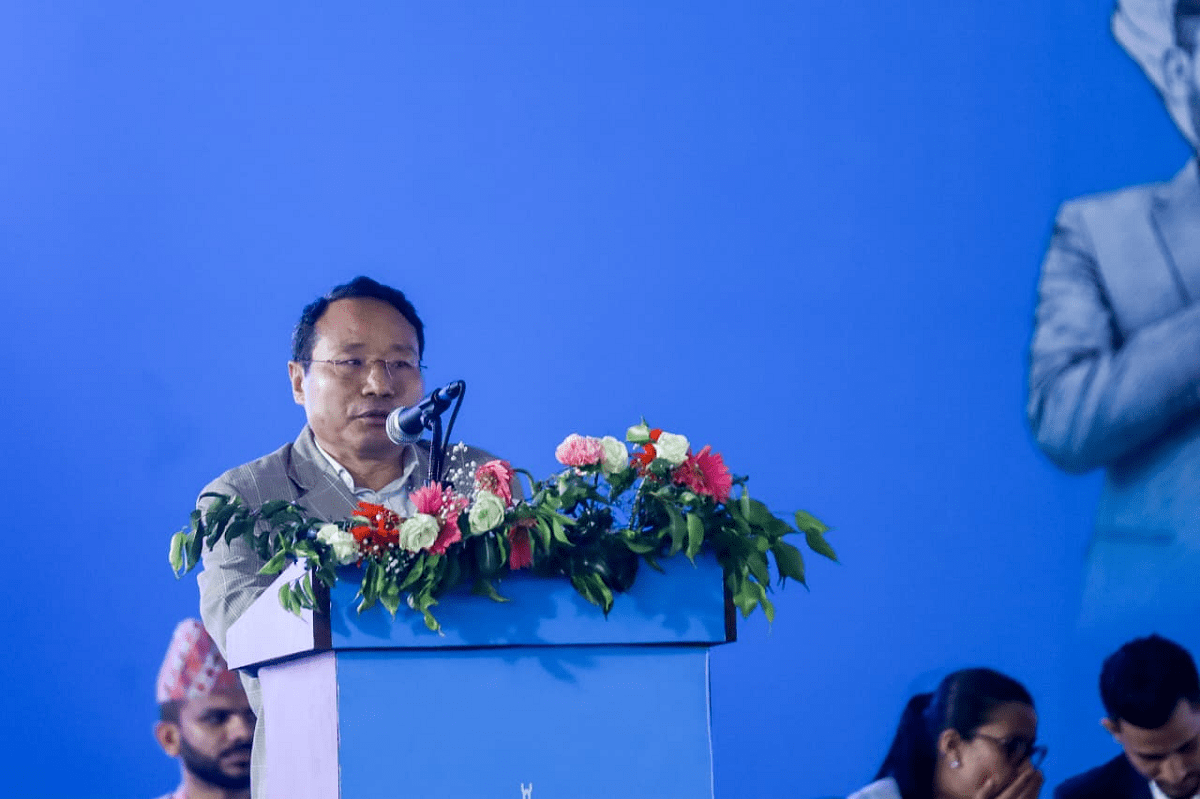
Addressing the party's first general convention on Sunday, he said that RSP is not just an campaign to change the government but an campaign to change political culture. He expressed the view that the country should be led from politics of sharing to meritocracy, from protectionism to competition, and from despair to hope.
Wagle mentioned that RSP is transforming from a party of protest into an institutional political power, stating that the party's goal is to build liberal democracy, competitive economy, equitable society, and capable state. He also emphasized the need to end the compulsion for youth to go abroad for opportunities.
Full Text
Respected Chairman, Honourable Prime Minister and Senior Party Leader, leaders of various political parties, representatives of the first general convention, and all Nepali brothers and sisters who are watching this historic moment with hope.
Today, Ashad 7, is the party's fourth anniversary. We are not just gathered for the general convention of a party. We are gathered to write a new chapter in Nepal's political history.
Rastriya Swatantra Party was born to do justice to the aspirations and ambitions of the entire nation. It is not a party formed from any division or unnatural agreement. It is the political expression of the long-accumulated despair and anger in Nepali society on one hand, and the strong aspiration for positive change on the other, that is Rastriya Swatantra Party.
When honest people started concluding that politics is not for good people,
When democracy stopped giving hope and power seemed like mere management of greed,
When the bridge of trust between citizens and the state began to collapse,
At that time, the desire for change turned into rebellion, and Rastriya Swatantra Party was able to become the democratic voice of that rebellion.
Past movements brought democracy to Nepal. The constitution came. The basis for inclusivity was prepared. We respect these achievements. But the institutional quality of democracy has not developed as expected.
Elections were many, but accountability remained weak.
The constitution was made, but institutions did not become strong.
The size of the state expanded, but the capacity of the state did not increase.
Rights increased, but the quality of public services did not increase.
The nature of economic activities changed, but limited employment opportunities did not expand.
This contradiction has created today's crisis.
Dear friends,
Nepal's problem is not just a lack of resources. Nepal's problem is also not a lack of potential. Our problem is a flawed incentive structure.
A system was created where it is difficult for honest people to enter politics, but easy for those with influence to succeed. A system was created where it is difficult to innovate in business, but easy to be close to centers of power.
A culture developed where the state distributes rather than creates, controls rather than increases competition, and protects influence rather than expands opportunities.
Therefore, our political objective is not just to change the government. It is an campaign to change political culture.
We want to move towards governance based on reason, method, and rules. We want to move from sharing to meritocracy. We want to move towards citizen-centric democracy.
Friends,
We have come through politics of radical reform not to defeat anyone, but to make Nepal win. We have not come to fight the old generation, but to establish a new political culture.
Therefore, RSP's strength should not just be anger, but hope. It should not just be criticism, but provide alternatives. It should not just be rebellion, but construction.
From today, we are transforming ourselves from a party of protest into an institutional political power.
We have to prove that the new generation not only knows how to ask questions, but can also provide answers.
Not only knows how to protest, but can also govern. Not only knows how to dream, but can also deliver results.
The main question of today's general convention is this: What kind of future does RSP envision for Nepal?
We want such a liberal democracy where elections form the government, but the constitution, rule of law, and civil liberties keep power in check – where the majority governs, but the minority is also respected.
We want such a competitive economy where competence, not influence, becomes the basis for success; where entrepreneurship and hard work open the door to prosperity, not crony capitalism or distorted socialism.
We want such an equitable society where a child's future is determined not by their surname, caste, geography, language, or family's economic status, but by their talent.
We want such a capable state that serves its citizens, not rules over them – that does not cause unnecessary trouble, but provides reliable support when needed.
We want such a Nepal where youth are not compelled to leave their country in search of opportunities – where labor, skill, knowledge, and creativity find respect and opportunity in this very soil.
Here, farmers and laborers can live with pride, entrepreneurs can invest without fear, and every citizen can be hopeful about their future.
We want such a confident Nepal that does not wait for others' favors or assistance to build its destiny – that establishes itself as a progressive nation of the 21st century by relying on the potential of its citizens, the strength of its institutions, and the courage of its dreams.
Friends,
History gives every generation an opportunity. Our generation has received that opportunity. Now the only question is: Will we utilize this rare opportunity? Will we be remembered in history as the generation that gave Nepal a new direction?
I am confident that this first general convention of Rastriya Swatantra Party is not just an organizational program. It can be the beginning of Nepal's political renaissance.
It is a declaration of a journey from despair to hope, from irresponsibility to accountability, from protectionism to competition, and from wayward politics to open, capable, and results-oriented democracy.
Come, let us turn despair into hope, anger into construction, and rebellion into transformation. Let us move forward on the journey to make Nepal a liberal, prosperous, equitable, and confident nation.
Let us take the initial steps of this long journey from Chitwan itself. Thank you.
This specific news has been automatically translated by AI. As a result, there may be some inaccuracies or language errors.
_DIPzASvc9B.jpg)