Lalitpur Metropolis Introduces Reforms in Building Standards and Land Protection

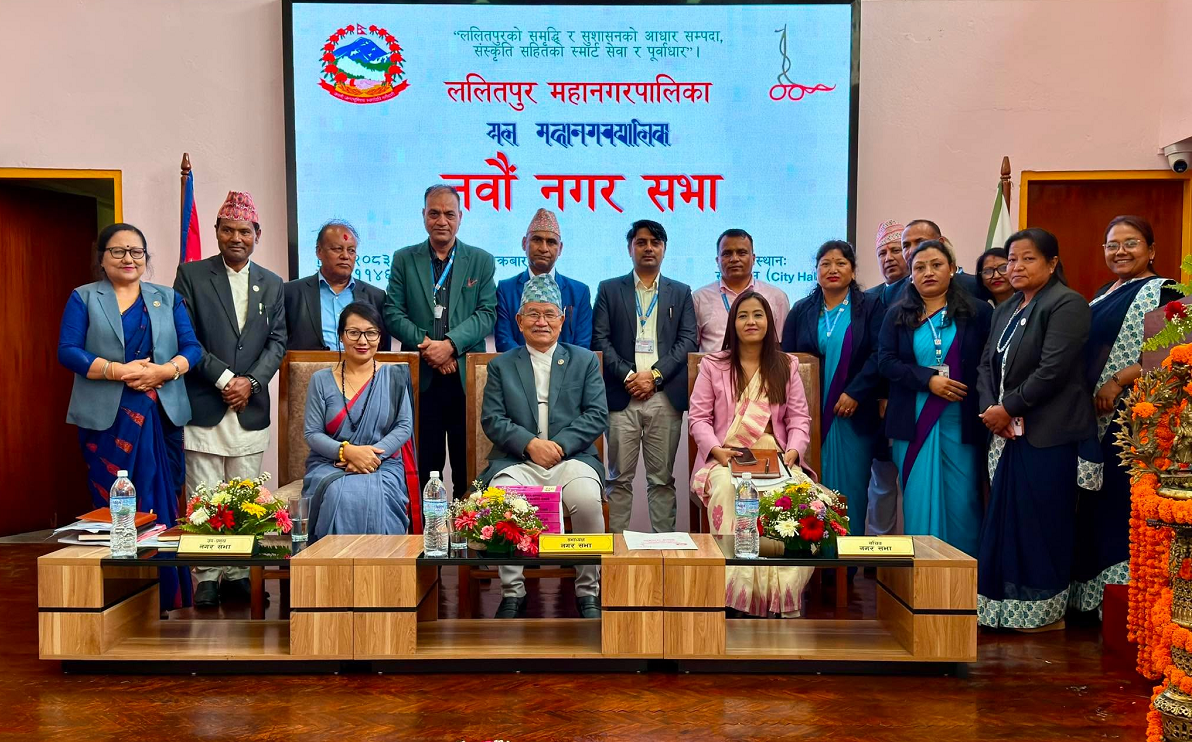
Kathmandu. Lalitpur Metropolitan City has brought significant reform programs in building construction standards, map passing process, and land protection arrangements for organized and eco-friendly urbanization. The metropolitan city's upcoming fiscal year 2083/084 policy and program aims to make the urban area environmentally friendly and promote groundwater recharge by tightening building completion standards.
Eco-friendly Infrastructure Mandatory, Emphasis on Digital Map Passing System The metropolitan city has continued its policy of requiring new buildings to meet environmental standards to make the city eco-friendly. In old urban areas where possible, and in new areas, building completion certificates will be issued only after septic tanks, soak pits, ground recharge pits, fire control equipment, and planting at least two trees are fulfilled. Furthermore, programs will be conducted to raise public awareness about building construction standards and building codes. To make the map passing process more efficient and hassle-free, the metropolitan city has stated that it will continue the paperless technology through digital signatures by improving the 'e-BPS' system currently in use.
Special Concession in Map Passing for Small Plots Targeting landowners affected by road expansion, the metropolitan city has made a new lenient arrangement in the map registration process. The policy and program mention that a special legal arrangement will be made to register maps based on old land ownership certificates even for land with an area of less than two annas and two paisa remaining after road widening or in previously existing single plots.
Metric Addressing, Parking, and Public Land Protection The metropolitan city's policy and program mention the continuation of distributing house numbers based on the metric addressing system to make urban management scientific. The metropolitan city plans to link this system with building documentation and revenue collection processes.
To reduce traffic and parking problems, the policy of making underground parking mandatory for commercial and business buildings constructed on land adjacent to roads up to 14 meters wide has been continued. However, it is the metropolitan city's policy not to make underground parking mandatory for small plots with a frontage of less than 4 meters. The metropolitan city has stated that a separate special mechanism will be formed for the full implementation of the policy to collect data and demarcate public lands within the metropolitan area to protect public property.
This specific news has been automatically translated by AI. As a result, there may be some inaccuracies or language errors.