Karnali Province Receives Increased Federal Grant Amidst Implementation Challenges
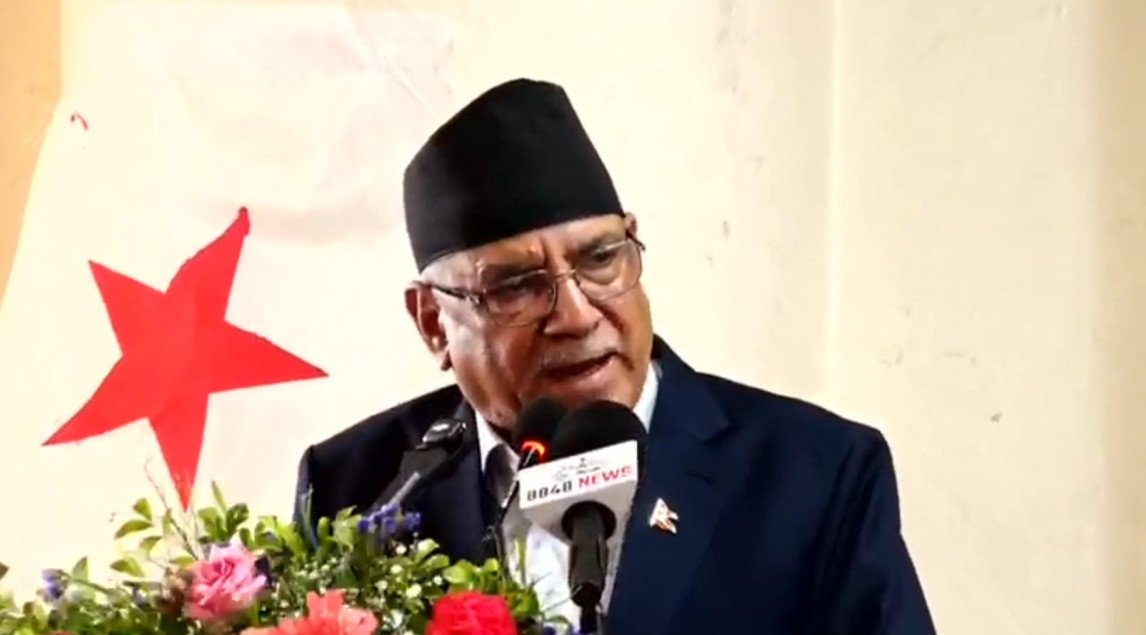
Surkhet. After hearing the budget speech for the upcoming fiscal year (2083/084) presented by Federal Finance Minister Swarnim Wagle on Jestha 15, Karnali's Chief Minister Yamlal Kandel said at a public event, 'The government led by Balen Shah also neglected Karnali in the budget.'
Kandel stated that although much was included in the address, there was no budget in terms of figures. He had been saying this since the past—the center should provide budget to Karnali based on geography, not population. The budget being provided now is insufficient.
However, this time, the federal government has increased the grant amount provided to the Karnali Province government, led by Kandel himself.
According to statistics, the Karnali Province government has been given a grant of Rs 17.20 billion for the upcoming fiscal year, which is the second highest after Madhesh Province. Madhesh has received Rs 290 million more grant than Karnali.
The central government provides financial equalization, conditional, complementary, and special grants to the provinces.
For the upcoming year, the center has provided Rs 10.63 billion for financial equalization, Rs 5.42 billion for conditional grants, Rs 480 million for special grants, and Rs 660 million for complementary grants. If the revenue sharing provided by the center is also added, the limit of financial transfer to Karnali will exceed Rs 27 billion in the upcoming fiscal year.
According to the Ministry of Economic Affairs and Planning, Karnali received Rs 10.27 billion from revenue sharing in the current year. It will receive the same amount now.
Highest Grant in the Last 3 Fiscal Years
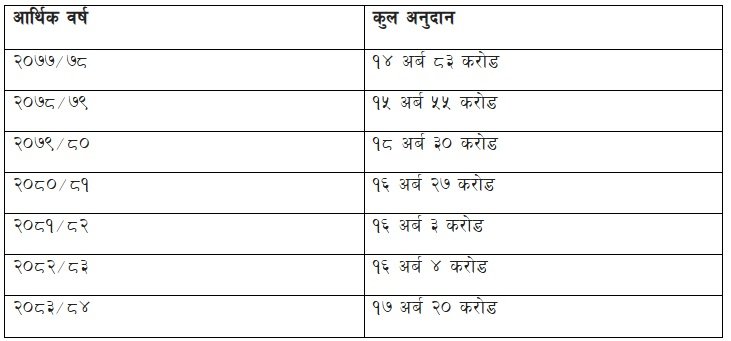
The total grant amount Karnali has received for the upcoming year is the highest in the last three years. Also, looking at the grant limit from the establishment of the province to date, it is the second highest.
In the fiscal year 2079/080, Karnali received the highest grant of Rs 18 billion to date. After that, it was limited to Rs 16 billion with a decline in the subsequent three fiscal years.
Now, the grant has increased by more than Rs 1 billion.
Total Grant Amount Received by Karnali in the Last 7 Years:
Among the four types of grants, Karnali receives more equalization grants every year compared to other provinces.
In the upcoming year, Karnali will receive Rs 10.63 billion, while Bagmati received only Rs 8.42 billion. Considering Karnali's geographical remoteness and low internal income, Karnali receives more grants under this head.
Karnali is completely dependent on central grants. The province's own internal income cannot even account for 30 percent of the total budget.
When the total budget of Rs 32.99 billion was presented for the current fiscal year 2082/083, the share of internal income was set at Rs 960 million. However, analyzing the data so far, it is difficult to earn even Rs 800 million.
Lalit Thapa, an accounting officer at the Provincial Auditor General's Office, stated that the province government's internal income was Rs 590 million by the end of Baishakh. It is difficult to earn Rs 200 million in Jestha and Ashad.
Whereas the entire budget is dependent on central grants. Additionally, Rs 5 billion has been kept as a source of expenditure by not being able to spend the amount.
Karnali's Size is Also Increasing as Federal Grants Increase
As the grant amount from the center has increased, the Karnali Province government is also increasing its budget size.
Karnali government has almost finalized preparations for the upcoming budget to be presented in the parliament on Ashad 1.
On one hand, it is said that the center has disrespected Karnali in the budget, but on the other hand, the province government is being criticized for not fully implementing the grant amount provided by the same center. Stakeholders are questioning the capacity of those in the province's leadership.
Chetankumar Timilsena, spokesperson and deputy secretary of the Ministry of Economic Affairs and Planning, said that the ceiling has been distributed by increasing it by 1 percent compared to the current fiscal year. Accordingly, Karnali's budget for the upcoming fiscal year is estimated to be between Rs 33-34 billion.
Secondly, there are indications that a large portion of the current year's budget will not be implemented. Due to the Iran war, the prices of asphalt and petroleum products have skyrocketed, and most infrastructure projects have come to a standstill.
The Ministry of Economic Affairs and Planning stated that the budget size for the upcoming year has been increased because more than Rs 7 billion from the current year is expected to be saved.
Karnali's Problem: Budget Shortage or Implementation?
On public platforms, most Karnali leaders' speeches are—the center did not provide as much budget as it should have for Karnali.
However, there is a debate going on now whether the problem is a budget shortage or implementation.
On one hand, it is said that the center has disrespected Karnali in the budget, but on the other hand, the province government is being criticized for not fully implementing the grant amount provided by the same center. Stakeholders are questioning the capacity of those in the province's leadership.
The main agenda of the new Chief Minister or Finance Minister seems to be improving budget implementation. However, the implementation status of the development budget is very weak at the end of the fiscal year.
Former Finance Minister and spokesperson for the Karnali government, Binod Kumar Shah, says that budget implementation is the main challenge. 'Considering Karnali Province's needs and remoteness, it is natural to ask for more budget or for it to be higher. This should not be taken otherwise,' he told RatoPati. 'But the main problem now is not the budget shortage, but its implementation.'
He stated that the budget allocated so far has not been fully implemented.
'We are trying to improve from our side, and we need to pay attention to why implementation is not happening and whose fault it is,' he added. 'Making policies and programs is the government's job, which the government is doing. However, the main party responsible for implementation is the bureaucracy. Instead of everyone just blaming the minister, it is necessary to do a micro-analysis of the real reasons and reality behind the non-implementation.'
This specific news has been automatically translated by AI. As a result, there may be some inaccuracies or language errors.