World Environment Day: History, Challenges, and Azerbaijan's Role

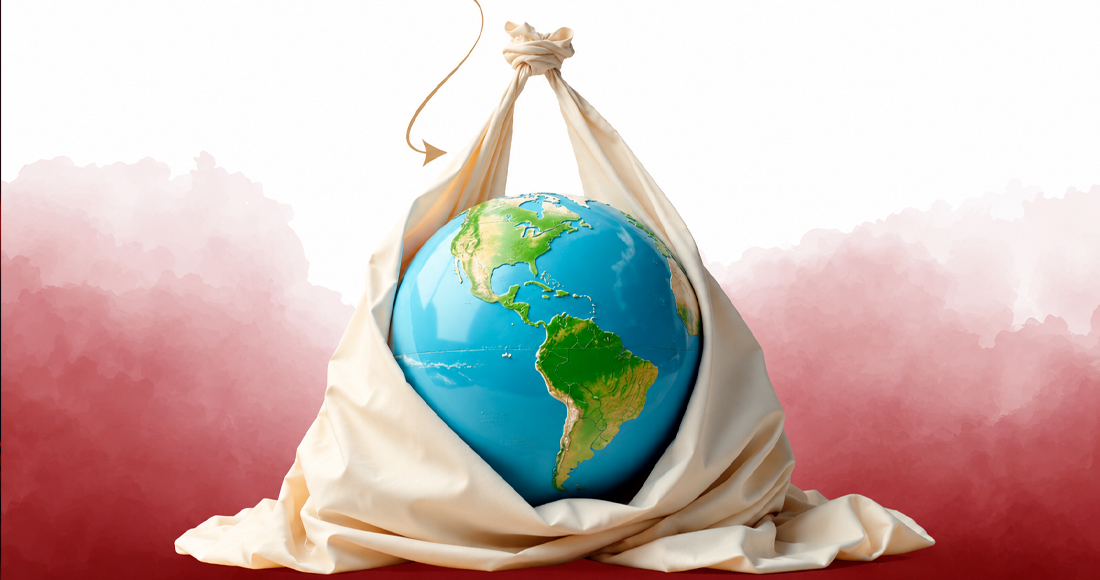
World Environment Day is celebrated worldwide every year on June 5. The main objective of this day is to raise public awareness about environmental protection and the challenges of climate change. The long-term objective is to build a safe future by protecting nature and reducing the effects of climate change.
Recognizing the need for political and social awareness worldwide for environmental protection, the United Nations General Assembly organized the World Environment Conference in Stockholm from June 5 to June 16, 1972. In accordance with the decision of that conference, World Environment Day was first celebrated on June 5, 1973, one year later.
Since then, under the leadership of the United Nations Environment Programme, all nations of the world have been celebrating World Environment Day.
In its five-decade-long history, World Environment Day has become the world's largest environmental forum, with over 150 countries participating. On the other hand, during this long period of World Environment Day, environmental crises on Earth have also increased in the name of human civilization development. Global temperatures have risen unexpectedly and uncontrollably. Even so-called developed countries are pushing human civilization to the brink of destruction.
The environmental protection campaign, which began five decades ago to raise general awareness, has now become the main means of fighting the extreme crisis of climate change, biodiversity loss, and increasing pollution. We are realizing that under the shadow of that campaign, these problems have reached a frightening state in different forms.
Looking at the five-decade history, the slogans and agendas of Environment Day have changed with the demands of the time. In the early 1970s, the world focused on the basic relationship between human settlements and the environment with the slogan 'Earth One'.
In the two decades from 1980-2000, policy issues such as ozone layer depletion, sustainable development, and green city construction were prioritized for World Environment Day. Similarly, in the decades of the 21st century and recent years, it has been focused on challenges such as reducing plastic pollution and restoring ecosystems that require immediate action.
The impact of plastic pollution and efforts to reduce it are important issues. Plastic pollution has emerged as the most serious problem and environmental challenge for human civilization. It is rapidly destroying the Earth's water, land, and atmosphere.
Since plastic is a non-biodegradable substance in soil, it reduces soil fertility and obstructs the natural process of groundwater resources. Similarly, plastic entering rivers and oceans destroys marine life, affecting the marine food web.
Even more dangerous is microplastic, an invisible poison. Microplastics, formed by the fragmentation of plastic, have entered the human body, including blood and breast milk, through drinking water, salt, and breathing, increasing the risk of serious diseases.
In addition, climate change, biodiversity loss, and increasing pollution have become serious issues. The slogan for World Environment Day 2026 is 'Now for Climate', inspired by nature. This slogan seems to address biodiversity loss. This slogan is very important at a time when increasing population and disorganized human activities are causing serious crises for nature itself. The essence of this slogan is that we all need to understand nature to protect the environment and maintain ecological balance. We are in a situation where we must draw inspiration from nature for a balanced climate and our safe future.
Nature is, in its subtle form, a balanced mixture of the five elements: earth, water, air, sky, and heat. Physically speaking, we humans and the world around us, plants, animals, etc., are components born from these five elements. The continuity and balance of their lives is the purpose of nature. This year's program is focused on climate change and nature conservation.
All countries of the world celebrate World Environment Day with great importance. However, each year, a specific country serves as the host nation for World Environment Day. This year, the host country is Azerbaijan. The Republic of Azerbaijan shares borders with the continents of Asia and Europe. The capital of Azerbaijan is Baku.
The host country of World Environment Day leads the main global program. The host country, in collaboration with the United Nations Environment Programme, plays a key role in raising environmental awareness worldwide and promoting practical environmental conservation activities. The host country presents its specific environmental efforts to the world, giving an exemplary message to the world.
Azerbaijan has put forward policies such as green energy, development of zero-emission zones, and a ban on single-use plastics as a continuation of 'COP Twenty-Nine' (COP29). Furthermore, it is calling on the world community to join campaigns like 'Now for Climate' to solve the Earth's climate crisis.
Although the United Nations has been trying to implement a global treaty to end plastic pollution by the end of 2024, we can understand how much impact it has had here by looking into our own kitchens and backyards as Nepalis. The European Union and many developed countries have completely banned single-use plastics such as straws, plates, and spoons.
Industries have already made public the concepts of rejecting, reducing, and not reusing them. However, we Nepalis often make fun of such efforts by government and non-governmental organizations.
In countries like Nepal, in addition to the degradation of soil fertility and obstruction of groundwater renewal, plastic bags and bottles block drainage systems, causing artificial floods and waterlogged roads during the monsoon season.
Although the Government of Nepal has repeatedly announced a ban on plastic bags thinner than 40 microns, its implementation has been weak due to lack of effective monitoring. Some wards in Pokhara, Ilam, and Kathmandu are trying to declare local areas as plastic-free zones and promote cloth bags. However, local levels have not been vigilant in expanding these efforts.
The awareness to unite the Nepali people in the global effort to find solutions to increasing pollution, biodiversity loss, and climate crisis is progressing at an extremely slow pace.
Campaigns run at government and non-governmental levels for plastic pollution reduction, tree plantation, and sustainable use of natural resources have not reached the general public due to corruption.
Nevertheless, there is no alternative for the Nepali people but to come forward spontaneously in their role as citizens to ensure the right to live in a clean environment by cleaning up and respecting nature from their respective positions. This crisis will not end unless citizens themselves are imbued with a collective resolve to abandon the use of plastic.
If plastic pollution is understood only as a waste management problem, the problem cannot be solved; rather, it will become more severe. It must be controlled at the time of consumption. It cannot be meaningful as long as things like the government implementing strict laws and monitoring systems, and industries producing alternatives, remain within theoretical limits.
Therefore, it is necessary to understand the messages given by World Environment Day today for immediate collective action for its conservation. By changing our small daily habits at the individual level, we can make a significant contribution to reducing plastic pollution. If we have the awareness and determination of what we can start doing ourselves from today, then we can say that the World Environment Day campaign has taken the right path.
This specific news has been automatically translated by AI. As a result, there may be some inaccuracies or language errors.