
National Dalit Commission Chairman Highlights Lack of Progress for Dalit Community

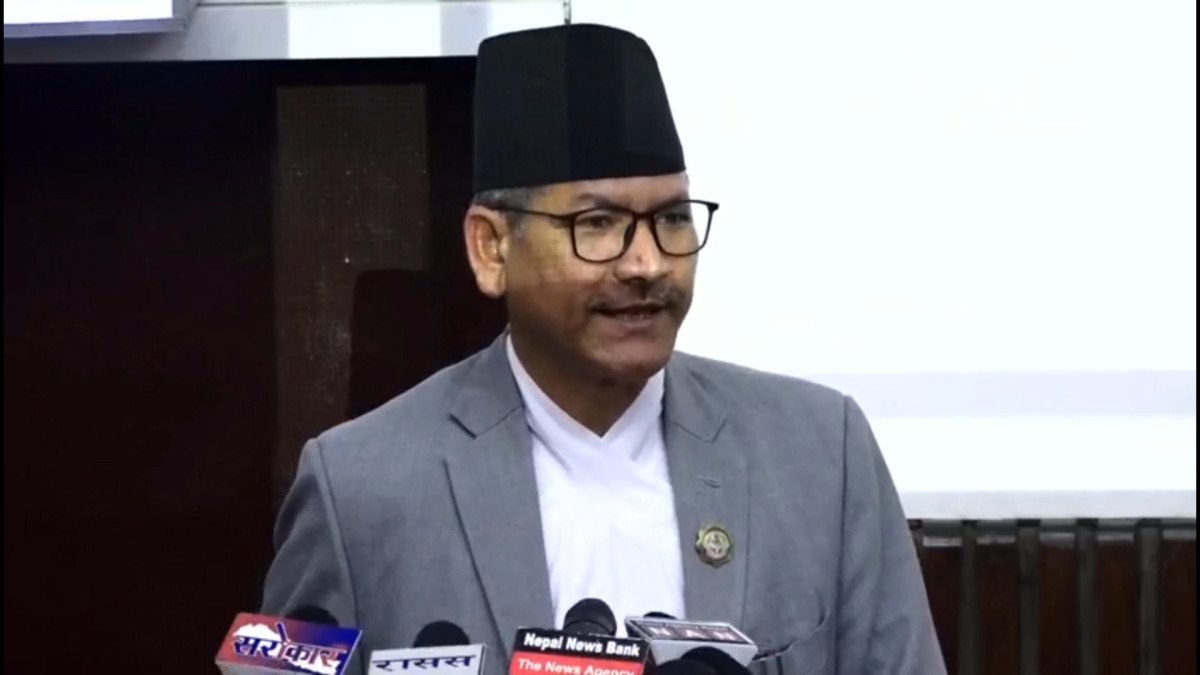
Kathmandu. National Dalit Commission Chairman Devraj Bishwakarma has stated that the expected improvement in the living standards of the Dalit community has not occurred due to the lack of change in the thinking and working style of responsible individuals within the state structure.
Speaking at a program organized in Lalitpur on Thursday, Chairman Bishwakarma mentioned that even though excellent constitutions and laws have been enacted in the country, they have not brought about change in the daily lives of the Dalit community. Chairman Bishwakarma stated that the Dalit community is still deprived of basic necessities such as food, shelter, clothing, education, health, and employment. He argued that the tendency to consider budget allocation for the upliftment and mainstreaming of the Dalit community as 'unproductive expenditure' still prevails.
He stated that it is wrong to perceive discussions on Dalit rights and women's rights as inciting violence, emphasizing that open debate and dialogue on issues of discrimination are necessary. Recalling the Sustainable Development Goal's slogan 'Leave No One Behind,' Chairman Bishwakarma said that the country cannot move forward by leaving behind the marginalized Dalit community who have been excluded for ages.
He stressed that the state should not belong only to certain individuals or the 'well-to-do' class but should be common to all citizens, including the marginalized and socio-economically backward.
He said, 'Even today, the life of the Dalit community is extremely difficult. They are deprived of basic necessities like food, shelter, clothing, education, health, and employment. We have made a good constitution, and some laws and regulations have also been arranged, but the provisions of the constitution and laws alone do not change people's lives. The state system is reflected in the thinking and working style of those who take responsibility in the state structure. Looking from the perspective of the Dalit community, our working style seems to reflect Manu Smriti and the Muluki Ain of 1910. The mentality of viewing budget allocation for the upliftment and mainstreaming of the Dalit community as unproductive expenditure still prevails.'
He mentioned that studies show that the resources and means of the state are still under the control of certain communities and expressed concern that the 'positive discrimination' policy currently adopted by the state is being ridiculed. He stated that no one should make the issue of Dalit community rights a subject of ridicule, and the National Dalit Commission is committed to continuously advocating for this.
This specific news has been automatically translated by AI. As a result, there may be some inaccuracies or language errors.
_fkg5u05PqN.jpg)


_6BsDewPY2j.jpg)