FIFA World Cup 2026: Format, Rules, and Host Cities

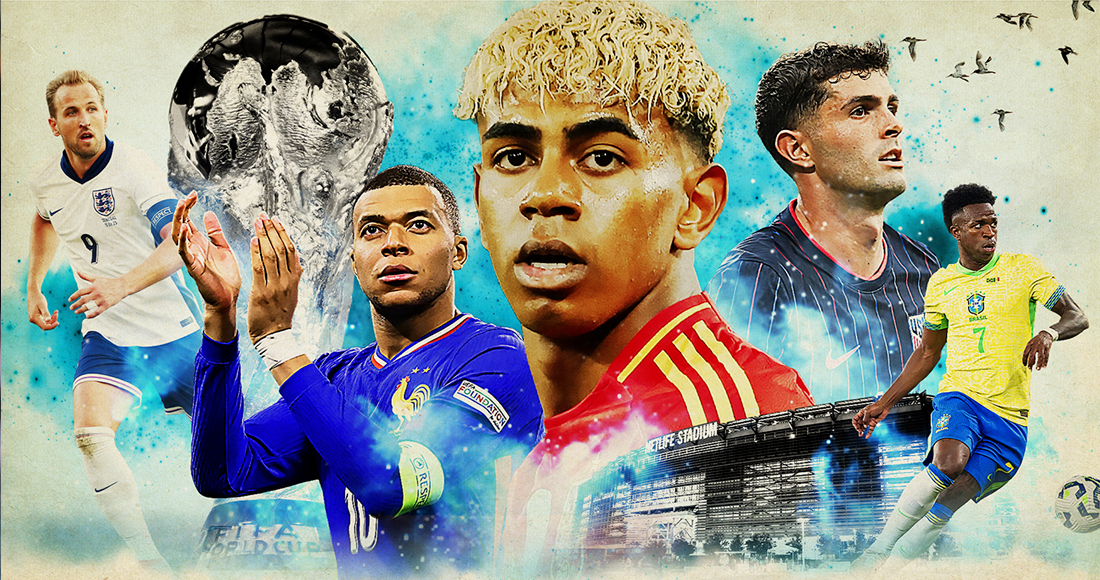
KATHMANDU. The 2026 World Cup will be jointly hosted by the United States, Canada, and Mexico. This is the first time in history that three different nations will come together to host this competition.
The opening match of the tournament will be held on June 11, 2026, in Mexico City, while the final will be played on July 19 in New Jersey. This time, for the first time, the size of the competition has been increased to include 48 teams, making this World Cup a record 39 days long.
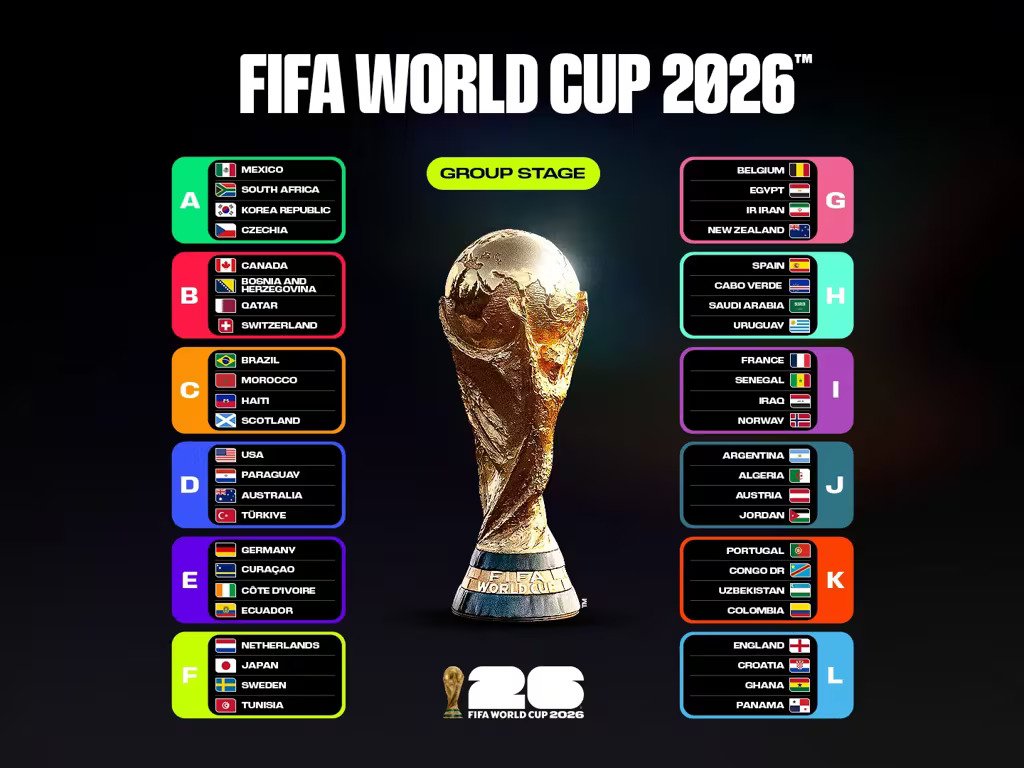
When the United States hosted the World Cup in 1994, only 24 teams competed. Compared to that, the number of teams this time is double. According to the new structure, there will be 12 groups of four teams each, and an additional knockout stage (Round of 32) has been included this time.
In which cities will the 2026 World Cup matches be played?
Matches of this World Cup will be held in 16 cities, including 11 in the United States, 3 in Mexico, and 2 in Canada.
- The list of host cities is as follows:
- United States: Atlanta, Boston, Dallas, Houston, Kansas City, Los Angeles, Miami, New York/New Jersey, Philadelphia, San Francisco, and Seattle.
- Mexico: Guadalajara, Mexico City, and Monterrey.
- Canada: Toronto and Vancouver.

Which teams will play in the 2026 World Cup?
A total of 1,248 players will compete in the final stage of this year's World Cup. Each nation will be allowed to announce a squad of 26 players, including three goalkeepers.
Teams qualified for the FIFA World Cup 2026:
- Host nations: Canada, Mexico, United States
- AFC (Asia): Australia, Iraq, Iran, Japan, Jordan, South Korea, Qatar, Saudi Arabia, Uzbekistan
- CAF (Africa): Algeria, Cabo Verde, Democratic Republic of Congo, Cote d'Ivoire, Egypt, Ghana, Morocco, Senegal, South Africa, Tunisia
- CONCACAF (North, Central America, and Caribbean): Curacao, Haiti, Panama
- CONMEBOL (South America): Argentina, Brazil, Colombia, Ecuador, Paraguay, Uruguay
- OFC (Oceania): New Zealand
- UEFA (Europe): Austria, Belgium, Bosnia and Herzegovina, Croatia, Czechia, England, France, Germany, Netherlands, Norway, Portugal, Scotland, Spain, Sweden, Switzerland, Turkey
Tournament Format
With the participation of 48 teams, this will be the biggest World Cup in history. This is a 50 percent increase compared to the 2022 tournament. With the increase in the number of teams, there will now be a total of 104 matches, which is 40 more matches than the previous World Cup.
As per the regular process, the 48 teams have been divided into groups of four for the 72 group stage matches. After the round-robin group stage matches, the top two teams from each group will advance to the knockout stage. Along with them, the best eight third-placed teams will also enter the next round.
There have been some changes in the rules this year. In case of a tie in points in the group, the first tiebreaker will not be goal difference. Instead, head-to-head results will be considered.
In the event of a tie between more than two teams in a group, head-to-head goal difference and head-to-head goals will be used as a basis. If the teams are still tied after the head-to-head tiebreaker, only the overall group goal difference will be considered. Then, the total number of goals scored and the lowest fair play points (points awarded based on yellow and red cards) will be calculated.
With the increase in the size of the World Cup, the knockout stage has also become larger. This stage will start from the Round of 32 and continue until the final. If the match is tied within the stipulated time, the winner will be decided through extra time and penalty shootouts.
What other new rules are there in this World Cup?
Apart from the format of the matches, some rules have been changed to keep the pace of the game brisk, and one change will pause the game for a short period in each half:
- To provide relief to players from excessive heat, a mandatory three-minute hydration break will be given between each half. This will give players rest and media rights holders an opportunity to sell additional advertisements.
- Players will have only five seconds to restart the game with a throw-in and goal kick.
- Players have a time limit of 10 seconds to exit the field when substituted.
- A player who receives medical treatment on the field must remain off the field for one minute. This rule will not apply in cases where a player is injured due to a foul that resulted in a card.
- Only the team captain will be allowed to protest to the referee or question decisions. Other players who do not comply may receive a yellow card.
- Video Assistant Referee (VAR) can review second yellow cards and corner kicks in cases of clear and serious errors.
What will the weather be like in the World Cup?
Excessive heat was a major problem in the Club World Cup held in the United States this year, and it will remain a concern in next year's World Cup.
Paris Saint-Germain manager Luis Enrique expressed dissatisfaction, stating that the first Club World Cup match against Atletico Madrid in Los Angeles had to be played in nearly 40 degrees heat. That match started at 12 PM local time.
Many coaches and players were affected by the excessive heat and humidity. Chelsea's Enzo Fernandez complained of dizziness during the match.
To combat the heat problem, FIFA may consider scheduling World Cup matches involving major European nations at night.
This specific news has been automatically translated by AI. As a result, there may be some inaccuracies or language errors.
_KDY0kg6t86.jpg)