Government Imposes 3% Education Equity Fee on Private Schools, Sparking Parental Outcry


Kathmandu. Parents are worried about increased financial burden following the government's announcement of 'Education Equity Fee' in the budget for the upcoming fiscal year.
The budget statement mentions that educational institutions operated by the private sector will collect a three percent education equity fee on all types of fees charged to students.
This announcement by the government has created an additional financial pressure on parents of private schools. Parents have demanded that the government not implement this announcement.
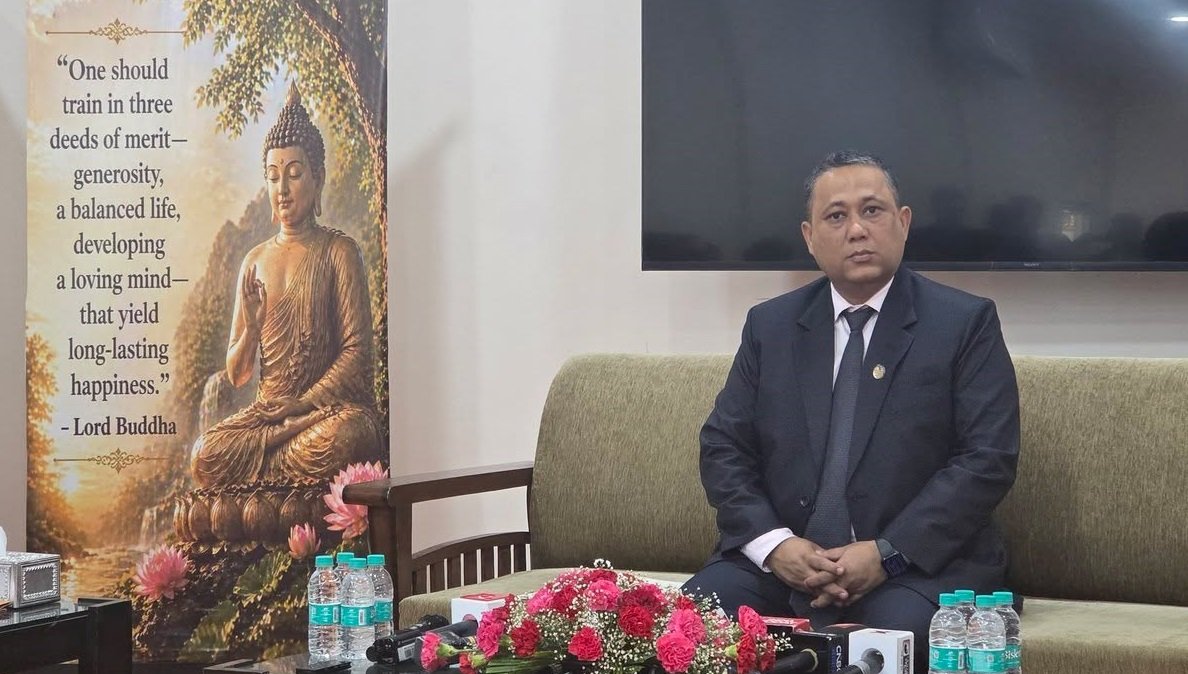
Keshav Puri, Chairman of the Parents' Association, stated that parents should not be burdened with various fees. He said, "Education is the responsibility of the state. The state should have coordinated with stakeholders before making such decisions. When it comes to education, the burden has always fallen on parents."
Puri said that the government should officially withdraw this equity fee announcement. He said, "We parents will not accept this decision of the government under any circumstances. The three percent tax will fall on the parents. The government should immediately announce that the imposition of tax on education will not be implemented."
Parents say they are further burdened by the high fees of private schools, and now an additional tax burden.
The Parents' Association had already issued a statement last Monday protesting the government's decision. "We have been seriously drawn to the announcement of imposing a three percent equity fee on student fees," the statement said. "Education is the responsibility of the state. For parents who send their children to private schools for quality education by cutting corners because they do not trust community schools, a three percent tax will be an additional burden."
Parents say they are further burdened by the high fees of private schools, and now an additional tax burden.
RB Katuwal, General Secretary of the Private Schools' Organization PABSON, said that the government's announcement to collect a 3% equity fee is wrong. He clarified that this step by the government would further victimize parents. He said, "The government's program to collect a three percent education equity fee on all types of fees charged by private educational institutions is wrong. The government must correct this decision."
Suvas Neupane, Chairman of NPABSON, said that the government has adopted a policy of punishing parents for sending their children to private schools. He said, "Although the current constitution of Nepal mentions free education up to the secondary level, the government has introduced a provision to punish parents for sending their children to private schools."
Neupane argued that private schools would naturally close if the quality of community schools improved, and stated that the government's decision should be corrected as the constitution provides for the 'right to choice'.
The Ministry of Education and Sports has clarified that the government has put forward the program of education equity fee on student fees to ensure quality education by arranging resources in community schools.
Suprabhat Bhandari, former president of the Parents' Association, said that the equity fee would affect millions of parents. He said, "Currently, there is increasing attraction towards private schools and aversion towards community schools. Millions of parents are educating their children with great difficulty. Firstly, the fees have increased, and secondly, collecting equity fee is an additional burden. The government could have imposed the equity fee on the school's income."
Private sector educational institutions include universities, colleges, schools, and technical institutes operated by the private sector, as well as institutions providing any form of education, excluding training and refresher courses.
The Ministry of Education and Sports has clarified that the government has put forward the program of education equity fee on student fees to ensure quality education by arranging resources in community schools.
Ministry spokesperson Shivakumar Sapkota said that the plan is to arrange resources for community schools and increase the public accountability of private schools. He said, "The government's decision will be implemented."
Sapkota mentioned that although the government has announced free education up to the secondary level, there is a lack of resources in community schools, and informed that a directive or framework will be created to implement and manage the government's program.
He stated that no further decision has been made regarding whether to collect additional fees from parents or deduct the three percent equity fee from the fees charged at the school. He said that the government's policy is to establish education as a basis for equity and prosperity.
The government claims that this scheme has been introduced for healthy regulation to make private sector educational institutions service-oriented and quality-focused. Following this decision by the government, the Parents' Association, PABSON, NPABSON, and HISSAN are holding internal discussions on how to proceed.
The budget statement mentions that an education equity fee will be collected on all types of fees charged by private sector educational institutions to students. The budget statement also states that such fees will be spent on access to quality education and educational infrastructure programs.
According to the Ministry of Education, approximately 5.2 million students study in community schools and about 2 million students study in private schools across the country.
This specific news has been automatically translated by AI. As a result, there may be some inaccuracies or language errors.
-1780761623189_v_HD5Pdcbrzy.webp)