NPI Suggests Strategic Policy Opportunity in Non-Resident Nepali Act Amendment


Kathmandu. Nepal Policy Institute (NPI) has suggested the government take the ongoing debate on amending the Non-Resident Nepali (NRN) Act not just as a regular technical reform but as a broad and strategic policy opportunity.
Experts have pointed out the need for the Government of Nepal to provide an umbrella policy and legal framework for all Nepalis residing abroad by enacting a 'Policy on Engagement of Nepalis Abroad' and subsequently a dedicated 'Act on Nepalis Abroad'.
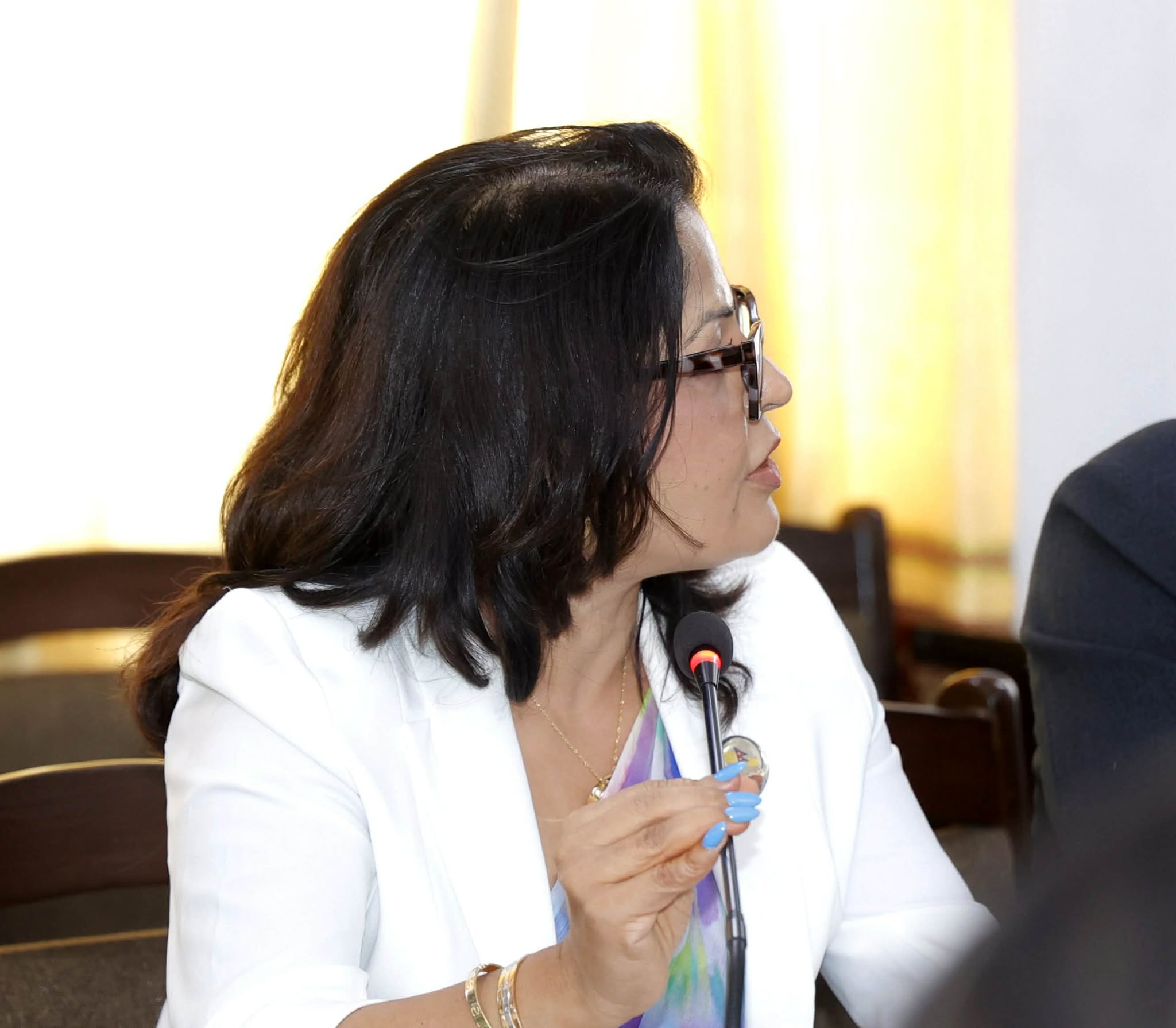
Speaking at a policy dialogue organized by NPI, experts emphasized the need to view the diaspora not just as a source of remittances or investment, but also as a source of skills, knowledge, technology, entrepreneurship, and global networks. Professor Binit Sharma presented data stating that the number of Nepalis residing abroad is approximately 3 million, about 10 percent of Nepal's population, and argued that consumption based solely on remittances cannot lead Nepal towards long-term transformation. He cited that remittances accounted for about 25.3 percent of Nepal's Gross Domestic Product in the fiscal year 2023/24, arguing that the diaspora should be considered a global development asset.
Similarly, Dr. Prabhat Adhikari emphasized the need for diaspora engagement in the context of Nepal's declining demographic situation. Presenting data showing that Nepal's fertility rate has dropped from 2.51 in 2011 to 1.85 in 2021, with more than 1.67 million external departures in 2024 alone, he interpreted this as a potential demographic trap. He warned that if Nepal does not strengthen its relationship with its own diaspora, the gaps in workforce, population, and identity could deepen in the future.
The dialogue also heard voices linking the issue of continuation of citizenship by descent with economic confidence. Basudev Ghimire stated that the current Non-Resident Nepali citizenship system has not created sufficient trust. He said that Nepalis with citizenship by descent are forced to give up their full citizenship and accept a weaker legal status. Arguing that legal intimacy creates economic confidence, he said that a large capital could be mobilized if Nepalis residing abroad could be connected to building homes, investing, and engaging in entrepreneurial activities in Nepal.
From a legal perspective, senior advocate Dr. Narayan Ghimire stated that Article 14 of the constitution is an independent, controlling, and guiding constitutional provision for Nepali-origin individuals holding foreign citizenship. He opined that since this limits Non-Resident Nepali citizenship to economic, social, and cultural rights, a constitutional review or amendment of Article 14 might be necessary to address issues like the continuation of citizenship by birth or descent. However, he suggested that while extensive reforms are needed in the current Non-Resident Nepali Act, the government can issue necessary circulars or administrative directives to remove difficulties in investment, property, business, and administrative processes.
Former Justice Dr. Shri Krishna Bhattarai, however, argued that the relationship with Nepalis residing abroad should not be viewed solely based on Article 14 of the constitution. He stated that many Nepalis who have acquired or are eligible for citizenship by descent are also connected with other clauses of the constitution and citizenship laws, and therefore, the notion that citizenship by descent automatically ceases simply because a Nepali later acquired foreign citizenship should not be adopted. He said that if there is political and legal consensus on the continuation of citizenship by descent, clarity can be brought through necessary amendments in the Citizenship Act.
The discussion concluded that Nepal needs a long-term, clear, and inclusive policy and legal framework for all Nepalis residing abroad. It was suggested to adopt 'Nepalis Abroad' as an inclusive policy term and to clearly differentiate between Nepali citizens residing abroad, individuals holding foreign citizenship, and persons and communities of Nepali origin. Emphasis was placed on creating connecting mechanisms for communities of Nepali origin and Nepali-speaking people who have historically resided in places like Myanmar/Burma, Fiji, Thailand, and Bhutanese Nepali communities.
Furthermore, it was recommended to protect Nepali citizens residing abroad, including migrant workers, students, and professionals, as Nepali citizens with rights to labor, consular assistance, social security, reintegration, and external voting rights. Experts suggest that the continuation of citizenship should be viewed not just as a legal or emotional issue, but as a basis for economic confidence, knowledge transfer, generational continuity, and national development.
“This is not just a demand from the diaspora, but a constructive proposal to find a solution to a real national policy problem in collaboration with the state,” said Dr. Khagendra Raj Dhakal, Founder and Chairman of Nepal Policy Institute. NPI stated that the amendment of the Non-Resident Nepali Act should be understood not just as a separate legal practice, but as a broad national policy agenda that connects Nepalis living outside Nepal with Nepal's long-term development, diplomacy, and global identity.
The institution believes that future reforms should be guided by a comprehensive policy on the engagement of Nepalis abroad, which will support the protection of rights, continuity of identity, promotion of investment, and mobilization of knowledge.
This specific news has been automatically translated by AI. As a result, there may be some inaccuracies or language errors.