Pokhara Metropolis Succeeds in Removing Encroachments on Phirke River


Kaski. Pokhara Metropolitan City has succeeded in removing encroachments on the Phirke river after a long effort. The plan to remove encroachments on this river, which flows through the middle of the market, was from the previous term's representatives.
The then Mayor Man Bahadur GC had also started by running a dozer. However, that work could not proceed beyond one day. Locals had also gone to court against the Phirke criteria. Due to various reasons including this, the attempt to remove encroachments had not been successful.
Now, with strong support from the federal government, Pokhara Metropolitan City has started the work of removing the riverbank structures on the Phirke from Sunday. The work was completed peacefully on the first day. There are 35 private and personal permanent structures and 97 temporary structures on the riverbank. Similarly, there are 18 institutional permanent and 10 temporary structures.
The metropolis has stated that the work of removing encroachments will continue as an ongoing campaign. Locals have also supported the metropolis in the work of removing riverbank structures. Although they say that structures built on the riverbank should be removed, locals have opposed the criteria thereafter. Citizens of the Phirke area complain that the Phirke criteria of six meters is not scientific and practical.
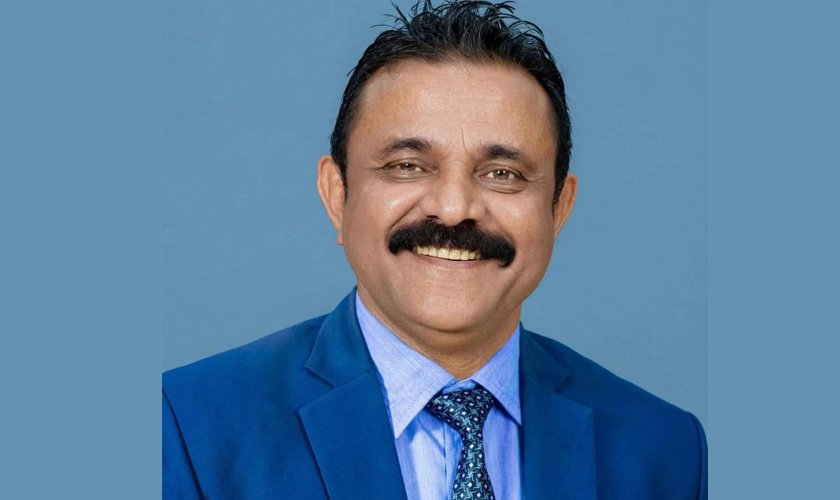
After clearing the riverbank of Phirke, the metropolis has planned to start the Phirke Corridor project. The metropolis has stated that assistance will be received from donor agencies for this project. The Phirke Corridor project is a visionary campaign to establish Pokhara as a 'green, clean, modern, and world-class river-corridor city', said Metropolitan Mayor Dhanraj Acharya.
According to Mayor Acharya, the main concept of the Phirke Corridor includes maintaining a minimum six-meter criterion on both sides of the Phirke river, with systematic footpaths, safe cycle lanes, and attractive walkways for 'morning' and 'evening' walks.
'The goal is to give Phirke River a new urban identity by connecting it with natural beauty, environmental balance, tourism, and citizens' lifestyles. While preserving the natural flow of the river, both banks will be decorated with green belts, native plants, stone embankments, smart LED lighting, and eco-friendly public open spaces,' said Metropolitan Mayor Acharya.
The metropolis plans to build resting places in the style of Pokhara at various places within the corridor, coffee points and open cafes, selfie points and viewing spots, small open parks and resting platforms, and cultural and artistic structures, with child-friendly and senior-citizen-friendly open spaces.
'We will make the Phirke Corridor not just a walking path, but a public destination for lifestyle and entertainment. This will be the new urban identity of future Pokhara, where nature, modern infrastructure, tourism, health, environment, and citizen lifestyle will be beautifully blended,' Acharya said.
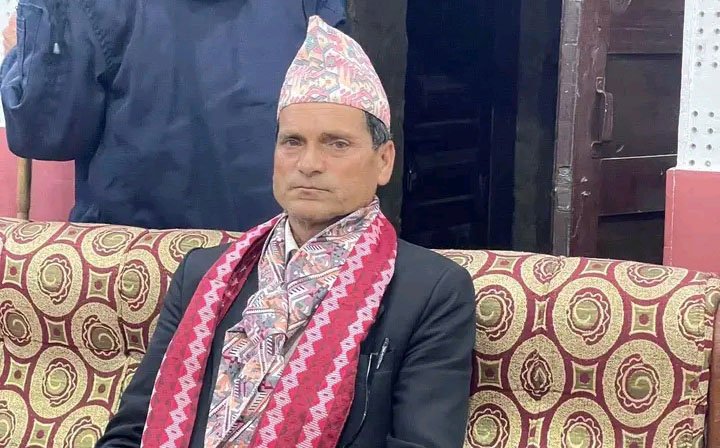
Loknath Bhandari of Ganesh Tole, Pokhara, says that after demolishing the riverbank structures, proper management and sustainable development plans should be brought. 'We locals support the work of clearing the Phirke river. However, in the name of criteria, arbitrary criteria cannot be applied to private land. If the metropolis needs it, compensation should be given. After demolishing the structures around Phirke, a plan for its systematic development should be brought,' Bhandari said.
The Phirke, which stretches for eight kilometers from Pokhara Ward No. 18 Andheri Khuna through Wards No. 2, 4, 5, 7, 8, 17 to the tourist destination of Phewa Lake-Gaighat in Ward No. 6, is eight kilometers long.
This specific news has been automatically translated by AI. As a result, there may be some inaccuracies or language errors.