Construction Sector Faces Crisis Due to Price Hikes

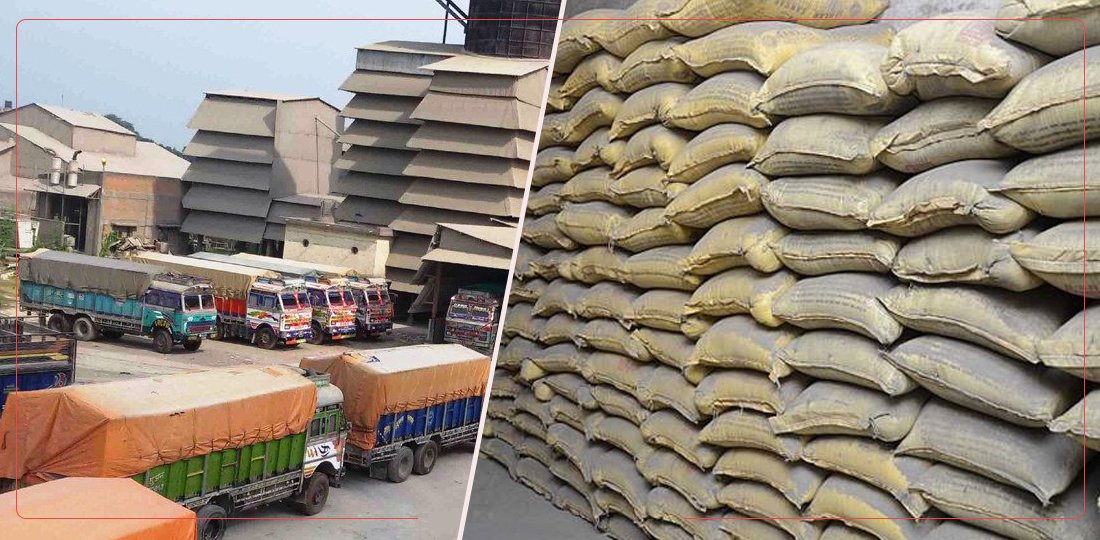
Kathmandu. The direct impact of the West Asian conflict has been felt in Nepal's infrastructure sector. Due to the Israel/US-Iran conflict, the price of petroleum products has increased significantly. Along with this, the price of construction materials in Nepal has increased by up to 107 percent.
Construction entrepreneurs have become agitated, stating that the future of approximately 30,000 development projects operating across the country has become uncertain due to this unnatural price increase.
For the past five days, construction entrepreneurs, represented by the Federation of Contractors' Associations of Nepal, have been protesting across the country. Entrepreneurs are demanding scientific price adjustments in all types of contracts, not blacklisting contractors whose work has stopped, and extension of project deadlines and budget management.
What is the price increase for which material?
According to Mangal Bahadur Shahi, spokesperson for the Federation, the prices of main materials used in the construction sector have increased unnaturally. According to the data provided by him, the price of bitumen, which is essential for road construction, has increased by 107 percent. Bitumen, which was available for Rs 75 per kg some time ago, has now reached Rs 155.
Similarly, the price of diesel, required for operating construction equipment, has increased by 62 percent. Due to the Middle East war affecting the international market, the price of diesel in Nepal has reached Rs 224 per liter (which was at its lowest before). He stated that the prices of other materials have also increased unnaturally.
This is the situation of price increase:
- Bitumen: 107 percent
- Steel bars: 35 percent
- Cement: 15 percent
- Labor wages: 25 percent
- Various construction materials (bricks and others): 20 to 25 percent
'Construction sector going through the biggest crisis in history'
Rabi Singh, former president of the Federation of Contractors' Associations of Nepal, said that the country's construction sector is going through the most serious crisis in its history. He claimed that the construction industry is on the verge of collapse due to the excessive price increase of materials, the oppressive behavior of government agencies, and the lack of skilled manpower.

In a conversation with Ratopati, Singh gave the example of the exorbitant increase in the price of construction materials, especially bitumen, and said, 'The price of bitumen, which used to cost Rs 85 per kg, has now reached Rs 185. Not only has the price increased, but it is also very difficult to find in the market, and there is no guarantee of the quality of the available materials.'
According to Singh, the price of steel bars had recently increased from Rs 75-76 per kg to Rs 97, but now it has come down slightly to below Rs 90 (around Rs 87-90) due to decreased demand. This is an increase of about 10-12 percent compared to the initial price. The price of cement had reached up to Rs 780 per bag. Currently, due to low demand, it has come down to around Rs 600 to Rs 650.
Singh said that this price increase in construction materials has added a burden of 30 to 40 percent to the cost of overall construction projects. According to him, in addition to the increase in material prices, the scarcity in the market and the arbitrary imposition of taxes on riverbed materials by local bodies have further burdened the entrepreneurs.
He also suggested that the government should prioritize projects to overcome the current crisis. 'If the state's treasury is weak, let's not proceed with all projects, but let's prioritize highways and river control works that are lifelines, and adjust the increased prices for those works,' he said.
Nagdhunga-Mugling like major projects are underway, but road blacktopping works that directly rely on bitumen and diesel have slowed down in many places. It is certain that the deadlines of projects will be extended and costs will increase as contractors lacking bitumen stock cannot move forward with the work.
He emphasized that development construction work will not progress with oppression and threats alone, and that the government must ensure an environment for entrepreneurs to work and the availability of materials.
Similarly, according to spokesperson Shahi, construction entrepreneurs have already incurred a loss of approximately Rs 10 billion due to this price increase. 'There has been a loss of Rs 6 billion in diesel alone and Rs 4 billion in bitumen,' said spokesperson Shahi. 'In Nepal, February to June is the main construction season, where 60 percent of the annual consumption is used. When prices increase during this period, entrepreneurs are on the verge of bankruptcy.'
This crisis has affected approximately 30,000 small and large projects across the country. Entrepreneurs have been protesting, stating that projects contracted at old rates cannot be carried out at current market prices.
Department initiates efforts to solve problems in the construction sector
Considering the entrepreneurs' protests and the slowdown of projects, the Department of Roads has started an internal study to solve this problem. Shyam Bahadur Khadka, spokesperson and director of the department, informed that various departments are jointly studying the entrepreneurs' demands.
'We are analyzing the demands put forth by the entrepreneurs and the data of actual price increases in the market,' said spokesperson Khadka. 'A policy decision will be made soon on this matter, which is expected to re-accelerate construction work.'
Legal and technical hurdles in price adjustment
According to Section 55 of the Public Procurement Act 2063, there is a provision for price adjustment if the price of construction materials fluctuates by more than 10 percent. However, according to the department, there are technical difficulties in implementing this provision for contracts with a duration of less than 1 year.
According to spokesperson Khadka, the formula for price adjustment is already mentioned in contracts longer than 1 year, but the absence of such a provision in short-term contracts makes it difficult to address the current unexpected price increase. He stated that the department is currently seeking a middle ground that covers all types of contracts.
Although entrepreneurs claim that projects have been halted, the Department of Roads states that work has not completely stopped. While major projects like Nagdhunga-Mugling are underway, road blacktopping works that directly rely on bitumen and diesel have slowed down in many places. It is certain that the deadlines of projects will be extended and costs will increase as contractors lacking bitumen stock cannot move forward with the work.
This specific news has been automatically translated by AI. As a result, there may be some inaccuracies or language errors.