US President Donald Trump Returns From China Amidst Weaker Trade Deals


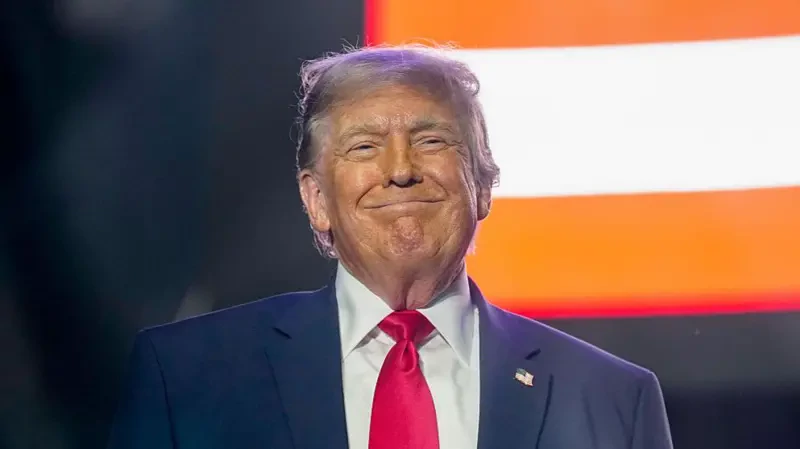
Kathmandu. US President Donald Trump returned home from China. The participation of American companies and trade deals in this summit appeared weaker compared to 2017.
During the current visit, the heads of about 17 American companies accompanied Trump. Trump has said that many trade deals have been made with China, including a commitment to purchase 200 Boeing aircraft and agreements related to the purchase of more American oil.
However, compared to his previous China visit in 2017, this number and outcome are significantly lower.
In the 2017 visit, Trump was accompanied by about 30 American business leaders. At that time, the US Department of Commerce had announced trade deals worth over $250 billion with China. At that time, China had also agreed to purchase 300 Boeing aircraft, which is larger than the commitment of 200 aircraft this time.
High officials from American companies including Boeing, General Electric, Goldman Sachs, and Qualcomm participated in that visit. Large companies like Dow Chemical, Honeywell, and Caterpillar were also in the delegation. At that time, 37 trade deals between the US and China were announced. However, it was later seen that not all of them were fully implemented.
Is it a sign of weakening economic relations?
According to analysts, this different outcome indicates that US-China economic relations have been weakening in recent years. After the two trade wars initiated by Trump, China has reduced its dependence on the American market, which has put China in a somewhat stronger position in this round of talks. China is currently strengthening its domestic industries, which has developed the capacity to compete with many foreign companies. There are many Chinese companies competing with the products of Apple and Tesla, which participated in this meeting. This has created a more challenging environment for foreign companies to do business in China than before.
Geopolitical tensions and impact on investment
The relationship between the US and China has also been greatly affected by technology, security, and geopolitical tensions. Especially due to the sanctions imposed in the fields of semiconductors, artificial intelligence (AI), and advanced technology, there has been a decrease in investment and trade deals between the two countries.
According to analysts, these sensitive areas have now become centers of strategic competition, which has complicated trade deals.
Strategic Differences
According to Kent Kedl, founder of risk consulting firm Blue Ocean Advisors based in Shanghai, the 2017 delegation was primarily focused on securing export deals.
However, this year's group appears to have prioritized access to the Chinese market and developing relationships with Trump. This indicates a change in the strategy of American companies.
According to him, earlier American companies were focused on securing large purchase deals from China, but now the situation has changed. Now, political relations and long-term market access are more important than trade.
This specific news has been automatically translated by AI. As a result, there may be some inaccuracies or language errors.