Finance Minister Bans 'Pocket Plans' in Budgeting


Kathmandu. Finance Minister Dr. Swarnim Wagle has announced a complete ban on the practice of including 'pocket plans' that have been going on for years in the upcoming fiscal year's budget.
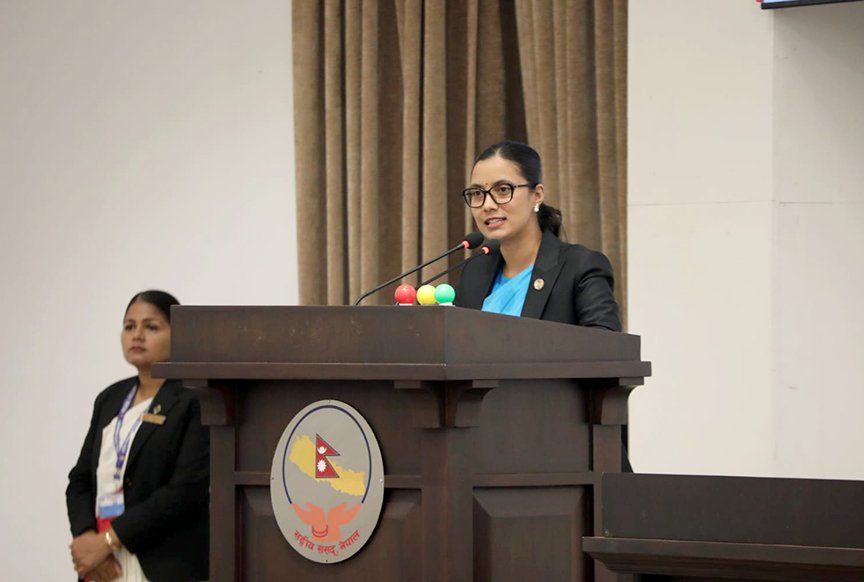
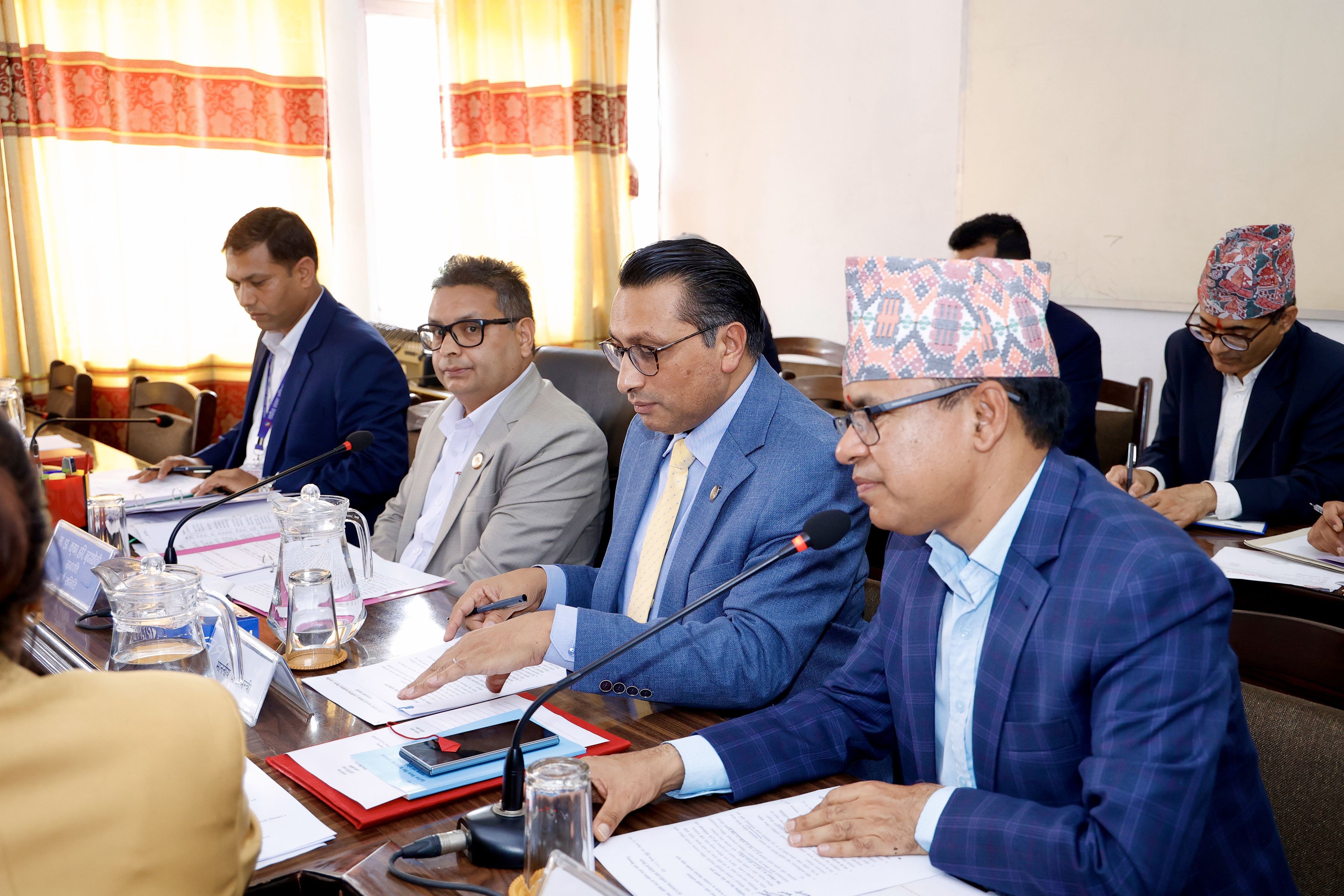
Speaking during a discussion in the House of Representatives' Finance Committee, he informed that a strict system has been implemented whereby the Ministry of Finance will no longer directly include any projects in the budget, and all projects must come through the respective ministry's system.
Minister Wagle stated that a new system has been developed to end the past malpractice of adding projects to the Ministry of Finance at the last moment based on influence. 'The Ministry of Finance will not directly enter any project now,' he said with determination. 'If there is a plan for a road, it must come through the Ministry of Physical Infrastructure after completing the process; if it is for drinking water, it must come from the Ministry of Drinking Water.'
According to him, when ministries enter their plans, they must align with the 16th periodic plan and the medium-term expenditure framework. The Ministry of Finance will allocate the budget within the limits of resources and means only for projects recommended by the ministries and those that have completed legal processes. He stated that this would increase the accountability of the ministries in budget preparation and eliminate projects without documentation.
Ministries will also no longer be able to arbitrarily send plans. A strict criterion has been set that the submitted plans must align with the 16th periodic plan and the medium-term expenditure framework. The Ministry of Finance will allocate the budget within the limits of resources and means only for projects entered into their system and falling under national priority areas. He argued that this would discourage small-scale projects and focus the budget on large projects.

- Financial Crisis and Compulsion for System Reform
Minister Wagle revealed that the country's serious financial reality is behind this strict step. He presented data showing that the country's mandatory liabilities have reached 13.30 trillion rupees, while revenue is projected to be only 13 trillion. 'Even if we do nothing, 13.30 trillion will be spent, which cannot be covered by revenue alone,' he said. In such a situation, he argued that 'pocket plans' should not be used to waste limited resources, and the budget must be kept under financial discipline.
- Cut on Projects Worth 119 Billion
During the discussion, Finance Secretary Dr. Ghanashyam Upadhyay also informed that the budget has prohibited projects that do not yield results and were selected arbitrarily. According to Secretary Upadhyay, the government had significantly cut the budget for small and fragmented projects that were unprepared at the beginning of the current fiscal year's budget implementation. 'Projects worth approximately 119 billion rupees that were unprepared, small, fragmented, duplicated, and did not provide clear results were put on hold,' said Secretary Upadhyay.
He stated that only essential projects and those for which liabilities had already been created among the suspended projects were re-examined and released. Only projects worth about 42 billion have been operationalized, while the remaining budget has been prevented from being wasted, according to the ministry's claim.
- National Pride Projects Cannot Be Transferred to Small Schemes
Secretary Upadhyay informed that legal provisions have been made to prevent influential individuals from cutting the budget of large projects and transferring it to their 'pocket' small schemes (reallocation). According to him, funds allocated for national pride projects and high-priority projects can no longer be transferred to other small and fragmented schemes except in special circumstances.
He also mentioned that the ministry has reformed its own structure to control wasteful expenditure. During this period, 39 unnecessary structures under the Ministry of Finance and more than 300 positions have been cut, he informed.
- Strategy for the Upcoming Budget
Upadhyay stated that this discipline will be continued in the upcoming fiscal year 2083/84 budget. The ministry is currently prioritizing the removal of unnecessary institutions and old structures while discussing the budget ceiling. 'Our focus is on areas where unnecessary expenses can be cut and how to complete ongoing projects quickly,' he said.
He also informed the committee that to bring transparency to the budget and ensure visible results from capital expenditure, the ministry has delegated the authority to reallocate funds to the respective ministries themselves.
- MPs Urge Prioritizing Constituency Plans
During the discussion, MP Narendra Kerung expressed the view that for public representatives, concrete plans for their constituencies are more important than theoretical debates on national and international economies. Recalling the meaningful dialogues held when Finance Minister Wagle was at the National Planning Commission, he said that discussions of the same level are necessary now.
'No matter how much we talk about theoretical, national, or international economies, what we need are the plans for our own constituencies,' Kerung said. 'The plans should not be limited to just the government system's list but should be implemented and completed.' He urged the Finance Minister to ensure the completion of projects when allocating the budget.
MP Parasmani Gelal complained that a bridge and road have not been constructed in Udayapur for 20 years. He said, 'In some places, bridges are being built for plotting to benefit their own people, but the Gideri Khola bridge and the Mutigada-Phattepur road, which are needed by the public, are still not built.' He stated that people are unable to get treatment due to the lack of roads and bridges during the rainy season. MP Gelal demanded that the Finance Minister distribute the budget equally to all places considering the geographical conditions in the upcoming budget. He drew the government's attention to preventing policy corruption and completing stalled projects. Similarly, other MPs also urged for adequate budget allocation for long-stalled projects.
- Finance Minister's Commitment to Fund Projects with 70-75% Completion
Responding to the queries and demands of the MPs, Finance Minister Dr. Wagle said that the government has adopted a strategy to manage the budget to complete incomplete projects within this year. Minister Wagle announced that development projects that have achieved 70 to 75 percent physical progress will be provided with sufficient budget and completed within this fiscal year.

Minister Wagle stated that the past practice of spreading small budgets across many projects will be discouraged, saying, 'We will provide as much budget as needed to complete drinking water, irrigation, and road projects that are 70-75 percent complete within this year. The style of allocating only 5 lakh rupees for a 100-kilometer road is wasting a large portion of the investment, and we will correct that.'
Minister Wagle clarified that projects with only 10-15 percent progress and started without preparation will be re-evaluated. He pledged that incongruous activities like 'building bridges where there are no rivers' will not be repeated and mentioned that project selection and budget allocation will be made scientific and result-oriented.
Furthermore, he informed that to facilitate construction entrepreneurs by resuming projects stalled due to the increase in construction material prices, scientific price adjustments based on the cost price index will be made in coordination with the central bank.
This specific news has been automatically translated by AI. As a result, there may be some inaccuracies or language errors.