Rhino Census Postponed Due to Budget and Tiger Count

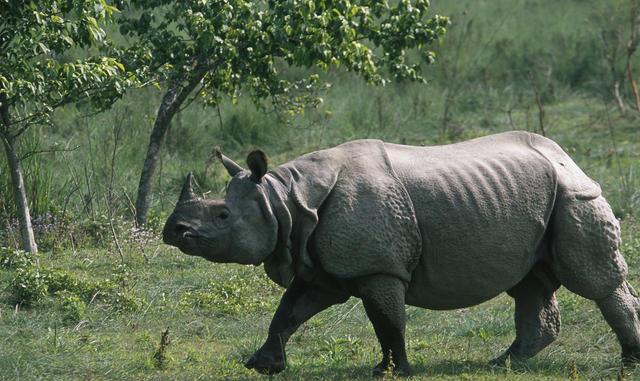
Chitwan. The census of rare one-horned rhinos, which was halted last year due to lack of budget, will not be conducted this year either. The rhino census, which is conducted every four years, could not be done this year because it coincided with the tiger census.
Rhino census is done by the genetic method. As the monsoon has started, it will not be possible to conduct the census by deploying teams in the field, so it will be done next year. The census work is carried out by the Department of National Parks and Wildlife Conservation.
The technical committee related to wildlife survey of the department has decided to prepare a protocol required for conducting rhino census by genetic method. Hari Bhadra Acharya, senior ecologist of the department and coordinator of the committee, informed that discussions have started to prepare the protocol.
In the genetic method of census, manpower is mobilized to collect rhino dung (feces) and the number and sex are identified through DNA testing in the laboratory. The genetic structure of the dung of one rhino and another is different.
According to Acharya, rhinos generally defecate in one place. By identifying these places, dung is collected repeatedly by installing CCTV cameras. He informed that the protocol will mention how to carry out all these tasks.
This method will be mainly used for rhino census in Chitwan National Park. Due to the large area, the percentage of land from which dung will be collected will be determined in the protocol. The habitat of rhinos includes riverbanks, grasslands, and riparian forests. Rhinos are found in four national parks of Nepal. Since rhinos can be counted by direct observation in Bardia, Shuklaphanta, and Parsa, this method will be used only in Chitwan National Park.
In Nepal, only snow leopards are counted using this method. It is said to be less expensive and safer than the previously used counting method. Previously, the direct counting method by dividing blocks was used. This method was very expensive and risky.
According to Acharya, the rhino census in 2021 cost around Rs 30 million. During that time, a technician was seriously injured after falling from an elephant. Counting by this method takes three weeks. It requires the mobilization of a large number of technicians along with elephants and other vehicles.
Acharya said that the department has focused on the genetic method because it is a method that is scientifically accepted by everyone compared to the direct and photo ID methods used so far.
In the census conducted in 2021, 752 rhinos were found in the national parks and conservation areas across the country. In the 1960s, the rhino population had decreased to around 100. It is estimated that there were 800 rhinos in Nepal in the 1950s.
In the 2021 census, Chitwan National Park alone had 694 rhinos, Bardia National Park's population increased from 29 to 38, and Shuklaphanta's reached 18.
This specific news has been automatically translated by AI. As a result, there may be some inaccuracies or language errors.


_iL3K2wYemS.jpg)