Pokhara Revises Building Bylaws, Allows Up to 5 Stories


Pokhara. In 2031 BS, when the master plan of Pokhara was being prepared, the then Zonal Chief Shankarraj Pathak also prepared the building standards for the area. A rule was implemented as a standard that buildings could not be constructed more than 2.5 stories in the vicinity of Phewa Lake and not more than 3.5 stories in areas outside of it.
Even now, buildings up to 3.5 stories easily get map approval and completion certificates in Pokhara Metropolitan City. Other buildings face problems in getting certificates. The main reason for this was, 'So that tall houses do not obstruct the mountains to the north.'
For some time, this rule was followed by everyone. Gradually, Pokhara became modern, and the population increased. Eventually, the standard from that time was no longer followed.
Now there are buildings up to the tenth floor here. Since tall buildings started being constructed, the demand to revise the building construction standards has been increasing. Pokhara Metropolitan City finally issued new Building and Infrastructure Standards in the year 2080 BS. After being unable to implement the standard that required the mountains to be visible from everywhere, the metropolis has revised the rule and now opened the way for building houses up to 5 stories.
In the past, an campaign was also started after the same standard to document all houses built in violation of the standards with fines. Now, generally, buildings up to 5 stories can be built throughout Pokhara. Soil testing is not mandatory for the construction of such structures up to 17 meters or 55 feet, but if a house taller than 5 stories is to be built, a special approval from the technical committee of the metropolis, soil testing, and a structural plan report must be submitted.
Along with this, elevators have been made mandatory in all buildings above 5 stories. The height of the house will be determined by applying the Floor Area Ratio and Ground Coverage based on the area and use of the land.
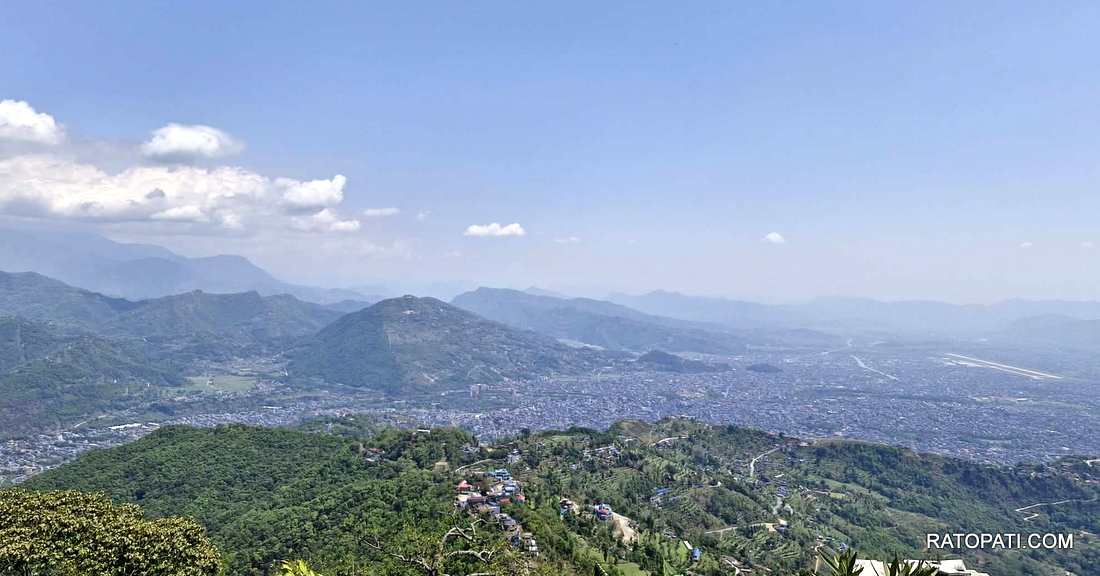
Underground parking has been made mandatory for houses to be built in commercial areas. This rule will apply to houses connected to the Kotre-Prithvi Chowk-Hallen Chowk, Prithvi Chowk-Mustang Chowk-Chhorepatan, Prithvi Chowk-Naya Bazaar-Mahendrapul-Lamachaur, New Road, and Chipledhunga-Mahendrapul road sections.
The problem of documenting illegal structures that have already been built rather than those to be built in Pokhara has increased. Although the new standard has opened the way for up to 5 stories, there is no clear policy on how to document about 19 buildings that were built up to ten stories after obtaining permission for 2.5 stories in the past and more than 5,000 houses built in violation of the standards.
The problem of documenting illegal structures that have already been built rather than those to be built in Pokhara has increased. Although the new standard has opened the way for up to 5 stories, there is no clear policy on how to document about 19 buildings that were built up to ten stories after obtaining permission for 2.5 stories in the past and more than 5,000 houses built in violation of the standards.
The Local Government Operation Act has a provision to document illegal structures by imposing a fine of 3 times. According to the same rule, the metropolis has been conducting a documentation campaign every year. Mayor Dhanraj Acharya has asked the owners of houses built before and after 2072 BS that have not been mapped to secure their property by paying three times the regular fee.
'In the current fiscal year, as a one-time opportunity, services can be availed by paying up to three times the prescribed fee. If an application is not submitted within this deadline, a fine of up to 5 times may be imposed in the future,' he said, 'Houses that are not documented cannot be rented out, mortgaged in banks, or sold.'
Stakeholders see the state's weakness in the construction of structures in violation of laws and standards.
'If the metropolis had been strict during construction, this problem would not have arisen. It is wrong to watch structures built in front of the metropolis's own buildings and then impose fines on citizens,' they say, 'The metropolis, which remains silent when wrong is done, should also be punished.'
Tall buildings are especially concentrated in commercial areas. There is no exact data on how many houses are in violation of standards. However, it is estimated that there are more than 5,000 houses that have not followed the height standards.
Committee Formed to Document Buildings Taller Than 5 Stories
A committee has been formed to make the documentation of house maps and revenue collection effective for large buildings constructed within the metropolis that are taller than 5 stories. A 5-member committee has been formed under the convenorship of Narendra Thapa, Chairman of Ward No. 26, at the executive meeting held on April 3.
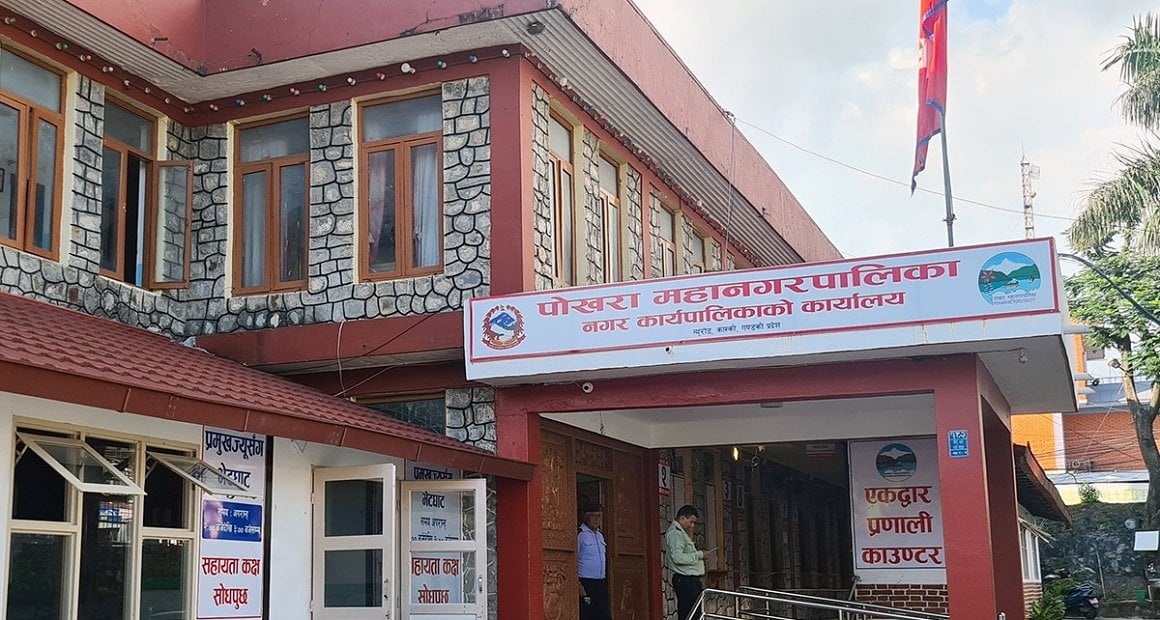
The committee includes Ward No. 15 Chairman Toran Bahadur Baniya, Ward No. 22 Chairman Himlal Baral, Engineer Ravichandra Ghimire, and Administrative Officer Dipendra Pandit as members.
The committee will ascertain the house map approval and documentation of buildings taller than 5 stories within the metropolitan area. It will also collect details of whether the entrepreneurs operating in the metropolitan area have paid their business registration and renewal fees.
The meeting decided that the committee will collect revenue, register and renew businesses, and document buildings by reaching doorsteps through mobile services.
Demand to Reduce Fines
The metropolis has been criticized for the fines it intends to levy for documentation. Jeevan Acharya, Chairman of CPN-UML Pokhara Metropolitan Committee and former ward chairman, suggested that special concessions should be given to residents of wards that were merged into the metropolis overnight from former Village Development Committees. 'It is impractical to collect lakhs in revenue for houses made of stones, mud, and tin that would cost two to three lakhs,' he said, 'Such houses should be legalized by taking a minimum fee and a single fee instead of three times for concrete houses in villages.'
Surendra Man Bijukchhe, Metropolitan President of Nepali Congress, also believes that cities and villages should not be treated equally. 'It is wrong to have the same arrangement for ordinary houses built for subsistence and large hotels and apartments of 8-10 stories,' he said, 'Villages and cities should be distinguished.'
Ten former Village Development Committees were merged into Pokhara, and the entire Lekhnath Municipality was incorporated. Local Tankaprasad Bastola also believes that geographical classification is necessary.
'Document all houses built before 028 BS within the old Pokhara Municipality, before 054 BS in Lekhnath, and before 2074 BS in the added Village Development Committees for free. You cannot impose rules now,' he said.
19 Crore Concession to Manipal
While an campaign is underway to document tall buildings, stakeholders also demand that Manipal, which has already received tax concessions from the metropolis, should be studied separately. Two years ago, the Metropolitan City waived the revenue of 19 crore 81 lakh 11 thousand rupees that Manipal Teaching Hospital had to pay for building map approval and construction completion certificates. The Auditor General's report had directed the metropolis to collect 21 crore 57 lakh rupees, including fines, according to building standards. However, by secretly writing a decision in the minutes of the 16th executive meeting of the metropolis, the hospital was given a map approval by taking only 1 crore 75 lakh rupees. The waiver of tax without discussion in the meeting was protested and criticized in the municipal assembly.
This specific news has been automatically translated by AI. As a result, there may be some inaccuracies or language errors.