MRP Mandate Halts Customs Clearance, Impacts Revenue


Kathmandu. Customs clearance has also been affected after the government made Maximum Retail Price (MRP) mandatory at customs points. Various customs offices, including Birgunj Customs Office, have stated that customs clearance has been stopped since MRP became mandatory in customs offices across the country. The private sector has stopped clearance as the government adopted a policy to implement mandatory MRP on imported and domestically produced goods at customs points.
Traders are protesting the implementation of MRP at customs points. They have also stopped customs clearance. Traders claim that the government is trying to implement it without any coordination with the concerned bodies and that MRP is not possible for all goods immediately.
According to Section 6, Sub-section 3 of the Consumer Protection Act, 2075 BS, the producer must mention the MRP in Nepali or English for domestically produced goods, and the importer for imported goods. According to the law, goods without prices specified on the label in a way that ordinary people can easily understand cannot be sold and distributed in the market. The rule is that the MRP must be set by including all taxes applicable to the goods.
It is equally mandatory to disclose other important details besides the price on the product label. This must clearly include the weight or quantity of the product, manufacturing date, batch number, expiry date, and information about potential side effects of use.
The Act has provisions for strict penalties for traders who do not comply with or defy such legal provisions, which can result in a fine of up to 300,000 rupees. However, even with the government implementing the law, practical implementation faces challenges. The Department of Consumer Interest Protection had tried to implement it repeatedly before but failed.
However, with the Balen government coming into power, the government had given high priority to effective market regulation and mandatory implementation of MRP in its 100-point agenda for governance reform published on April 14. To implement this priority, the Department of Commerce issued a notice on April 14, 2082 BS, giving 15 days for the implementation of MRP from April 15, 2083 BS. However, the policy decision taken by the government has created problems in the country's overall import trade at this time. Traders say that the government has implemented it without preparation, sufficient discussion with stakeholders, and by ignoring practical difficulties.
They claim that the MRP policy brought by the government cannot be implemented immediately, and customs clearance at customs points has started affecting the customs system. The government's rule that all finished goods imported from abroad must have an MRP label has been strictly enforced since April 15.
They claim that the MRP policy brought by the government cannot be implemented immediately, and customs clearance at customs points has started affecting the customs system. The government's rule that all finished goods imported from abroad must have an MRP label has been strictly enforced since April 15.
Customs Clearance Blocked at Borders, Customs Collection Affected
With the implementation of this policy, cargo vehicles have started getting stuck at customs points in the country's major customs points. Following the government's directive, clearance work has almost stopped at the country's major trade gateways: Birgunj, Bhairahawa, Biratnagar, Rasuwa, Nepalgunj, and Kakarbhitta. More than 600 containers are stuck at Birgunj, the largest customs point alone, and thousands of cargo vehicles are stranded at borders across the country.
According to Birgunj Customs Office, thousands of trucks and containers are currently stuck in the customs premises due to non-clearance. This is not only causing the state to lose revenue of crores of rupees daily but also increasing the risk of artificial shortages and price hikes of consumer goods in the market.
Udaya Singh Bisht, Information Officer at Birgunj Customs Office, informed that customs clearance work has been obstructed because traders and businessmen have not brought MRP as specified by the government. 'We tried to implement mandatory MRP on imported and domestically produced goods at customs points according to the government's policy, but customs clearance work has been partially stopped because traders and businessmen tried to bring goods without specifying MRP,' he said.
He stated that while the clearance process for industrial raw materials, fruits, and vegetables is ongoing, it is not the case for others. Customs offices are releasing perishable goods like fruits, green vegetables, garlic, industrial raw materials like crude palm oil, and machinery for hydropower projects without obstruction. However, the clearance of finished goods (clothing, cosmetics, electronics, packaged food, etc.) that go directly to the market has been completely stopped.
Birgunj Customs Office collects an average of 50 to 60 crore rupees in revenue daily. However, with the clearance stopped, revenue collection has been severely impacted.
Experts Say – Government's Decision is Impractical
Former Finance Minister Dr. Yuba Raj Khatiwada said that the MRP system set in the market is impractical. He stated that it is impractical for the government to implement it immediately and that the government needs to reconsider it.
Former Finance Minister Khatiwada argued that there is no clarity on where and how to set the MRP, and it is impossible to set a uniform price across the country due to geographical conditions and transportation costs. He stated that there are practical problems in the application of MRP according to the nature and packaging of the goods.
'At what level should MRP be set? Should it be on bundles or pieces? Should it be at the customs point or at the point of sale? There are many such issues,' asked Dr. Khatiwada, adding, 'A friend told me – a dozen pencils come, if I have to put MRP on each pencil, how will I sell it as a dozen?'
He pointed out the reality that consumers cannot get goods at the same price everywhere due to transportation costs. He insisted that the MRP should also vary accordingly, as the cost of selling the same product in Kathmandu and remote areas differs.
'If the cost of transporting an item set with MRP in the Kathmandu market to Dhunche, a bit farther from Kathmandu, increases by 2 rupees per unit, then its MRP will likely be different,' he clarified. Dr. Khatiwada said that policy rules should be made only after addressing the practical and logistical issues related to MRP.
'At what level should MRP be set? Should it be on bundles or pieces? Should it be at the customs point or at the point of sale? There are many such issues,' asked Dr. Khatiwada, adding, 'A friend told me – a dozen pencils come, if I have to put MRP on each pencil, how will I sell it as a dozen?'
Similarly, a high-ranking government official pointed out that the government's system of setting the Maximum Retail Price (MRP) at the customs point for imported goods is impractical. The official argued that the system of setting MRP at customs is not scientific because the final cost of the goods cannot be determined until they reach the warehouse.
According to the official, MRP is the sum of the total cost and profit of the goods. However, the actual cost of the goods is not known until they are imported and reach the local warehouse. 'There is no clarity on how much duty (tax) customs will charge; sometimes customs itself adds value,' he said. 'If the vehicle breaks down on the way, for example in Muglin, and the goods have to be transferred to another vehicle, the transportation cost increases. A trader will not sell goods at a loss by paying from their own pocket.'
He argued that although MRP is mandatory for the benefit of consumers, the process of implementing it is wrong.
'Consumers need MRP at the consumer level, there is no doubt about that. But who and where to put it is the main issue,' said the official. 'Importers should be allowed to put the MRP tag only after unloading the goods at their warehouse and before sending them to the market. It is not possible to put it from the way or from customs.'
Private Sector's Outrage – Technically Impossible
The private sector argues that it is almost impossible to bring all imported goods with MRP affixed abroad due to the nature of international trade. Manoj Shrestha, Chairman of the Federation of Nepalese Chambers of Commerce and Industry, says that the government has imposed this rule suddenly without discussing it with stakeholders.
He said that it is not immediately possible to implement the policy brought by the government unilaterally without sufficient discussion with the private sector. He said, 'It is impractical to affix MRP on all goods imported from abroad at the customs point at once. It is not possible for small and medium traders. Foreign countries do not provide goods with MRP labeled for Nepalis.'
Similarly, Naresh Katuwal, founding chairman of the Federation, said that it is not possible to implement MRP immediately. He said that while all decisions made by the government are justified, the issue of MRP is impractical. He stated that traders are not opposing MRP, but it should be implemented only after coordinating with the private sector on which goods to apply it to and how.
He said that if the government implements it immediately, it will also cause problems in the state's revenue collection. He said, 'The government is discouraging businessmen, not encouraging them. It is impossible to make MRP mandatory at the customs point immediately. It is technically impossible.'
Similarly, the Federation of Nepalese Chambers of Commerce and Industry and the Nepal Chamber of Commerce have repeatedly stated that they cannot implement this immediately. Traders bring goods in small quantities from various countries. Foreign manufacturers are reluctant to print separate Nepali or English MRP labels with other details for a small market like Nepal. Some goods come in bulk, which can only be packaged and priced after bringing them into Nepal. Traders complain that it is practically impossible to determine Nepal's retail price (MRP) while still abroad, without knowing the transportation costs, insurance, customs duties, and other taxes incurred by the time the goods arrive in Nepal.
Dinesh Shrestha, President of the Nepal Chamber of Commerce, Kathmandu, said that the implementation of MRP is an impractical policy. He said that it is not possible to implement MRP on all goods as stated by the government at once. He demanded that imported goods at customs be fragmented and implemented in phases.
He said, 'It should be made mandatory for essential consumer goods in the initial phase and gradually expanded to others. The MRP system should be made voluntary for luxury, technology-based, and special nature goods.' He suggested that instead of making MRP mandatory at the customs point, a system for labeling after import should be arranged. He emphasized the need for special practical arrangements for goods coming from countries like China where the MRP system is not implemented.
He said that the impractical MRP system could lead to an increase in smuggling and unauthorized trade in the market. He stated that when implementing MRP, foreign exchange rates, transportation costs, customs valuation, and distribution costs should be considered.
Customs Department's Middle Ground Proposal and Prime Minister's Office's 'Objection'
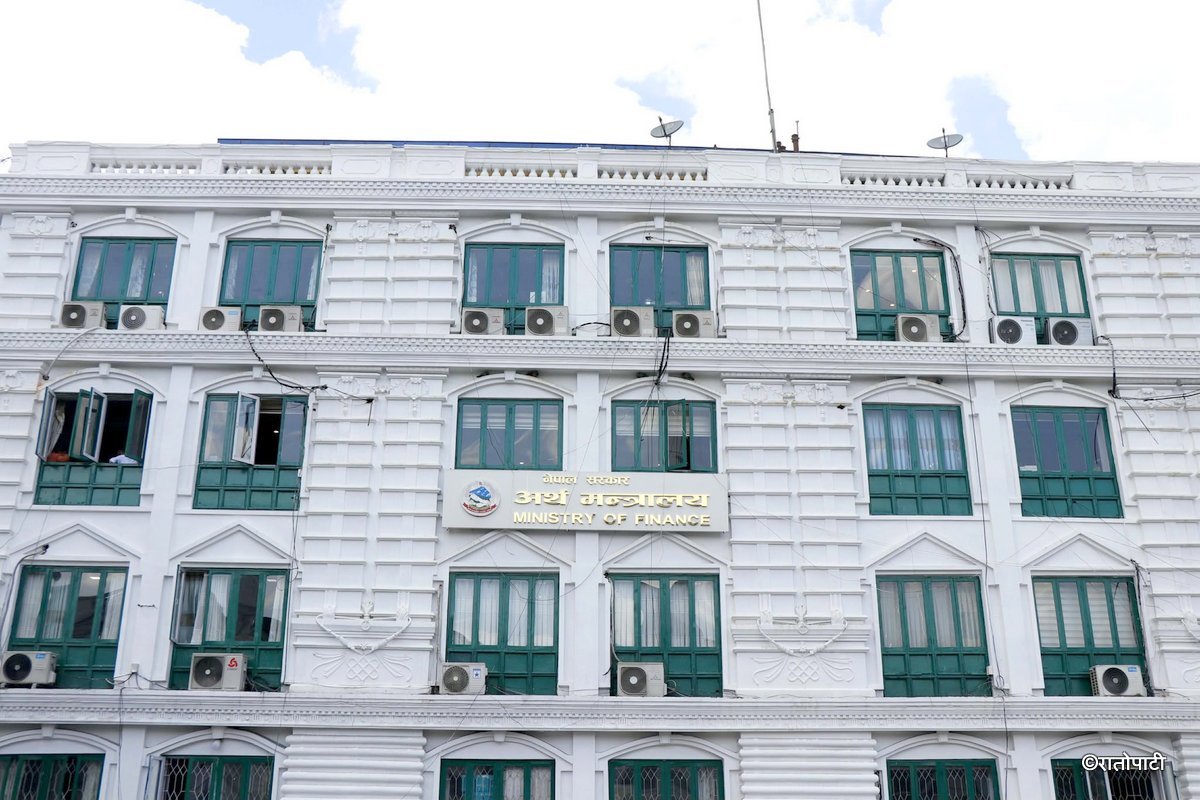
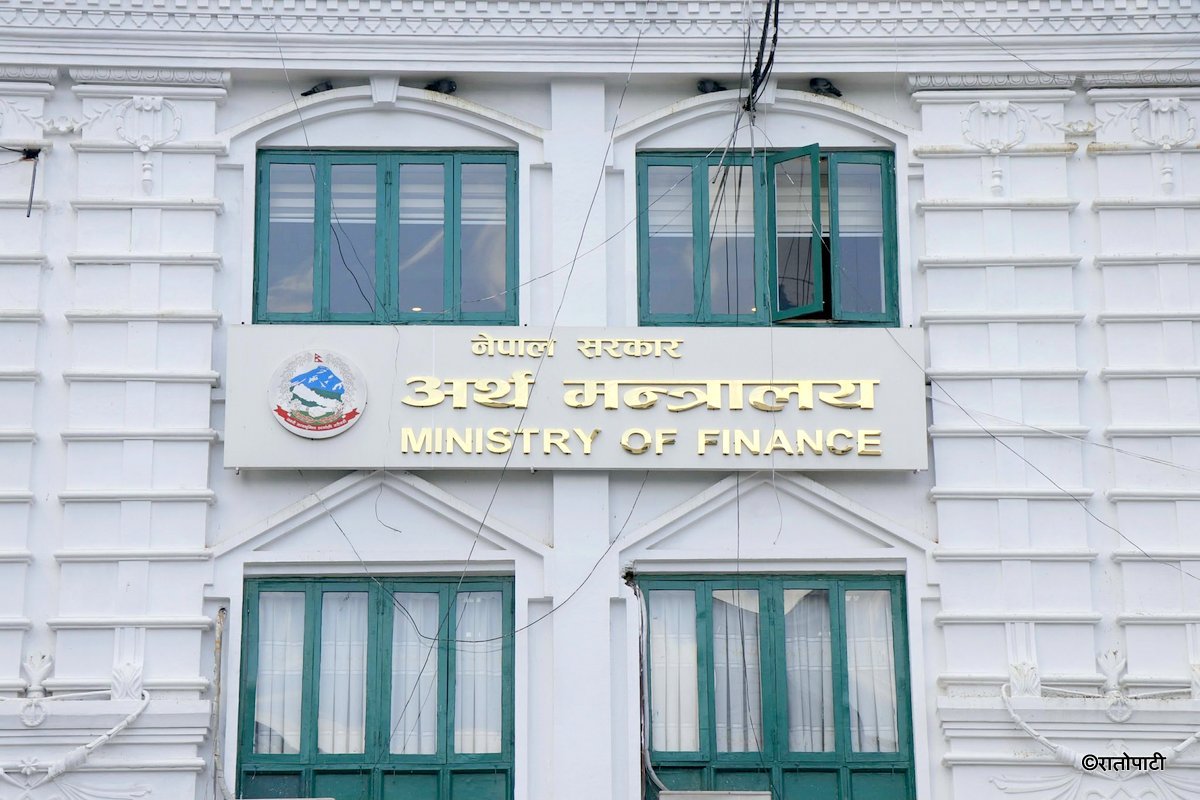
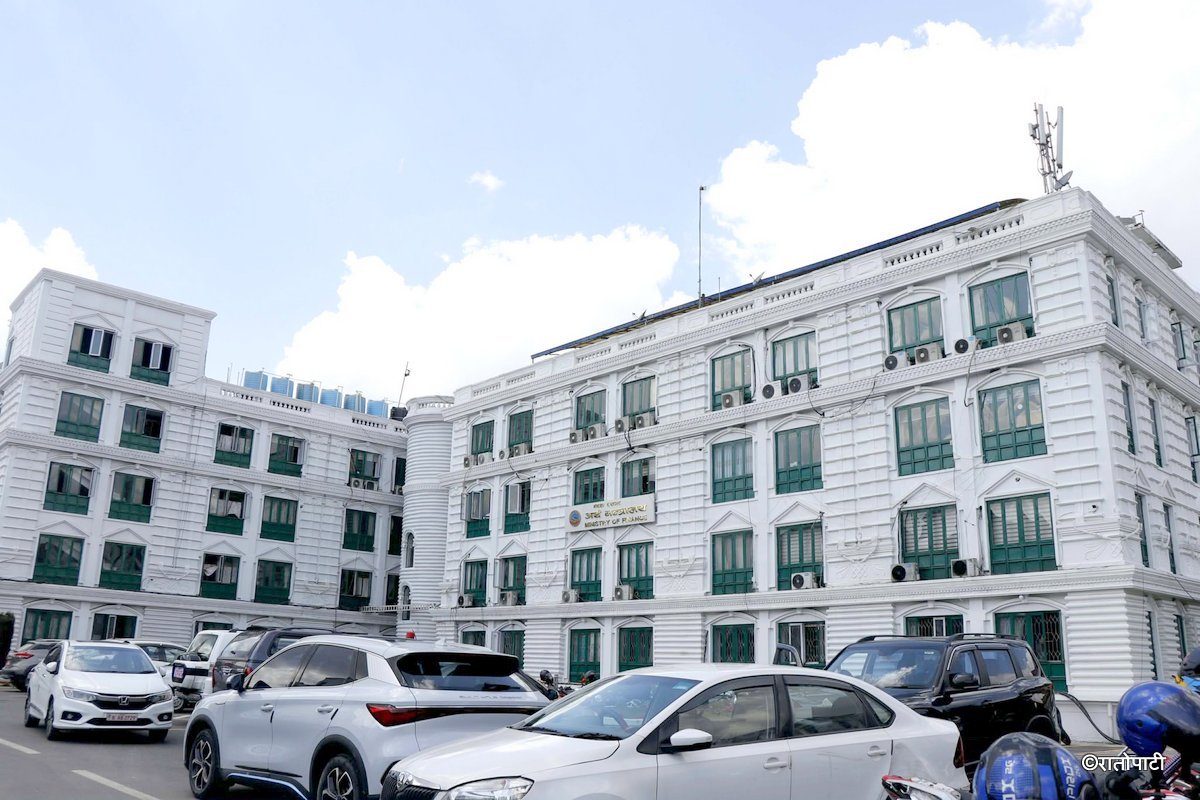
Problems have arisen in the customs system with the mandate of MRP. Following these problems, the Customs Department under the Ministry of Finance proposed a middle ground on Thursday, seeing a problem in revenue.
The Customs Department wrote to the Ministry of Industry, Commerce, and Supply, proposing facilitation for this rule for the time being. The department's proposal stated: 'For now, let the importer self-declare the MRP of the goods that have reached the customs point. After the goods are imported, allow customs clearance on the condition that the businessman affixes the label with MRP at their own warehouse before sending them to the market or distributing them.'
The department suggested that this could be further clarified in the budget and economic act for the upcoming fiscal year 2083-84 BS. However, high-level sources have informed that the Prime Minister's Office has rejected this excellent alternative proposed by the Customs Department to resolve the knot of the problem.
According to high-level sources, the Ministry of Industry had sent the Customs' proposal to the Prime Minister's Office for agreement. However, the secretariat of Prime Minister Balen Shah rejected the proposal.
'The Customs Department had sent a proposal to the Ministry of Commerce for facilitation. We sent the Customs' proposal through the Ministry of Commerce, but the response from above was that the MRP provision must be implemented exactly as it is,' the source said.
This specific news has been automatically translated by AI. As a result, there may be some inaccuracies or language errors.