Parliamentary Committee Meeting on National Pride Projects Disrupted by Minister's Absence

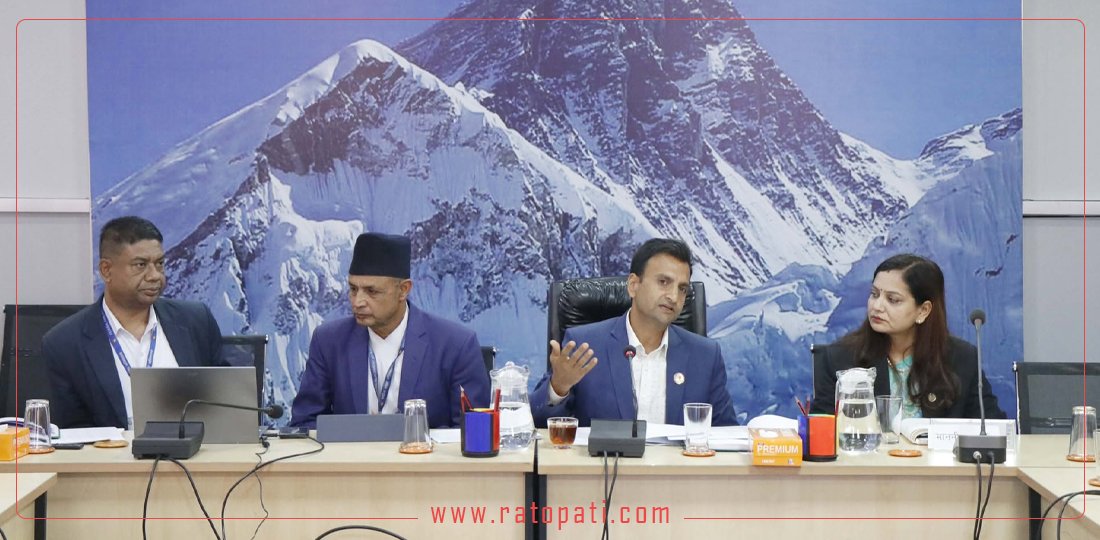
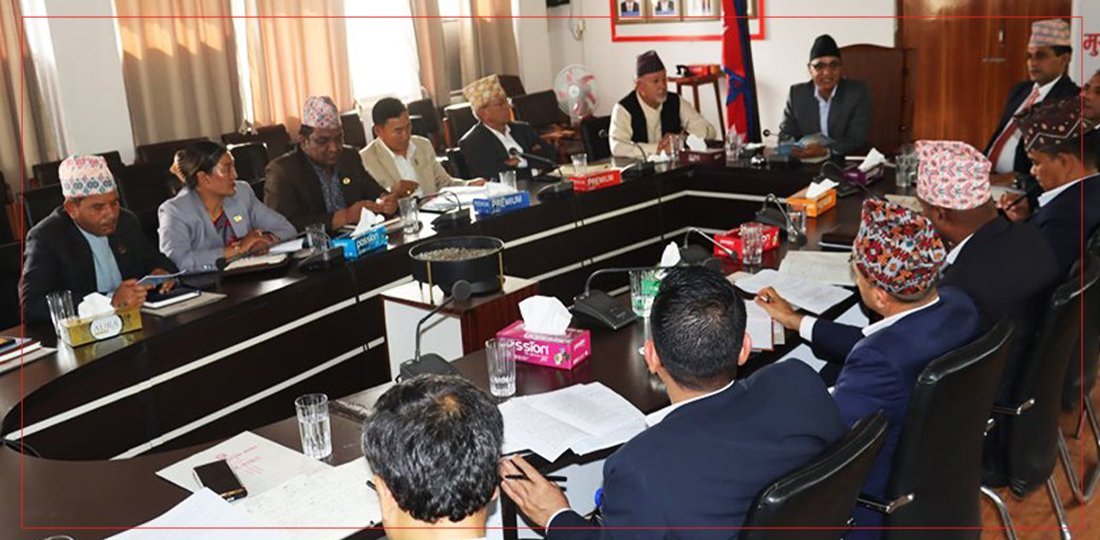
Kathmandu. A different scene was observed in the meeting room of the Infrastructure Development Committee under the House of Representatives on Tuesday. The agenda was the current status and problems of national pride projects, touted to transform the country's economy, but as soon as the discussion began, the environment focused more on the search for parliamentary dignity and the minister's presence than on development. MPs in the committee sought the presence of the Minister of Physical Infrastructure and Transport and Urban Development, Sunil Lamsal, as he was not present at the committee meeting. At the beginning of the meeting, the committee chairman, Ashish Gajurel, informed that the National Planning Commission had been invited to understand the problems of national pride projects. MPs and members of the National Planning Commission, including Secretary Ravi Lal Panth, were present in the committee hall. After this, as the discussion was about to enter the formality, MP Rajendra Kumar Rai raised an objection. 'Is this a committee or a club?' MP Rai's tone was both angry and objecting. He argued that discussing such an important issue without the minister's presence was against parliamentary practice. 'How can this meeting be held without the minister? This is not a club, it is a government committee,' he questioned, 'The meeting cannot proceed without clarity on how much an MP can speak and what the committee's procedures are.' After a few minutes of confusion and tug-of-war, Water Supply Minister Nisha Mehta attended the discussion. With the minister's arrival, the stalled process moved forward, but the MPs were still not satisfied. In the presence of Minister Mehta, National Planning Commission Member Secretary Rabindralal Panth presented the picture of pride projects. According to him, only 4 out of 27 pride projects have been completed so far. The progress of the remaining 23 projects is at a snail's pace. Panth assured that a 'dashboard' would be created to monitor the daily progress of the projects and that only projects with detailed studies would be funded from now on. Panth presented the current status and problems of all 27 pride projects. After this, it was the MPs' turn to speak. The MPs again raised the issue of the absence of all ministers. National pride projects include projects under the Ministry of Energy, Water Resources and Irrigation, Ministry of Physical Infrastructure and Transport, Ministry of Culture, Tourism and Civil Aviation, Ministry of Defense, and Ministry of Sports. However, the MPs objected to only the officials of the National Planning Commission being called for the discussion. Therefore, MP Rai again complained about the absence of ministers and secretaries from the ministries. MP Rai said, 'The Planning Commission only shows the way, who will answer our questions without the ministers and secretaries of the Physical, Energy, and Water Supply Ministries who are implementing them?' He suggested to Chairman Gajurel that relevant ministers, experts, and project chiefs should be compulsorily invited to the next meeting. What did everyone say in the discussion? After the Planning Commission's presentation, it was the MPs' turn to speak. Engineer Deepak Shah, citing the Babai River Diversion as an example, said, 'The nation is suffering a loss of 2 billion rupees due to the project being delayed by one year. This is like the operation was successful but the patient died.' MP Manju Bhusal expressed the pain of Bhairahawa. She said, 'They said Gautam Buddha Airport was built, but it is not operational. Businessmen who have invested billions there are on the verge of suicide due to bank loans. If businessmen are punished, why not the technicians who made the wrong DPR?' MP Dharma Raj KC narrated the plight of the Karnali Corridor, and the hall fell silent. 'Our people have not yet seen a paved road. The pride projects are just in name,' he complained. MP Shriram Neupane objected to the budget cut for drinking water, which is a fundamental right according to the constitution. His proposal was, 'If 100 billion is allocated for health, let's give 100 billion for drinking water too and bring taps to everyone's homes in 2 years.' MPs Gopal Sharma, Jayapati Rokaya, Bodh Narayan Shrestha, Shriram Neupane, and Srishti Bhattarai Rajunath Pandey again complained about the absence of ministers and secretaries. They gave a warning suggestion to Chairman Gajurel. 'In the next meeting, discussions should not be held without experts, project chiefs, and relevant ministers according to the subject.' Planning Commission's Response Responding to the MPs' questions, Member Secretary Panth informed that the commission is now going to establish a 'Progress Dashboard' to track the daily progress of the projects. 'We are now preparing to provide funds only through the project bank. Funds will not be allocated where there is no DPR, land acquisition, and source assurance,' Panth said. He stated that projects are not being completed on time due to the tendency of a single contractor to hold multiple contracts, and this tendency should now be ended. Subcommittee for Project Monitoring, Monitoring via Video Call Another interesting turn in the meeting was the style of monitoring. When Chairman Gajurel proposed forming a sub-committee for on-site monitoring, there was some disagreement among the MPs. Some argued that it was budget-making time, so they would not have time to go to the field. MP Shriram Neupane suggested a modern technological solution. 'We are in the 21st century. We can see the status of all 27 projects online on the screen in this hall. We can understand the situation by questioning the project chiefs via video call. We don't have to go to the field and get dusty every time,' he said. The committee took Neupane's proposal positively and agreed to complete the study in a short time using technology. After this, a concrete step was taken by forming a subcommittee. A 7-member Project Study Subcommittee has been formed under the convenorship of Engineer MP Shriram Neupane to conduct on-site and technical studies of national pride and other important infrastructure projects. This subcommittee has been given a deadline of 15 days to submit its report. It will provide 'input' to the government not only through paper reports but also through on-site visits and online monitoring as needed. A Meeting Operation Procedure Subcommittee has also been formed. To make the committee meetings more dignified, organized, and result-oriented, a 3-member subcommittee has been formed under the convenorship of MP Rajendra Kumar Rai. It will prepare the procedures for the dignity of the committee meetings, the speaking time of the MPs, and the process within 7 days. Concluding the meeting, Chairman Ashish Gajurel said that the main objective of the committee is to deliver results. 'Our job is not just to give instructions to the government, but also to coordinate and assist, but ministers and secretaries must answer the committee's questions. We will work to complete the unfinished infrastructure works without succumbing to any pressure,' he said. The committee meeting, which started with anger over the minister's absence, concluded with concrete decisions on the use of technology and the formation of subcommittees. The report to be submitted by the Project Study Subcommittee in the next 15 days is expected to further clarify the future of national pride projects and the effectiveness of the committee.
This specific news has been automatically translated by AI. As a result, there may be some inaccuracies or language errors.