Nepal Projects 3.85% Economic Growth Amidst Challenges


Kathmandu. On Tuesday, the National Statistics Office released the annual national accounts estimates for the current fiscal year 2082/83. Amidst internal political fluctuations, global war challenges, natural disasters, and low agricultural productivity, a growth rate of 3.85 percent (3.68 percent at basic prices) is expected in the current fiscal year. This has been considered 'satisfactory' by statistics officials.
The economy faced various shocks from the beginning of this year. Monsoon-related disasters, including floods and landslides, caused significant damage this year. From the flood at Rasuwagadhi to major damage to life and property in central and eastern Nepal.
Drought during the monsoon season affected the production of the main food crop, paddy. The 'Jenji' movement in the last week of Bhadra not only caused a loss of around Rs 84 billion but also obstructed development and construction work thereafter. Many had estimated that the global war in West Asia would also significantly impact Nepal's economic growth.
Despite this, based on eight months of actual data and projections for the next four months, the office's Chief Statistician Dr. Kamal Prasad Pokharel stated that the total gross domestic product is estimated to increase by Rs 401 billion this year. With this, the office has projected the country's economy to reach Rs 66 trillion at consumer prices and Rs 57.95 trillion at basic prices.
How was 3.85% growth possible?
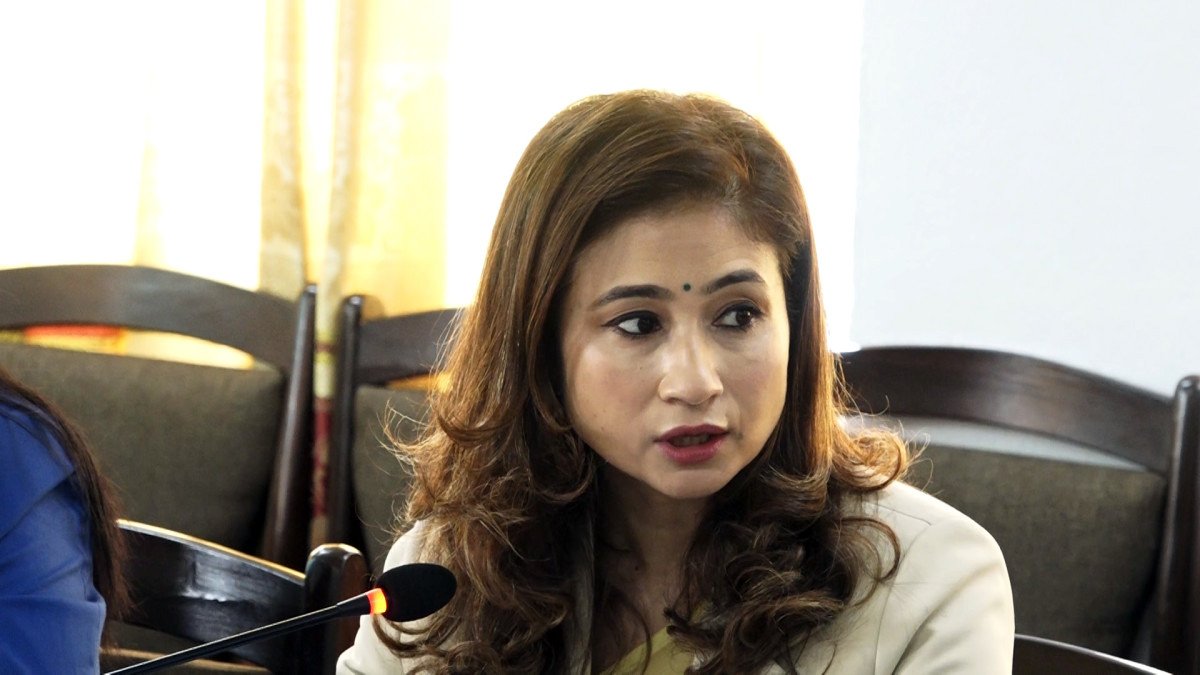
At the National Statistics Office's accounts estimate release program, Ramsharan Kharel, Executive Director of the Economic Research Department of Nepal Rastra Bank, mentioned some reasons for the economy's average state amidst adverse circumstances.
According to him, the current situation has been achieved due to energy, tourism, and policy reforms.
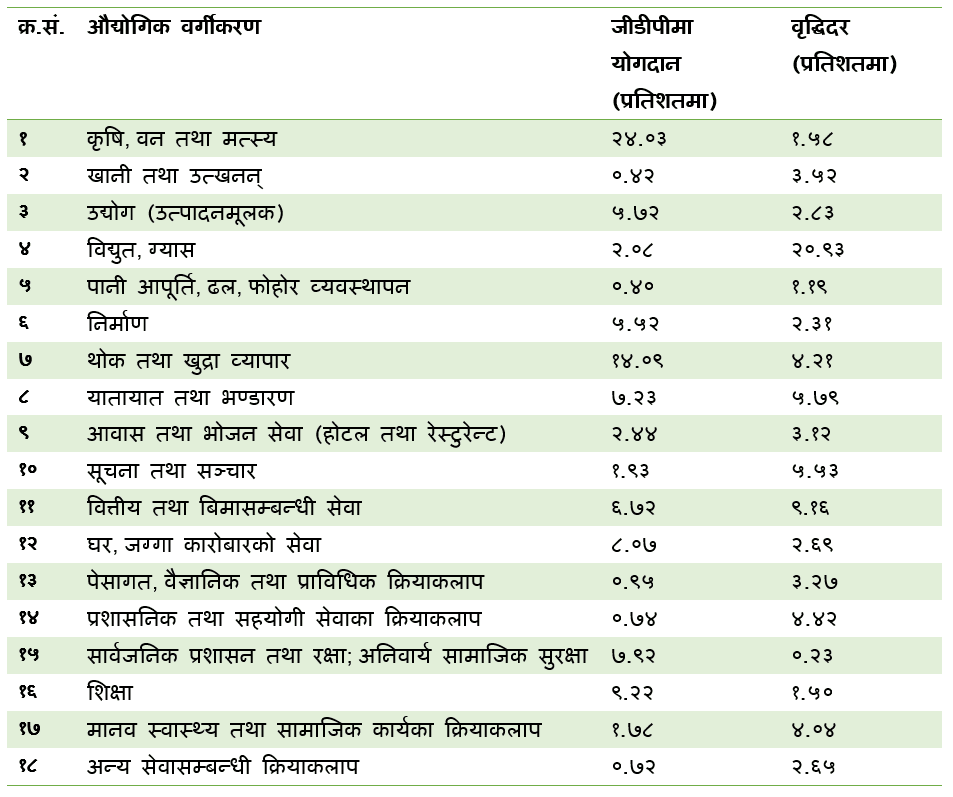
This year, 14 new hydropower projects have been completed and connected to the national transmission line. As a direct impact, the electricity and gas sector is estimated to achieve a high growth rate of 20.93 percent.
Although its contribution to GDP is only 2.08 percent, its multiplier effect has helped boost other industrial and commercial activities, he said.
Amidst global geopolitical tensions and internal political conflicts, Nepal's tourism sector did not see a significant negative impact this year. The continuity in tourist arrivals has shown a satisfactory growth of 3.12 percent in the hotel and restaurant sector, he said.
Another reason, Kharel said, is the policy reform measures taken by the interim government formed after the movement. The results of the hard work done by the then Finance Minister Rameshwar Khanal in the structural reform of the economy are also reflected in the statistics, he said. Kharel stated that steps taken in favor of good governance and efforts to increase capital expenditure have helped make the economy dynamic.
The central bank has also made its own estimates of economic growth, which are similar to the statistics office's projections. He said that for the estimated economic growth to materialize, the West Asian war should not escalate in the next four months, the good governance steps initiated by the current government should become more effective, and major national pride projects should be completed on time.
Why is the office's estimate different from ADB, World Bank?
While the office projects this economic growth for Nepal, it does not align with the estimates of international bodies like the World Bank, Asian Development Bank, and IMF. For the current fiscal year, ADB projected 2.7 percent, the World Bank 2.3 percent, and the International Monetary Fund (IMF) initially projected 3 percent economic growth. This situation raises questions about the reliability of the Statistics Office's estimates.
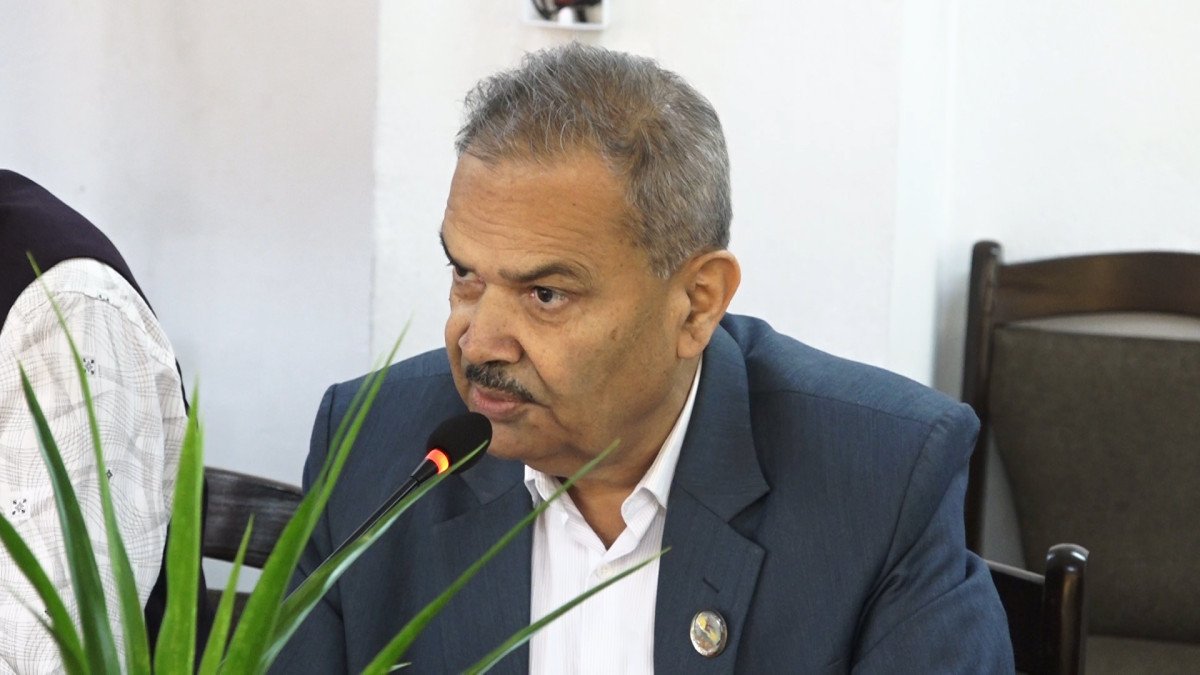
However, Chief Statistician Dr. Pokharel stated that technical differences are significant and that the office's estimate is more reliable.
According to him, the methods used by donor agencies and the Statistics Office are different. 'Organizations like ADB, World Bank, and IMF make model-based projections, which rely on various mathematical models and assumptions,' said Dr. Pokharel. 'But we adopt the international standards of the System of National Accounts and make projections based on actual data. We collect actual data for 6 to 8 months of the year and estimate only the remaining 4 months. Therefore, our data is very close to reality.'
Per capita income did not increase despite a 400 billion increase in the economy
While the government estimates 3.85 percent economic growth and a Rs 401 billion increase in the economy's size, the per capita income of Nepalis has remained stagnant this year. According to Chief Statistician Dr. Kamal Prasad Pokharel, the per capita gross national income of Nepalis remains stable at US$1533.
Pokharel attributes the main reason for the per capita income not increasing to the significant depreciation of the Nepali Rupee against the US Dollar. He stated that as the Nepali Rupee weakened, the per capita income, calculated in dollars, remained stable.
Service sector dominates, primary sector shrinks
The structural deviation that has been occurring in the economy for a long time continues this year as well. Analyzing the three main sectors of the economy, the share of the primary sector (agriculture, forestry, mining) is shrinking, while the service sector maintains its dominance.
Last year, the share of the primary sector in the overall economy was 25 percent, which has decreased to 24.5 percent this year.
Within this, the growth rate of the 'Agriculture, Forestry, and Fishing' sector is estimated to be only 1.58 percent. This sector has been affected by the damage caused by floods and landslides to arable land and the decline in the production of paddy, a major crop.
The share of the industrial sector, which includes manufacturing, construction, and electricity, has increased from 13.2 percent to 13.7 percent this year. Within this, the growth rate of the manufacturing industry is only 2.83 percent, and the construction sector's growth rate is 2.31 percent. Slow capital expenditure and sluggishness in real estate transactions have prevented the construction sector from fully recovering.
The service sector, the largest part of the economy, accounts for 61.8 percent. Among these, financial and insurance services show good growth of 9.16 percent, and transport and storage show 5.79 percent.
Only 9 rupees saved for every 100 rupees earned
Calculations of the economy based on the expenditure method show that the consumption-oriented trend of Nepali society remains the same. According to the statistics, total final consumption expenditure has reached Rs 59.99 trillion.
The total gross savings in the economy is only 9.71 percent. This means that for every 100 rupees earned by an average Nepali, 90 rupees and 29 paisa are spent on consumption, and only 9 rupees and 71 paisa are saved.
The other side of this is import-oriented trade. Imports account for 78 percent of total trade, while exports account for only 22 percent. The office's statistics show that Nepal is finding some relief from service exports rather than goods exports.
Extreme dependence on remittances: ratio increased from 27% to over 33%
Statistics show that Nepal's dependence on remittances is higher than in previous years. While the ratio of remittances to GDP was around 27 percent last year, it has increased to over 33 percent in the current fiscal year.
This dependence is due to a large number of youths migrating abroad in the absence of domestic employment opportunities, and their remittances are sustaining the country's consumption and imports.
This specific news has been automatically translated by AI. As a result, there may be some inaccuracies or language errors.