Constitutional experts question legality of government's constitution amendment task force


Kathmandu. Constitutional and legal experts have questioned the legal and constitutional status of the task force formed by the government to prepare a 'discussion paper' for constitutional amendment. They also stated that a discussion paper prepared by a task force led by a person not recognized by law and not represented in parliament would not be above the status of an individual or a party, not the government's.
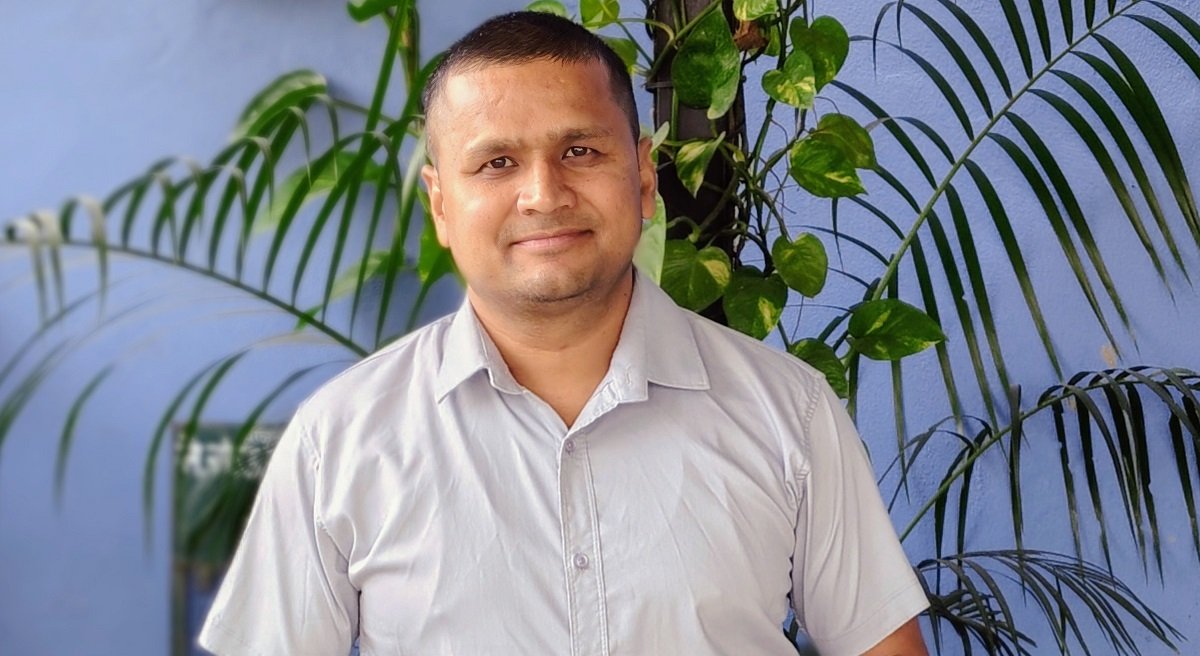
Participants said that the discussion did not even enter the agenda as such questions were raised during the discussion held by the task force led by Prime Minister Balendra Shah's political advisor Ashim Shah with constitutional experts on Monday.
The task force is preparing to continue the discussion on Tuesday as well. Ramnarayan Bidari, Dhruvalal Shrestha, among others, have been called for discussions on Tuesday.
The task force had called constitutional experts Govinda Bandi, Bipin Acharya, senior advocates Shambhu Thapa, Tika Ram Bhattarai, Radheshyam Adhikari, Purnaman Shakya, among others, to Singha Durbar on Monday to seek suggestions on constitutional amendment issues.
Only Mohan Acharya from Rastriya Swatantra Party, Dev Gurung from the Communist Party of Nepal, and Manoj Bhatt from Rastriya Janamorcha participated in the task force meeting on Monday. Representatives from Nepali Congress, UML, RPP, JSP, and Losp were absent.
Task force member Manoj Bhatt, who is also the general secretary of RSP, said that the constitutional experts raised questions about the legal aspects of the task force.
'The Constituent Assembly is the mother, and the current parliament is the child. The current parliament was born from the Constituent Assembly,' Bhatt quoted constitutional experts Shambhu Thapa and Tika Ram Bhattarai as saying to Ratopati, 'Therefore, the child cannot move forward by killing its own mother.'
The task force had sought suggestions from constitutional experts on issues such as whether to make local level elections non-partisan or continue the current system? Whether to implement a directly elected executive or not? Whether to adopt a fully proportional electoral system or continue with the mixed electoral system? However, the constitutional experts stated that although constitutional amendment is necessary and the government's initiative is justified, it cannot be recognized due to its lack of legal and constitutional validity.
'Changing the form of governance is not the mandate of this government; the mandate of this government is good governance,' the constitutional experts stated during the discussion.
'Because if we move towards a directly elected executive, the parliament will be automatically dissolved the day this issue is passed by the parliament, and we will have to move towards a directly elected executive,' a source quoted a constitutional expert's suggestion, 'The mandate you have received is a mandate for good governance. The people have not given you a mandate to change the state system itself and rewrite the constitution.'
Overall, constitutional experts have advised the government not to interfere with the electoral system and governance system, said Rastriya Janamorcha leader Bhatt to Ratopati.
'Overall, the constitutional experts' suggestion was not to change the electoral system and governance system,' Bhatt said. Constitutional experts also questioned the political party members in the task force led by Shah.
'A task force cannot be formed under the leadership of an unelected person, but it has been formed. How did the representatives of political parties attend such a task force?' When the constitutional experts asked, former law minister Dev Gurung of the Communist Party of Nepal and General Secretary Manoj Bhatt of Rastriya Janamorcha were left speechless.
Furthermore, questioning the task force, they stated that the constitution should only be amended through the provisions made in Articles 265 and 274 of the constitution. 'If the government is to form a task force or amendment committee, it should be formed by the parliament; this matter is not within the executive's jurisdiction,' said senior advocate Shambhu Thapa. 'Therefore, the formation of this task force is not in accordance with the law and the constitution. If it is an internal committee of RSP, we have no objection. But a government committee cannot be formed like this,' Thapa added.
After hearing the views of constitutional and legal experts, task force coordinator Ashim Shah responded that the task force would only collect suggestions from experts and stakeholders and submit them to the Prime Minister, and they would do nothing more. 'The task force will collect your suggestions and submit them to the prime minister. We will not do more than this,' said Shah.
Coordinator Shah also urged not to harbor the misconception that the government is unilaterally trying to amend the constitution.
Clarifying that the task force was formed in accordance with the government's 100-day work plan, Shah said that constitutional amendment is not solely based on the desire of any one party or the government, but should be understood as a common issue that is only possible through complete national consensus.
The government had mentioned in its 100-day commitment letter that it would prepare a discussion paper for constitutional amendment within 60 days. Accordingly, a task force was formed under Shah's leadership on behalf of the government to prepare the discussion paper. However, the Nepali Congress, the second-largest party in the parliament, has not yet sent its representative to the task force. Nepali Congress has stated that it will decide whether to send a representative only after the agenda and objectives of the task force are clarified, citing ambiguity.
This specific news has been automatically translated by AI. As a result, there may be some inaccuracies or language errors.