Koshi Province Agriculture Faces Severe Crisis Amid Technological and Policy Challenges


Biratnagar. Data indicates that the agricultural sector in the Terai region of Koshi Province is trapped in a severe natural and policy crisis despite advancements in technology and modernization.
A nine-month report for the current fiscal year from four key government agencies in Jhumka, Sunsari—the Seed Laboratory, Soil and Fertilizer Testing Laboratory, Plant Protection Laboratory, and Agricultural Training Center—reveals growing problems in the province's agricultural sector.
According to the data, the health of the province's soil is extremely fragile. It has been found that farmers are being cheated in the name of fake organic fertilizers available in the market. Similarly, substandard seeds have also been found being sold in the market.
The results of 2,274 soil sample analyses conducted by the Soil and Fertilizer Testing Laboratory in Jhumka show a serious problem in the soil of Koshi Province. Among the tested samples, 51 percent of the soil was found to be highly acidic. This data suggests that more than half of the province's fertile land is losing its natural fertility.
According to laboratory technicians, the unbalanced use of chemical fertilizers, lack of organic matter, and monocropping practices have increased soil acidity. When soil is acidic, production does not meet expectations. Technicians state that the use of agricultural lime is essential to improve this.
_WLcKJcrFRh.jpg)
Similarly, according to the Soil and Fertilizer Testing Laboratory, while 13 chemical fertilizer samples tested were 100 percent compliant with standards, 95 percent (55 out of 58) of the organic fertilizer samples tested were found to be non-compliant.
While the government is adopting policies to promote organic farming, this data shows that in the name of organic products, soil or low-quality fertilizer is being sold to farmers. The fertilizers purchased by farmers at high costs were found to have minimal amounts of nitrogen, phosphorus, and potassium.
_3mRai3Ok4Q.jpg)
Data from the Seed Laboratory in Jhumka also raises questions about seed quality. Out of 750 samples tested in the current fiscal year, nearly 12 percent (11.99 percent) failed to meet even the minimum quality standards.
The laboratory stated that problems were particularly observed in paddy, maize, and mustard seeds. Although the laboratory is conducting 'seed audits' by collecting samples from agro-vets in the market, the exploitation of farmers continues annually due to the lack of strict action against those selling substandard seeds.
The Plant Protection Laboratory monitored 26 pesticide shops and warehouses in Sunsari, Morang, Udaipur, and Ilam. During this process, expired pesticides were found in several shops, informed Senior Plant Protection Officer Saraswati Shrestha. She stated that expired pesticides not only fail to kill crop pests but also have more lethal effects on soil and human health.
However, to minimize chemical pesticides, the laboratory is producing 'Trichoderma' (biological pesticide) in Jhumka. Shrestha claims that 1,500 kg of biological pesticide was produced and distributed to farmers in nine months, which helps protect plants from diseases.
Lack of vehicles, shortage of skilled manpower to repair broken seed testing machines, and vacancies remain significant issues. Only 75 percent of positions are filled in the soil laboratory and 63 percent in the seed laboratory. Due to the lack of remaining staff, the laboratory's services cannot be expanded.
_c7mILz0jGm.jpg)
These laboratories in Jhumka have now started moving towards a digital path, changing their traditional patterns. Currently, soil and seed test reports are prepared via software and sent to farmers via WhatsApp or email. This has eliminated the compulsion for farmers to travel to Jhumka just to get a small report. Soil Health Cards have been distributed to help farmers understand the condition of their soil. This provides clear guidance to farmers on how much fertilizer to apply on which land. The practice of the laboratory reaching the farmers' fields to treat soil and crops has made things easier for rural farmers.
Over four thousand benefited
According to Naresh Kumar Pandit, Acting Chief of the Agricultural Training Center, the office has trained 271 people. Similarly, 2,506 people have benefited from the Soil and Fertilizer Laboratory, and 1,265 people have benefited from the Plant Protection Laboratory. The offices reported that a total of 4,042 people have benefited.
In the nine months of the current fiscal year, all four offices have provided professional training on more than 18 different subjects to 587 farmers and technicians.
According to Pandit, the Agricultural Training Center in Jhumka has provided training on commercial vegetable and fruit farming to 67 lead farmers and seed production and management to 60 farmers. Similarly, skill-based training on beekeeping was provided to 46 young farmers, mini-tiller repair to 44, and mushroom production and processing to 21.
_7fxxzYMx0H.jpg)
Regarding plant protection, the Plant Protection Laboratory provided awareness information on pesticides to 210 farmers and field training to 106 farmers by visiting their farms to identify and manage crop diseases and pests.
To enhance technical capacity, 24 people participated in software training conducted for agricultural technicians, and 9 participated in soil testing kit box operation training. Additionally, the Soil Testing Laboratory provided information on the use of GPS technology and digital mapping.
Finance Committee Monitoring
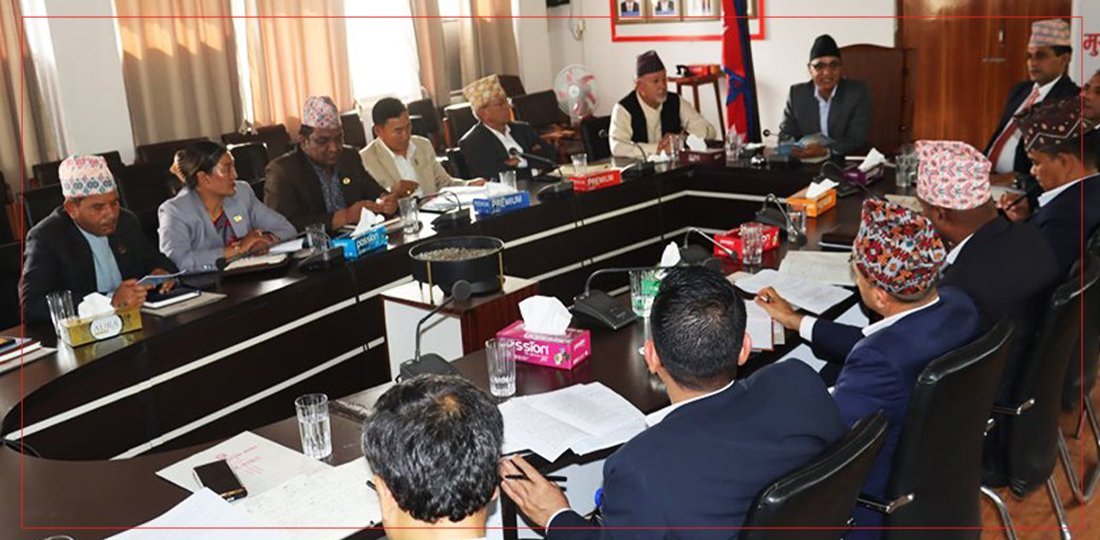
Meanwhile, the Finance Committee of the Koshi Provincial Assembly monitored all four offices in Jhumka on Friday. Committee Chairman Binod Bantawa stated that they received a briefing on the work that the provincial government needs to undertake during the monitoring.
_i7fE5zib0a.jpg)
While informing the Finance Committee about the status of their respective offices, the office chiefs emphasized the need for sufficient manpower and increased investment for the development of the agricultural sector. In response, Finance Committee Chairman Bantawa said they would write and send recommendations to the government.
This specific news has been automatically translated by AI. As a result, there may be some inaccuracies or language errors.