Interview: Nepali Congress General Secretary Pradeep Paudel on Democracy Day and Party Reform
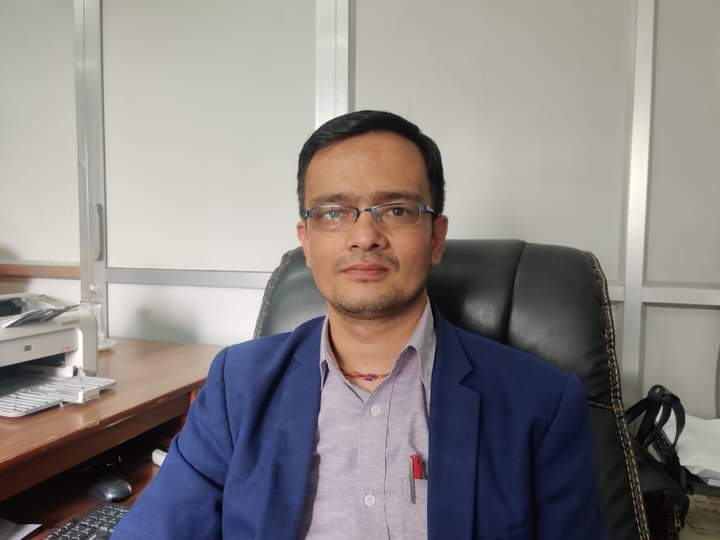

Today marks the 20th Democracy Day. The Nepali Congress, which led the struggle for democracy, has now become the main opposition party following the House of Representatives elections held on Falgun 21. We spoke with Congress General Secretary Pradeep Paudel about why the Congress failed to institutionalize democracy and what plans it has for the future. Here is a summary of the conversation with General Secretary Paudel:
The government did not even declare a public holiday on Democracy Day. The Congress is a party that fought for democracy. What is the Congress doing to protect it?
Today is Baisakh 11. We observe this day to honor the sacrifices made for democracy. This day was declared Democracy Day to commemorate the martyrs and individuals who sacrificed their lives for civil liberties, freedom of expression, and citizens' rights. However, it feels as though the current government does not want to acknowledge this as a significant historical day that should be remembered.
It is not natural for those currently leading the country to disrespect those who contributed to establishing the system of governance they now lead. The civil liberties we enjoy today, the competitive politics, and the ability to elect representatives are all due to the great martyrs who were willing to sacrifice their lives for democracy.
Therefore, one cannot simply choose to ignore certain historical events. We have reached this point through a series of historical developments. Civil liberties, freedom of expression, and the right of the people to choose their representatives have been secured. The state must respect and embrace this legacy.
We must be vigilant in protecting these civil liberties. We need to ensure that the sacrifices of the martyrs are always utilized for the benefit of the nation. We must enrich the achievements of democracy rather than let them be taken away.
We must admit that we failed to prioritize the feeling among citizens that the state exists for them, even during times of great hardship.
This experience has taught us that democracy is not just about freedom of expression. Along with freedom of expression, the issues of citizens' livelihoods must also be established as rights. The relationship between the state and the citizen must be confirmed at the level of responsibility. Democracy can only be complete when the state fulfills its obligations to its citizens. We have learned a lot in the process of making democracy complete. However, this does not mean that without the sacrifices and struggles of those martyrs, we could have learned this or that our democracy could have reached this stage. I believe it is essential to honor them, remember that day, and ensure it is recorded in history.
The current government does not seem very interested in the followers of democracy or democracy itself. You have also expressed concerns about this. As the main opposition party, what are you doing to make them fully loyal to democracy?
The officials currently in the government did not participate in this struggle at all. They suddenly reached a position where they could inherit that legacy. They must understand that this democracy made that possible. The rights that citizens fought for are what brought them to power. This is a sequence, not an overnight occurrence. They got the opportunity to reach power by winning the hearts of the citizens. They must understand that the last election is not the beginning of history; the struggles before it created the environment for such elections to take place.
Forgetting that long struggle and not recognizing that history prevents a sense of responsibility. They have received more trust from the citizens, but failing to respect that history can break that trust. I want to make them aware of this.
The Congress is a party that fought for the establishment of democracy and has been in power for a long time since its attainment. You mentioned that while in power, you could not connect citizens' rights with democracy. What was the reason for this failure?
The scope of rights was always narrow. We focused on individual freedom, freedom of expression, the right to choose representatives, and the development of democratic values. We prioritized media freedom. That is only a part of democracy, not the whole. We must admit that we failed to prioritize economic rights, the relationship between the citizen and the state, equal treatment for all, and the feeling among citizens that the state exists for them, even during times of great hardship.
The ideas of the Congress became institutionalized, but we were not entirely successful in the process of implementing those ideas.
Because we did not pay attention to these issues, public anger grew, and others organized to take the lead. Now, we have had a chance to learn. We must embrace those mistakes, understand what makes a democracy complete, and advocate for a full democracy. The history of the past is actually the history of the Congress. Nepal's political past cannot be complete without the Congress. The Congress has always led the struggle. Most of those who sacrificed their lives did so under the Congress flag. The Congress was the first to advocate for democracy and pluralism in this society. The ideas of the Congress became institutionalized, but we were not entirely successful in the process of implementing those ideas. I believe we must embrace that and correct ourselves.
What are the Congress's plans to move forward by acknowledging its mistakes and weaknesses? How will the Congress proceed to strengthen democracy?
First, the Congress must be clear on its plans and thematic aspects. The political perspective of the Congress is clear. What is our economic perspective? What is our view on education and health, which are the most concerning issues for citizens? What is our perspective on livelihood issues, social security, and good governance? What do we intend to do to bring corruption to zero? We need to be clear on all these issues first.
Second, we built an organization. We gave responsibilities to many people within the organizational structure. We did not realize that the Congress is the party with the most members and the most extensive structure in the country. Yet, a party without even booth agents defeated us. Therefore, what is needed is a message. The perspective towards the Congress must be positive to win elections and gain trust.
Yes, in that regard, we must be clear about digitizing the organization in this digital world and moving forward by connecting all people in the organization through digital means. Also, individual management is important because those who have made history cannot just sit on the sidelines; we understand that. Therefore, I believe we must move forward by keeping those aspects in mind.
", "tags": ["Nepali Congress", "Democracy"], "context": "Interview"}This specific news has been automatically translated by AI. As a result, there may be some inaccuracies or language errors.