Nepali Congress to Hold Election for Parliamentary Party Leader Today


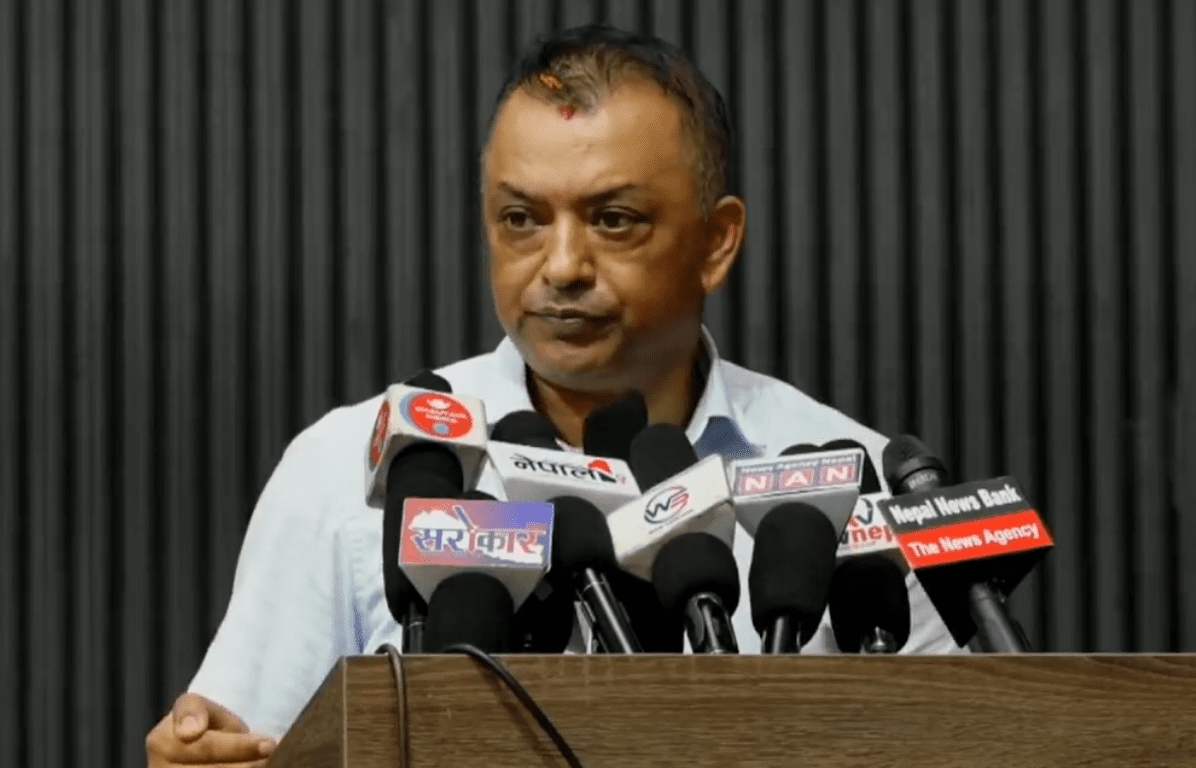
Kathmandu. The main opposition party, Nepali Congress, is holding an election today to select its parliamentary party leader. According to the 'election program' published on Baisakh 7 by the election committee formed under the coordination of party joint general secretary Prakash Snehi Rasaili, the voter list was published on Thursday. The committee includes central members Muna Bhusal and advocate Raju Katwal.
The registration of candidacy and the election are scheduled for today. The time for candidacy registration has been set for 3 PM on Friday, while the election is scheduled for 5 PM on Friday.
The Nepali Congress has 38 members in the House of Representatives, consisting of 18 elected through the first-past-the-post system and 20 through the proportional representation system.
Since the leader of the main opposition party also serves as a member of the Constitutional Council, there is significant interest in the position. Party leaders state that there are currently three aspirants for the leadership.
Bhishmaraj Aangdembe, Arjun Narsingh KC, and Mohan Acharya are presenting their claims and attempting to build support for their candidacy.
The party is currently divided into two factions: those supporting a special general convention and those supporting a regular general convention. KC and Acharya are aligned with the special general convention faction (the current establishment), while Aangdembe belongs to the regular general convention faction. Among the claimants, Acharya won the direct election from Rasuwa, while Aangdembe and KC were elected through the proportional representation system.
KC and Aangdembe are also former joint general secretaries of the Congress. KC is the most experienced lawmaker in the party, while Aangdembe served as a member of the second Constituent Assembly.
In the 14th general convention, KC was elected as a central member from the Dr. Shekhar Koirala group, and Aangdembe was elected as a joint general secretary from the Sher Bahadur Deuba group.
Acharya was elected as a central member in the 14th general convention and continues to hold that position following the special general convention.
According to party officials, KC has insisted that if he is not selected, Acharya should be made the parliamentary party leader.
Aangdembe is supported by current vice-president Bishwa Prakash Sharma, the group of former president Sher Bahadur Deuba, and the Dr. Shekhar Koirala group. With vice-president Sharma supporting Aangdembe, his close associates, including lawmaker Nishkal Rai, are also backing him.
Other office bearers, excluding party president Gagan Thapa and vice-president Sharma, are in favor of KC. KC is the father-in-law of party president Thapa. Thapa has expressed concerns to other office bearers about potential accusations of nepotism if he supports his father-in-law for the leadership. Thapa would prefer if KC did not seek the position. An official noted that the situation has become complicated because KC insists on being the candidate himself, or having his preferred person chosen if he cannot be.
Sources indicate that Thapa has been telling his close leaders and lawmakers that if Acharya is made the candidate, KC would not be offended, and he would avoid accusations of promoting his father-in-law. However, since vice-president Sharma remains in favor of Aangdembe, a consensus within the establishment appears unlikely.
Congress General Secretary Pradip Paudel stated that despite long-standing efforts to reach a consensus, it has not yet been successful. 'We waited and discussed for a long time to reach a consensus,' Paudel told Ratopati. 'Efforts for consensus are still ongoing. If it does not happen, we will proceed with the process. The election committee has already finalized the election program.'
According to leaders striving for consensus, there is no indication yet that any candidate will withdraw their claim.
In the parliamentary history of the Congress, the party leader has been selected through elections since the 2008 elections. Internal factionalism has reached its peak after the Supreme Court granted legitimacy to the leadership selected through the special general convention. Therefore, the possibility of selecting the leader through voting is high.
This specific news has been automatically translated by AI. As a result, there may be some inaccuracies or language errors.