Nepal's New Bi-Monthly Salary Policy Sparks Controversy Over Teacher Pay Disparities


Kathmandu. A new experiment has begun in Nepal's administrative history: paying government employees twice a month.
The Ministry of Finance argues that this decision will boost economic activity in the market and make life easier for employees. However, at the same time, millions of school teachers across the country are forced to wait 3-4 months to receive their salaries. Due to quarterly or quadrimestral payment rules, they are often forced to live without pay for extended periods.
It appears that teachers are now bearing the brunt of this contradictory government behavior. It has become clear that in the eyes of the state, 'civil servants' and 'teachers' are treated differently.
What is the Ministry of Finance's new strategy?
Last Friday, the Ministry of Finance wrote to the Financial Comptroller General Office, directing them to make arrangements to provide 'semi-monthly' salary allowances to government employees, effectively breaking the monthly salary rule.
According to Joint Secretary Dr. Suman Dahal of the Ministry, this arrangement was introduced for the convenience of employees. The government argues that 'receiving money every 15 days will make it easier for employees to manage household expenses and keep money circulating in the market.' The ministry claims this will provide relief to the sluggish economy.
But teachers' grievances remain unaddressed
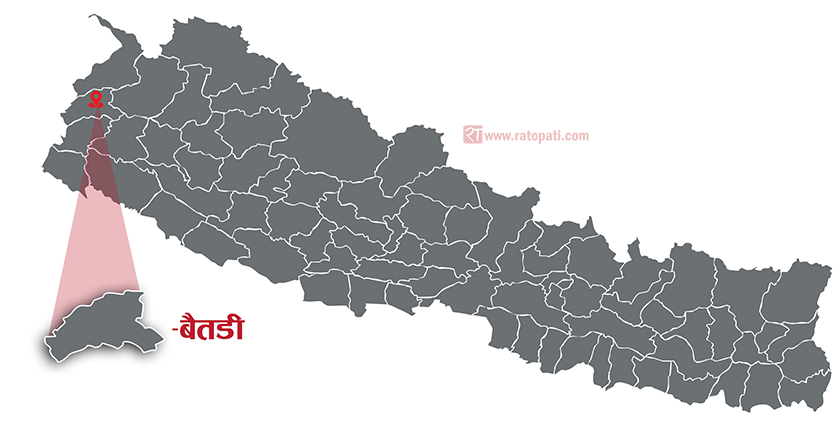
While the government decided to pay 'government employees' every 15 days, teachers were left out. Teachers, the backbone of education, have been deprived of this facility. Teachers, who are solely dependent on their salaries, are already forced to borrow money for basic survival. Following Friday's decision, the Nepal Teachers' Federation stated that in dozens of local levels across the country, teachers have not received their salaries since Shrawan. Teachers in Budhiganga Municipality of Bajura have not been paid for four months and are currently protesting.
According to the Federation, teachers in Kamala Mai Municipality of Dhanusha have also not received salaries since Shrawan. Due to administrative disputes in various municipalities of Madhesh Province, including Lahan Municipality of Siraha, teachers have been returning home empty-handed for months.
General Secretary of the Federation, Tula Bahadur Thapa, has called this 'extreme discrimination and a ridiculous drama' by the government. He says, 'On one hand, facility after facility is added for employees, and on the other, teachers, who are called nation-builders, are kept hungry for 3-4 months. What kind of democracy is this?'
Why is teachers' salary delayed?
The federal government sends teachers' salaries to local levels as 'conditional grants.' Even though the money comes from the center, it has to pass through several 'fortresses' at the local level to reach the teachers. According to Rajendra Pyakurel, Executive Director of the National Association of Rural Municipalities, there are various reasons why teachers do not get paid. The first is the lack of Chief Administrative Officers and Accounting Officers. In most local levels, the central government does not send these officials on time. Without the boss and the accountant, checks cannot be signed, causing money to remain stuck in bank accounts.
In some local levels, budgets cannot be passed on time due to political disputes. When the municipal assembly does not convene, the legal path for spending is closed, and teachers are the first to suffer. Pyakurel argues that the problem is exacerbated by the tendency of the center not to appoint staff while blaming the local levels.
Employees' argument: Paying every 15 days makes no difference
Although the government claims this decision was made for employees, the employee leaders themselves are not enthusiastic. Prakash Bhattarai, Secretary of the Civil Service Union, considers this move by the government as merely 'spreading confusion.' Bhattarai says, 'The salary of employees in Nepal is so low that it is difficult to cover expenses for the whole month, let alone 15 days. Paying every 15 days will not increase the purchasing power of employees.'
According to him, the main concern of employees is the 'Federal Civil Service Act' and their career development, but the government is trying to escape the main problems by getting entangled in such minor issues. The employee union has also challenged the government's claim that market liquidity will increase. They believe that with salaries barely covering basic needs (food, shelter, and clothing), it is impossible to buy luxury goods or increase spending.
The state's 'double-tongued' policy on teachers and employees
Teachers play the most important role in Nepal's educational reform, but the Federation complains that in practice, teachers are always treated as second-class citizens. There is a provision that when civil service salaries increase, teachers' salaries also increase automatically, but statistics show that the state always favors civil servants and sidelines teachers when it comes to distributing facilities. The current 15-day salary arrangement seems to have fueled this further.
General Secretary Tula Bahadur Thapa expresses anger, 'We have been demanding a teachers' hospital for years, we have asked for tourism leave facilities, but that is not granted. Yet, for employees, salaries are provided in 15 days without even asking. This discrimination has created extreme frustration among teachers.'
One teacher says, 'When they don't get paid for 3-4 months, teachers are forced to borrow from local moneylenders. By the time the salary arrives, it is all spent on paying interest. It is a matter of shame for the state that people who are respected as gurus in society have to bow their heads because they cannot pay their grocery bills.'
Regarding this government move, former headmaster Hari Prasad Sharma says, 'Implementing the government's 15-day salary decision is not bad in itself, but it should not be for a select class only. If the state provides facilities to employees, it should treat the teachers who work day and night for the same state equally.'
He, who worked in government schools for 34 years, adds, 'The new 15-day salary arrangement brought by the government may provide momentary relief to some employees, but as long as thousands of teachers across the country have to go hungry for months, such decisions are ridiculous and discriminatory.'
This specific news has been automatically translated by AI. As a result, there may be some inaccuracies or language errors.
_Ts2JZ1AxTS.jpg)

_CI16rghsRT.jpg)