
The Science of Dreams: Can They Predict Health Issues and Influence Decisions?


In 2011, Adeline (name changed) had a dream that changed her life. She was feeling very sad and missing her mother, who had passed away three years earlier.
Adeline, a resident of Hong Kong, says her mother appeared in her dream one night. She recalls, 'I said- Mom, I am finally meeting you, how are you? And Mom said- I am fine, but I want to tell you something, get a health checkup as soon as possible.'
Adeline took this message seriously and visited a doctor. Later, she was diagnosed with stage-1 cancer. Because the disease was detected in time, treatment was possible.
Adeline says, 'I am very grateful, otherwise I would not have gone for a checkup myself.'

People in various cultures around the world have been analyzing their dreams for thousands of years. In ancient Egyptian, Greek, and Babylonian civilizations, it was believed that dreams could predict the future.
In Abrahamic religions, dreams are considered a 'vision' sent by God. Similarly, in some indigenous communities, dreams are viewed as assistance received from spirits (spirit helpers).
Adeline says that although she knew about the traditional Chinese belief that ancestors can send messages through dreams, she never thought such an event would happen in her own life.
Nowadays, this fascination with dreams has also reached online platforms. Users of Hong Kong's 'Discuss' forum share their dreams, while on 'Reddit', hundreds of people say they use ChatGPT to analyze their dreams.
But what does the dream Adeline saw tell us? How seriously should we take it? What do scientists and psychologists say about this?
- Why do we dream?
Our brain loves to dream. According to Dr. Abidemi Otaiku, a neuroscientist at Imperial College London, when we are in Rapid Eye Movement (REM) sleep, we are definitely dreaming.
This means we can spend about one-third of our sleep time dreaming.
If we cannot dream due to a lack of deep sleep, our brain shows even more vivid dreams the next time. This process is called 'REM rebound'.

Dr. Otaiku says, 'The body really wants to dream and makes up for it as soon as it gets a chance.'
Why we sleep remains a mystery to science even today.
Researchers generally believe that sleep gives the brain rest and time to organize the day's memories.
With the help of medical imaging technology that examines the brain, it has been discovered that the way our brain works changes during sleep. This is why we perceive dreams differently at that time.
When we are dreaming, the 'frontal lobe' of the brain, which helps us be rational, stops working.
Similarly, the 'limbic system', which is connected to emotions, is very active. Dr. Otaiku says, 'This is one of the reasons why our dreams are often strange and difficult to understand.'
- Should we make decisions with the help of dreams?
Research has shown that things seen in dreams can inspire us to make better decisions after waking up.
According to one study, people who have quit smoking but dream that they are smoking are less likely to return to the same addiction.
A similar effect was found in divorced people. Researchers found that people who dream about their ex-partners are mentally healthier after a year.

In fact, both studies revealed that negative dreams can sometimes help people solve their problems more effectively than positive dreams.
American dream researcher and psychologist Dr. Dylan Selterman says, 'You are understanding that experience and dealing with it in a creative way.'
Dreams can also help us solve problems. In a study at Harvard University, participants who were given puzzles to solve performed excellently if they dreamed about them.
According to Selterman, this may be because the brain gets more time to solve a problem and dreams help to look at it in a more creative way.
He says, 'Dreams only inspire them to make a small start in that direction.'
- Do dreams show our emotions?
It is not that dreams show our hidden or true feelings, but when we are awake, the things we value are what our brain focuses on while sleeping.
Selterman says he has met people who broke up with their partners because of dreams. However, their relationship was already cold.
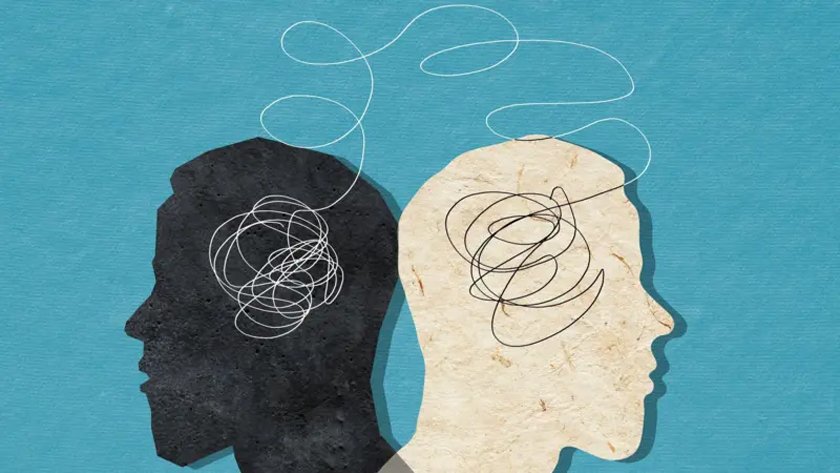
He explains, 'The dream only gave them a little strength. They felt they were understanding themselves better, but this was consistent with their previous thinking.'
So, should we worry when we dream about someone we never thought of?
Selterman says, 'If you are in a happy and loving relationship and one night you dream that you are with someone else, it is okay, it is a normal thing.'
He adds, 'You don't have to blame yourself for this, it may not have any special meaning.'
- Can our brain detect the future?
When our dreams seem like predictions and match real-life events, only then do we pay attention to them and remember them.
Dr. Abidemi Otaiku says, 'When you dream and they don't match the real world, you forget them.'
'But there may be another reason for dreams that seem like predictions, which is called interoception.'
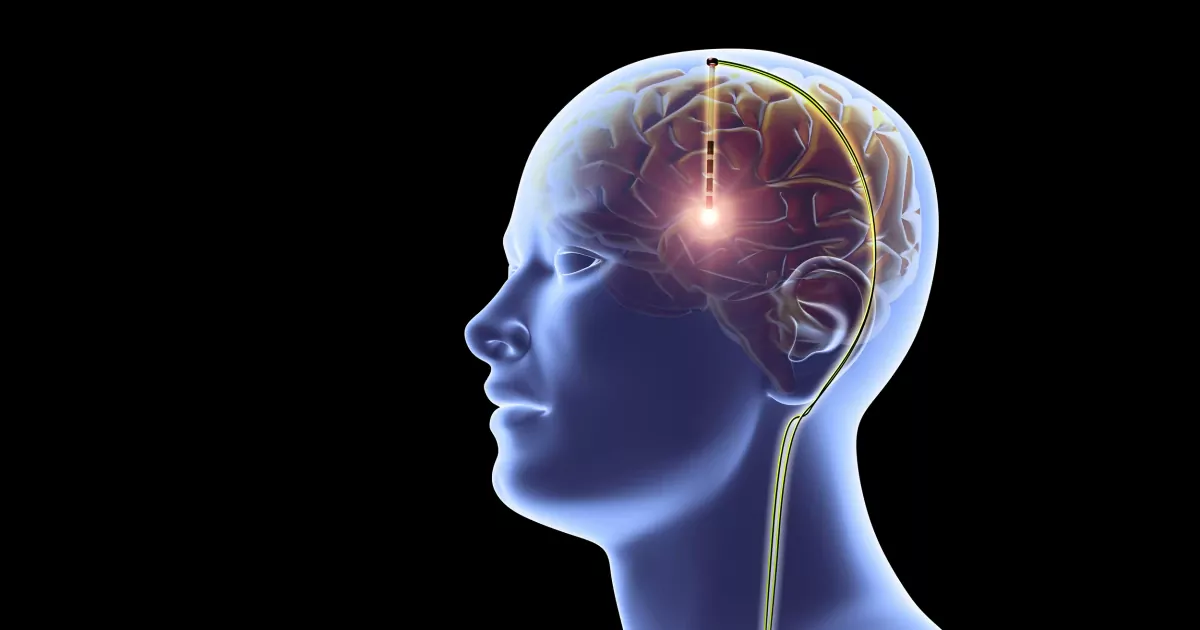
Dr. Otaiku explains, 'Some people call this our sixth sense. Basically, it is the brain's ability to sense the internal state of the body.'
The part of the brain associated with interoception often overlaps with the part that is active during dreaming.
Some researchers believe this could be the reason why our dreams sometimes signal illness.
Dr. Otaiku continues, 'It seems to act as a potential mechanism that can explain these things.'
- How much should we think about scary dreams?
Research by neuroscientists like Dr. Otaiku has shown that our dreams can be a sign of the risk of some brain-related diseases.
He says, 'The more bad dreams you have, the higher the risk of dementia and Parkinson's disease.'
He has three theories about this. First- bad dreams can be early signs of such diseases.
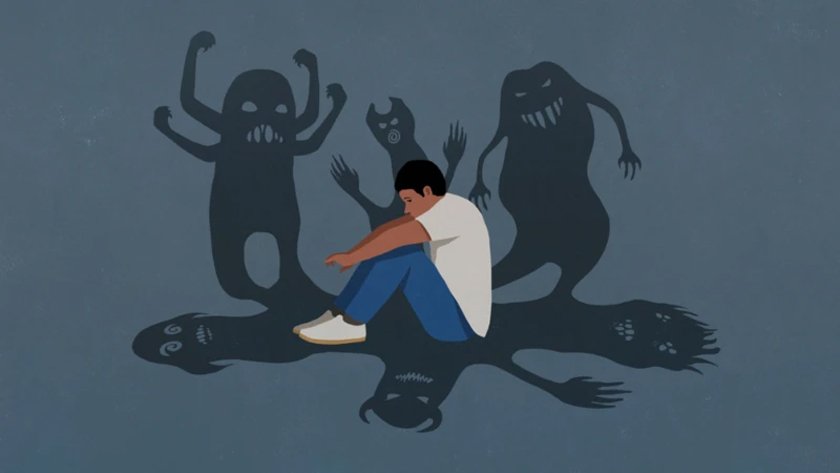
Second- bad dreams themselves can be a cause of poor health. And third- bad dreams and these diseases may have a common cause, such as our genetics.
More research is needed to know which of these is correct.
Dr. Otaiku says that instead of being disappointed by these results, one should take them as an opportunity to improve their health.
In such a situation, reducing stress, getting enough sleep, and not watching scary movies before bed prove helpful.
In serious cases, some treatments are also available. In 'Image Rehearsal Therapy', patients practice changing the ending of recurring bad dreams.
Similarly, the blood pressure medication 'Prazosin' can stop bad dreams without affecting normal dreams.
Otaiku adds, 'It is entirely possible that treating bad dreams will have an immediate and long-term positive impact on our health.'
- Should we analyze our dreams?
Dr. Selterman warns that looking for the exact meaning of dreams can be misleading. Because it ignores the individual's own context and circumstances.
His understanding is, 'The meaning of a shark for a marine biologist can be completely different compared to a dentist.'
However, he says that paying attention to the content of dreams can help one understand oneself better.
He says, 'Maybe you are repeatedly dreaming about a specific person who is no longer in this world, or dreaming about a job you want to get in the future.'
By paying attention to these matters, we can gain a better understanding of ourselves and our relationships. Because these are the things we dream about the most.
Dr. Selterman says, 'If dreams have any significance, it is mostly seen in our social life.'
Adeline says she pays more attention to dreams nowadays and uses them as a sign to understand her emotions.
She says, 'To understand what message dreams are giving, we should rely only on our own feelings. Look inside your own mind, you will find the answer.'
This specific news has been automatically translated by AI. As a result, there may be some inaccuracies or language errors.






_Ts2JZ1AxTS.jpg)