Bagmati Province Government Plans to Abolish Ministry of Internal Affairs and Law Amidst Administrative Restructuring


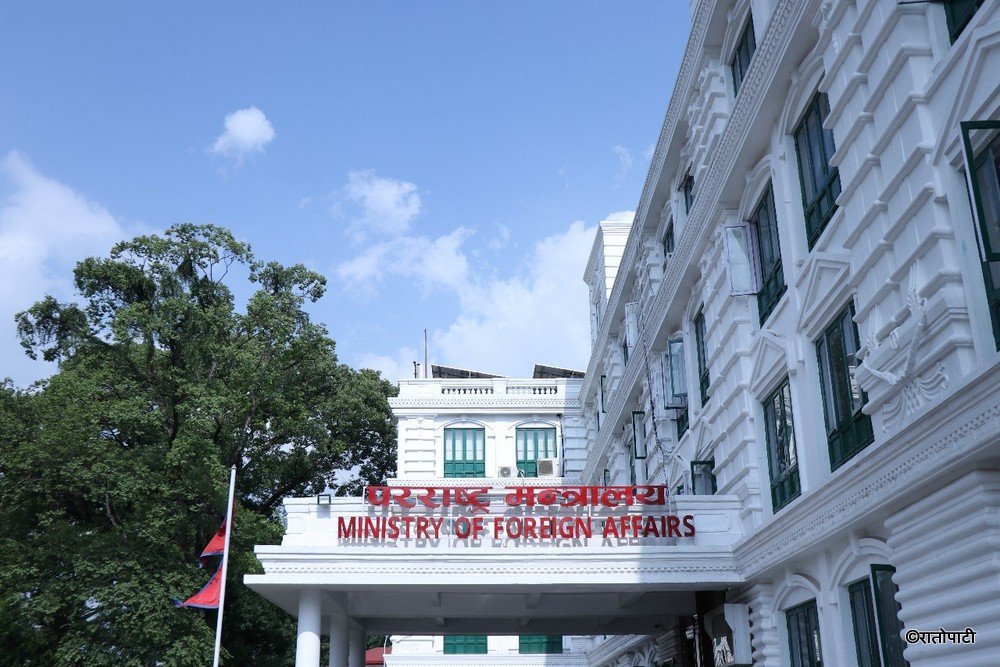
Hetauda. The Bagmati Province government is preparing to abolish the Ministry of Internal Affairs and Law as part of its administrative restructuring process.
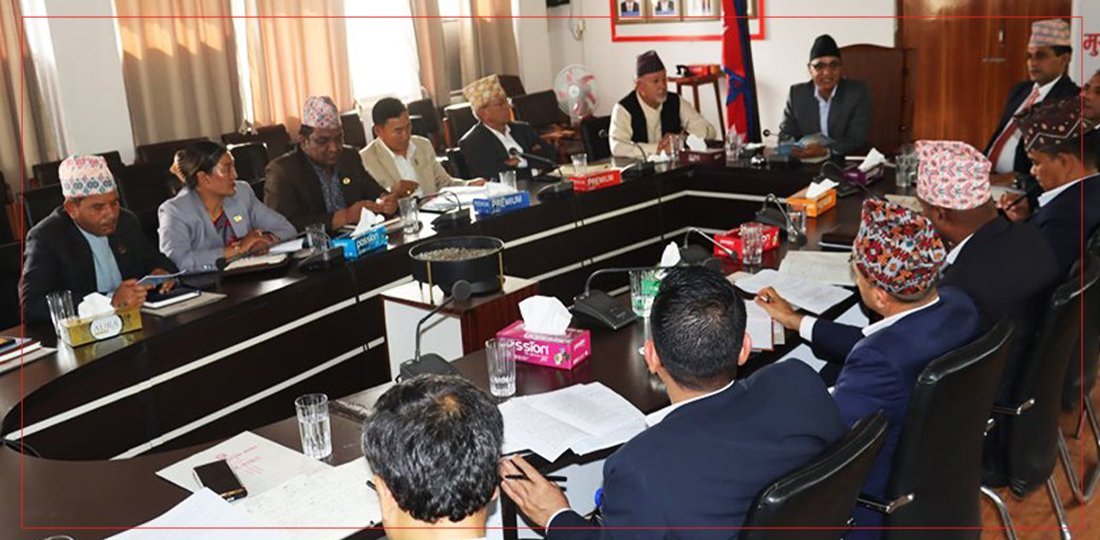
Furthermore, the responsibilities of the said ministry are set to be placed under the Office of the Chief Minister. The government has formed a high-level political steering committee led by Minister for Agriculture and Livestock Development Madhusudan Paudel to study administrative restructuring. For this task, a committee of experts led by former secretary Bimal Wagle was also formed to conduct a study.
The expert committee suggested abolishing the Ministry of Internal Affairs and Law and placing its responsibilities under the Office of the Chief Minister.
The report containing this suggestion has been sent by the steering committee led by Minister Paudel to parliamentary committees and ministries for discussion and feedback. The committee has requested feedback by the 11th.
Amidst this situation, the incumbent Minister of Internal Affairs and Law of the province, Shivaraj Adhikari, has complained that his ministry is being merged into another, effectively ending its independent existence. In the provincial assembly meeting held on Sunday, Minister Adhikari complained that in the name of administrative reform, there is an attempt to eliminate the existence of a strategically important ministry.
The provincial government is in the final stages of reducing the current 14 ministries to 8, and as the Ministry of Internal Affairs is set to be reduced to a branch or unit of the Chief Minister's Office under this process, Minister Adhikari has drawn the attention of the House.
He stated that the Law Ministry should not be considered weak based solely on the volume of staff and budget, and that the Law Ministry plays an extremely important role in terms of politics and security.
Minister Adhikari said that while reducing the number of ministries is positive, strategically important bodies should not be abolished arbitrarily without reviewing the role of each ministry.
'After the decision on administrative reform is implemented, the independent existence of the Ministry of Internal Affairs and Law will no longer remain. There is an attempt to merge the Ministry of Internal Affairs and Law into others. Which is tragic,' he said, 'The Law Ministry is our strategic ministry. Tomorrow, after the federal government completes police adjustment and sends them, this will become the most powerful and A-one ministry of the province. Therefore, no decision should be made that erases the existence of this ministry.'
He mentioned that the Law Ministry has left no stone unturned in serving the people. He stated that the ministry has made special plans for disaster management in the context of the upcoming rainy season. According to him, the ministry has kept disaster materials ready by placing warehouses in Hetauda, Banepa, and Trishuli for disaster management. He said that demands from places including Kamalamai of Sindhuli and Tripurasundari Rural Municipality of Dhading have been addressed, and budget and relief materials have been sent.
In the Bagmati Provincial Assembly meeting, former Chief Minister and Member of Parliament Shalikram Jamkattel raised serious questions about the government's plan to end the independent existence of the Ministry of Internal Affairs and Law. After Minister of Economic Affairs and Planning Prabhat Tamang informed that the report on administrative restructuring has been prepared and the number of ministries will be reduced from 14 to 8, Jamkattel questioned its basis and justification.
Law Ministry cannot be abolished or downsized: Leader Jamkattel
Jamkattel expressed objection to the government's plan to merge or abolish the Ministry of Internal Affairs and Law. Questioning the government spokesperson and Economic Affairs Minister Tamang in the provincial assembly meeting on Thursday, leader Jamkattel warned not to evaluate a strategically important ministry based only on budget volume and staff numbers.
After the government stated that the number of ministries is being reduced to decrease administrative burden, leader Jamkattel countered by emphasizing that the political and constitutional role of the ministry should be considered when restructuring.
He claims that after the federal government completes police adjustment, the ministry will become the most powerful body in the province.
'The Ministry of Internal Affairs and Law is a strategic ministry of the province. It is completely wrong to take it to another ministry and merge it as an assistant or erase its independent existence,' he said, 'Maybe the budget is low in this ministry now. There might be fewer employees. But tomorrow, as soon as the police adjustment happens, it will be an important ministry of the province. Has the government not understood its long-term importance? How will this ministry run by being reduced to a department or branch?'
He said that the government's proposal to reduce the number of ministries to 8 is cheap popularity for cost-cutting. According to Jamkattel, work should not be done to weaken the foundation of the province in the name of administrative reform.
What will be the work of the Ministry of Internal Affairs and Law?
However, experts have said that the Ministry of Internal Affairs and Law should remain. According to Prakash Chapagain, Deputy Secretary of Law of the Provincial Assembly, the proposal to abolish the ministry or merge it into the Office of the Chief Minister and Council of Ministers is not appropriate.
He stated that the independent existence of the ministry is indispensable for the province's peace and security, disaster management, and law-making. According to him, the ministry is necessary for maintaining the rule of law, preventing centralized governance, allowing the Chief Minister time to focus on policy coordination and decision-making, effectiveness in governance and administration, and for coordination with the provincial assembly. He also said that abolishing this ministry would hurt the essence of federalism and increase administrative complexity.
1. Obstacles in the implementation of the Constitution and law-making
Provincial laws are mandatory to exercise the powers given to the province by Article 57 (2) of the Constitution of Nepal. Without a separate ministry to draft and implement laws, the daily operations of the province could be affected. The argument is that not needing a Law Ministry is equivalent to saying 'the province does not need laws at all'.
2. Accountability and risks for the Chief Minister
In recent public movements and protests, questions have been raised against the Home Minister and Prime Minister when security agencies use force. If the Law Ministry is kept under the Chief Minister, the direct responsibility and moral crisis for any small error in the security sector tomorrow will fall on the Chief Minister. When there is a separate minister, the Chief Minister can focus on policy work and accountability for security-related incidents is shared.
3. Excessive centralization of power and crisis of 'Rule of Law'
Both Internal Affairs (peace and security) and Law (legislation) are powerful areas. Merging both into the Chief Minister's Office could lead to power being concentrated in one place, weakening the principle of checks and balances. This could increase the risk of autocracy by rule of law rather than the rule of law.
4. Decline in the Chief Minister's efficiency
The main task of the Chief Minister is to coordinate between all ministries and focus on high-level decision-making. However, if the Chief Minister himself has to get entangled in sensitive and daily tasks like disaster management and security, the overall effectiveness of governance will decrease. This could lead to the Chief Minister being distanced from his main responsibilities and a degradation in administrative capacity.
5. Demand for an effective and scientific structure
The 7-ministry model that existed at the time of the province's establishment is the most scientific, economical, and effective. To preserve the essence of federalism and good governance, the independent existence of the Ministry of Internal Affairs and Law must be maintained.
This specific news has been automatically translated by AI. As a result, there may be some inaccuracies or language errors.