Tourist Arrivals Surge in Nepal's Kanchenjunga Region as Peak Season Begins

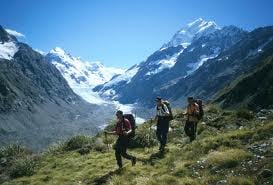
Taplejung. Tourist arrivals have begun in the Kanchenjunga region, home to the world's third-highest mountain. As weather conditions improve, the movement of both domestic and foreign tourists has started to increase.
The period from the first week of Chaitra to the third week of Jestha is considered the ideal time to visit the Kanchenjunga region. According to Tashi Tshering Sherpa, a tourism assistant at the Ghunsa Checkpost of the Kanchenjunga Conservation Area Management Council, 165 foreign tourists have visited in the last month.
There are two main tourist seasons in a year. The first is from Chaitra to Jestha, and the second is from Asoj to Mangsir, he informed. The Ghunsa Checkpost reported that 750 foreign tourists visited during the first season alone last year.
Two primary trekking routes are used to reach the Kanchenjunga Base Camp. One can reach the base camp via Ganeshchowk in Panchthar through Sirijunga Rural Municipality, or by flying from Kathmandu to Suketar Airport and using the route through Phaktanglung Rural Municipality.
The Kanchenjunga Conservation Area Management Council stated that 52 hotels, ranging from small to large, are currently operating to cater to tourists on the Kanchenjunga trekking route. In Gyapla, Phaktanglung Rural Municipality-6, the 'Singi Namjong Hotel' has come into operation with an investment of over 70 million rupees.
Tourism assistant Sherpa informed that four hotels, built with an investment of over 10 million rupees each, are operating at altitudes between 3,500 and 4,500 meters above sea level. According to him, other hotels also have investments exceeding 8 million rupees.
Large-scale hotels targeting tourists have also opened in the district headquarters, Phungling Bazaar. With the rise in tourist arrivals, local tourism and hotel entrepreneurs are feeling encouraged. The livelihoods of local communities in the Kanchenjunga Conservation Area are primarily based on tourism, the hotel business, and animal husbandry. Most households in the Ghunsa, Phale, and Yamphudin areas are directly linked to tourism, said tourism assistant Sherpa.
According to him, some have become self-employed by running hotels, while others earn income as tourist guides or porters. He noted that due to limited agricultural potential, the younger generation is increasingly attracted to the tourism business rather than animal husbandry.
The first ascent of Kanchenjunga took place on May 25, 1955. While it previously took about 24 days to travel from Phungling on foot, the trip duration has now shortened, allowing visitors to reach both base camps and return within 11 to 16 days. Tourist traffic is highest in this region during Chaitra, Baisakh, Jestha, and Asoj, Kartik, and Mangsir.
Mountain climbing mainly takes place in Baisakh and Jestha, tourism assistant Sherpa informed. Tourists from countries including Japan, Germany, Australia, the United States, France, the United Kingdom, the Netherlands, Canada, Switzerland, Belgium, the Philippines, Spain, and Sweden visit this area. Additionally, a smaller number of tourists from India and China also visit for trekking and climbing.
This specific news has been automatically translated by AI. As a result, there may be some inaccuracies or language errors.