Dhorpatan Hunting Reserve to Conduct First-Ever Snow Leopard Census

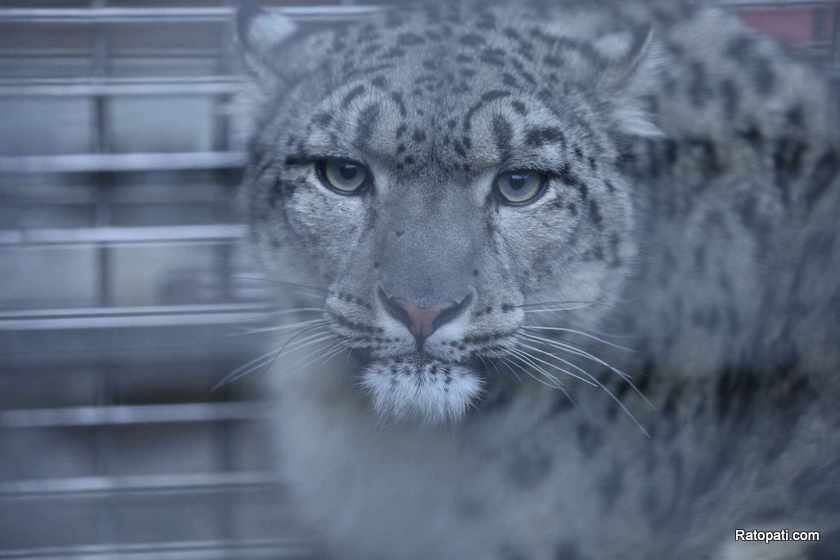
Baglung. For the first time, a census of snow leopards will be conducted in Dhorpatan, Nepal's only hunting reserve. Although the high-altitude regions of this reserve, world-renowned for the legal hunting of blue sheep and Himalayan tahr, are known to host snow leopards, an official count has never been performed until now.
According to Reserve Ranger Sagar Subedi, preparations are underway to train enumerators for the census. The operation will involve reserve staff, trained enumerators, and local residents. Subedi stated that 56 automated 'camera traps' will be installed in hunting blocks across the high-altitude areas of the reserve to determine the status of the snow leopards.
"We are attempting to determine the population and status of snow leopards in the reserve for the first time," said Subedi. Approximately 10 enumerators will be deployed in the high-altitude regions for 45 days. They will install cameras, capture direct photos and videos, and collect footprints and scat samples to prepare a detailed report. Individual leopards will be identified by matching body spots from the camera images, and the collected scat will be tested in a laboratory.
Spanning an area of 1,325 square kilometers, the reserve extends across Baglung, Myagdi, and Rukum districts. It is estimated that snow leopards inhabit the Seng, Sundaha, Dogadi, Ghustung, Barse, and Phagune blocks of the reserve. These blocks are located at altitudes ranging from 4,000 meters to over 7,000 meters.
According to a census conducted in Dhorpatan in 2079 BS, 1,290 blue sheep and 744 Himalayan tahr were recorded. The reserve plans to conduct another census of blue sheep and Himalayan tahr next year following the completion of the snow leopard count. It is believed that obtaining accurate data on the snow leopard will facilitate better conservation and management efforts.
This specific news has been automatically translated by AI. As a result, there may be some inaccuracies or language errors.
_iL3K2wYemS.jpg)